AI estimate as of October 25, 2025 · verify with a professional before acting
AI-Generated · Verify before acting
Everything on this page is generated by AI for informational purposes only. AI can make mistakes — the AI may misidentify items or misattribute them (artist, maker, brand, designer, origin, era). This is not an official valuation and should not be used for insurance, sale, tax, estate, legal, or lending purposes — or any decision requiring a certified appraisal. It is not an authoritative claim about any person, brand, or rights holder — do not share or rely on it as a factual statement about a third party. Always consult qualified professionals before making financial decisions.
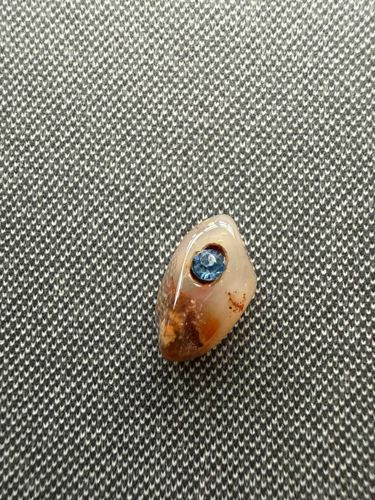
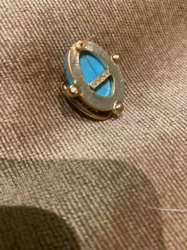
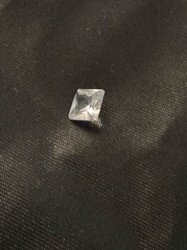
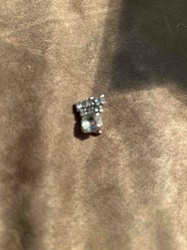
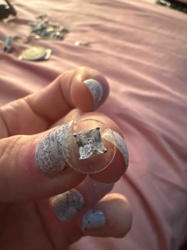
This item is an irregularly shaped pendant or cabochon crafted from what appears to be natural agate, characterized by its translucent to opaque qualities and a blend of earthy tones. The primary color is a milky, warm beige or light brown, which transitions into areas of deeper reddish-brown, possibly indicating iron inclusions or staining within the stone. There are subtle hints of translucency, allowing light to pass through in certain areas, highlighting the natural banding or organic patterns typical of agate. The stone is polished to a smooth, lustrous finish on its exposed surfaces, suggesting it has been shaped and refined for ornamental use.
One of the most notable features is a small, round, brilliant-cut blue gemstone inlaid directly into the agate. The blue stone, possibly a sapphire or a spinel, exhibits a vibrant, medium-to-deep blue hue and appears to be faceted, catching and reflecting light. It is set flush within a precisely drilled or carved recess in the agate, indicating careful craftsmanship. The size of the inset gemstone is relatively small in proportion to the overall size of the agate piece. The edges of the agate are gently rounded, creating a smooth, tactile feel. There are no visible chips, cracks, or significant abrasions on the polished surface, suggesting the item is in good to excellent condition. The unique combination of natural stone and an inlaid gemstone suggests a handcrafted or artisan piece, potentially designed as a charm, a focal bead for a necklace, or an element for a larger piece of jewelry. There are no visible maker's marks or signatures. Given the natural variations in agate, this piece is likely one-of-a-kind.
AI Appraisal Report
Upon visual examination of the provided images, I assess this agate pendant or cabochon to be in excellent condition. The polish is smooth and lustrous, and I detect no chips, cracks, or significant abrasions. The agate itself appears authentic, displaying characteristic translucence, earthy banding, and an appealing blend of warm beige and reddish-brown tones. The inlay of a small, round, brilliant-cut blue gemstone is executed with precision, sitting flush within the agate. While the blue gemstone's vibrant hue suggests sapphire or spinel, definitive identification is impossible without gemological testing. Its small size, however, indicates it is unlikely to be a high-carat stone. This piece appears to be a handcrafted or artisan item, making it unique.
Market conditions for natural agate pendants with gemstone inlays are generally moderate. While agate is abundant, the craftsmanship of the inlay adds value. Comparables for similar artisan agate pieces with small inset gemstones typically fall within the $50-$200 range, depending on the assumed quality of the inset stone and the overall aesthetic appeal. Demand is steady among collectors of unique jewelry components and those seeking natural gemstone pieces. The rarity lies in its one-of-a-kind nature due to the agate's organic patterns and the specific inlay work.
Factors significantly impacting value include the authenticity and type of the blue gemstone – a natural sapphire would command a higher value than a spinel or synthetic stone. Without physical inspection, the actual species of the blue gemstone cannot be confirmed. To fully authenticate the blue gemstone and ascertain its natural origin, a full gemological examination by a GIA-certified gemologist would be essential. Furthermore, chemical composition analysis could be performed on the agate to confirm its natural origin. Without in-person examination, statements regarding gemstone type and absolute authenticity remain provisional based on visual characteristics alone.