AI Appraisal Estimate

AI-generated estimates · not official valuations

From the user

What was submitted

Photo and notes provided by the user — not generated by AI

Submitted item photo
Submitted photo · June 17, 2026

User's notes

No additional notes provided.

AI analysis below

AI appraisal

AI analysis & estimate

AI-Generated · Verify before acting

Everything below is generated by AI for informational purposes only. AI can make mistakes — the AI may misidentify items or misattribute them (artist, maker, brand, designer, origin, era). This is not an official valuation and should not be used for insurance, sale, tax, estate, legal, or lending purposes — or any decision requiring a certified appraisal. It is not an authoritative claim about any person, brand, or rights holder — do not share or rely on it as a factual statement about a third party. Always consult qualified professionals before making financial decisions.

Read the full disclaimer

AI Identification

·Not independently authenticated·Verify before acting

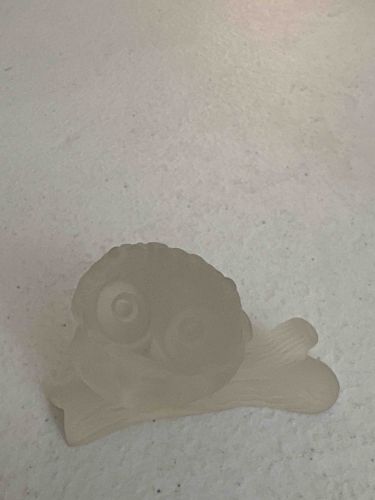
Frosted Satin Glass Owl Figurine

Decorative Art Glass

AI Estimated Value

·Not an official valuation·Verify before acting

$15 - $35

As of June 17, 2026

AI Item Analysis

·AI can make mistakes·Verify before acting
This item is a decorative figurine depicting a stylized owl perched horizontally on a textured branch. The piece is crafted from translucent glass with a comprehensive frosted or 'satin' finish, which diffuses light across its surface for a soft, velvety appearance. Physically, the figurine features oversized, concentric-circle eyes that are a hallmark of mid-century whimsical glass design. The body of the owl is rounded with minimal feather detailing, while the branch base exhibits molded ridges to simulate wood grain. The material appears to be a pressed glass, likely from a mid-to-late 20th-century manufacturer such as Fenton, Viking, or a similar American art glass house. The color is a neutral semi-white frosts, potentially 'camphor glass' style. Regarding condition, the piece shows no immediate chips or cracks in the photograph, though satin glass is prone to 'flea bites' along the base and can pick up gray scuff marks from contact with other surfaces. There are no visible maker's marks or signatures on the upper surface, though a logo might be present on the underside of the base. The craftsmanship displays a high level of uniformity in the acid-etching or sandblasting process used to achieve the matte texture, suggesting professional factory production rather than an individual artisan piece. This style of glass was popular between the 1960s and 1980s as a giftware item.
AI Appraisal Report

·AI can make mistakes·Verify before acting
Based on my visual examination of this frosted satin glass owl figurine, I identify it as a mid-to-late 20th-century American art glass piece, most likely produced by the Viking Glass Company or arguably Fenton, circa 1970s. The 'Glimmer' or 'Frosted' finish is characteristic of mass-produced giftware from this era intended to mimic higher-end camphor glass. The stylized concentric eyes and minimal body detailing serve as key identifiers for this period of pressed glass manufacturing. Regarding condition, the piece appears to be in very good vintage condition, retaining a uniform satin finish without obvious chips, cracks, or discoloration in the provided image. However, satin glass is notoriously susceptible to 'scuffing' and surface oils, which can be difficult to detect in photographs. The market for mid-century American pressed glass is currently stable but saturated. While whimsical animal figurines have a dedicated collector base, this specific owl form is relatively common and does not carry the premium associated with rarer colors like persimmon or cobalt. Authenticity is highly likely given the low probability of reproducing such specific, low-value items, but accurate attribution remains a limitation. A physical inspection is required to check the underside for a faint acid-etched logo (often lost on satin finishes) or mold seams that might distinguish between manufacturers like Viking, Mosser, or Westmoreland. Without a definitive maker's mark or original foil label, the value is driven primarily by aesthetic appeal rather than investment rarity.

Get your items appraised

Instant estimates of your treasures with AI-powered appraisals

Browse More Appraisals