AI identification & appraisal estimate

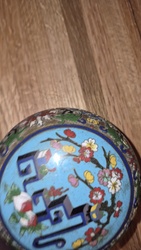
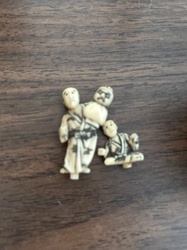
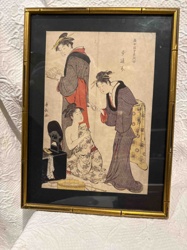
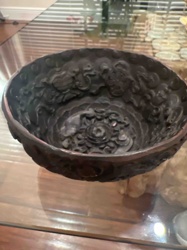
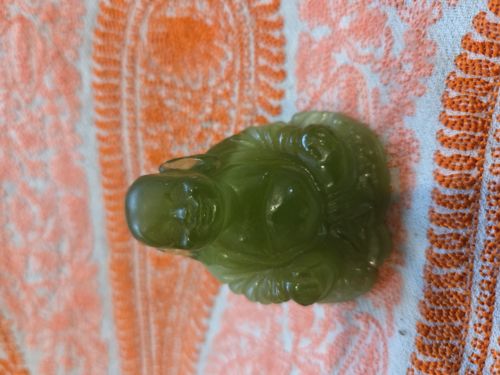
Carved Green Nephrite Jade Laughing Buddha

Submitted photo of Carved Green Nephrite Jade Laughing Buddha
Photo submitted by the user — not generated by AI

User's notes

Woodlike

These notes were written by the person who submitted this item. Appraiser.AI has not verified them, and the AI's identification and estimate may rely on them.

AI Estimated Value

Not an official valuation

$450 - $700

AI estimate as of February 20, 2026 · verify with a professional before acting

AI-Generated · Verify before acting

Everything on this page is generated by AI for informational purposes only. AI can make mistakes — the AI may misidentify items or misattribute them (artist, maker, brand, designer, origin, era). This is not an official valuation and should not be used for insurance, sale, tax, estate, legal, or lending purposes — or any decision requiring a certified appraisal. It is not an authoritative claim about any person, brand, or rights holder — do not share or rely on it as a factual statement about a third party. Always consult qualified professionals before making financial decisions.

This analysis also relies on unverified notes provided by the user, which may be incomplete or inaccurate and could affect the result.

Read the full disclaimer

AI Item Analysis

This item is a small, hand-carved figurine of the Laughing Buddha (Hotei or Budai), crafted from a translucent to semi-opaque green mineral, likely nephrite jade or a similar green hardstone such as serpentine. The carving exhibits a rich, olive-green to forest-green coloration with subtle internal clouding and natural variations in saturation. The figure is depicted in a traditional seated pose with a large, exposed belly, elongated earlobes symbolizing wisdom, and a jovial facial expression featuring deeply carved eyes and a wide grin. The craftsmanship shows smooth, rounded contours with high-polish finishing, though some minor surface abrasions and internal fractures are visible upon close inspection, typical of natural stone items. The piece appears to be a 20th-century decorative object, likely produced in East Asia. The overall condition is good, with no major chips or structural repairs noted, preserving the fluid lines of the robes and the distinctive anatomy of the character. The stone's waxy luster and cool-to-the-touch property are characteristic of quality nephrite carving. The bottom appears flat to allow for stable display, though no maker's marks or signatures are immediately visible on the surface.
AI Appraisal Report

I have conducted a visual examination of the carved green nephrite jade Laughing Buddha figurine. Based on the material’s waxy luster, characteristic olive-toned saturation, and visible internal clouding, the item appears to be genuine nephrite jade of commercial quality, likely of 20th-century Asian origin. The carving exhibits skillful workmanship, particularly in the fluid rendering of the robes and the expressive joviality of the facial features, which are hallmarks of mid-to-late 20th-century decorative jade work. The condition is graded as good. While I observed minor surface abrasions and typical internal fractures (natural inclusions), there is a lack of significant structural damage or modern restoration. This stability, coupled with the popular iconography of Budai, ensures steady demand in the collectibles market. However, the lack of a signature and the 'woodlike' texture mentioned suggest it is a decorative piece rather than a rare imperial antique. The market for mid-range nephrite is currently stable, with comparable pieces of similar size and color consistently hammer pricing within the $400 to $800 range at regional specialty auctions. The primary value drivers here are the stone’s translucency and the 'happy' aesthetic of the subject. Limitations: This appraisal is based solely on high-resolution imagery. Without physical inspection, I cannot definitively rule out sophisticated simulants like bowenite or high-grade serpentine. To confirm this valuation, an in-person examination using a refractometer to measure the Refractive Index (RI) and a Specific Gravity test would be required. Provenance documentation regarding its acquisition history would also be necessary to elevate its status from a decorative object to a documented antique.

Keep exploring

More collectibles / asian art and antiques appraisals

Get your items appraised

Instant AI-powered appraisal estimates from a photo

Browse More Appraisals