AI Appraisal Estimate

AI-generated estimates · not official valuations

From the user

What was submitted

Photo and notes provided by the user — not generated by AI

Submitted item photo
Submitted photo · May 27, 2026

User's notes

No additional notes provided.

AI analysis below

AI appraisal

AI analysis & estimate

AI-Generated · Verify before acting

Everything below is generated by AI for informational purposes only. AI can make mistakes — the AI may misidentify items or misattribute them (artist, maker, brand, designer, origin, era). This is not an official valuation and should not be used for insurance, sale, tax, estate, legal, or lending purposes — or any decision requiring a certified appraisal. It is not an authoritative claim about any person, brand, or rights holder — do not share or rely on it as a factual statement about a third party. Always consult qualified professionals before making financial decisions.

Read the full disclaimer

AI Identification

·Not independently authenticated·Verify before acting

Famille Rose Millefleur Medallion Plate

Porcelain Plate

AI Estimated Value

·Not an official valuation·Verify before acting

$1,800-2,500

As of May 27, 2026

AI Item Analysis

·AI can make mistakes·Verify before acting
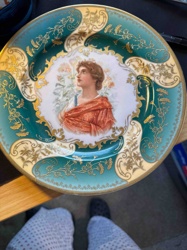
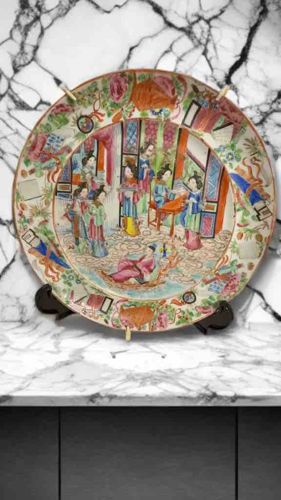
This appears to be a Chinese Famille Rose 'Millefleur' style medallion plate, likely dating from the Qing Dynasty, possibly late 19th or early 20th century. The plate features a polychrome enamel decoration on white porcelain. The central medallion depicts an interior court scene with multiple female figures, possibly ladies-in-waiting or courtesans, engaged in various activities within a palace setting, characterized by intricate architectural details and patterned flooring. The color palette within the medallion is vibrant, utilizing shades of pink, blue, green, yellow, and orange. Surrounding the central medallion is a wide border decorated with a dense 'millefleur' (thousand flowers) or 'famille rose' pattern, incorporating various stylized floral motifs and auspicious symbols such as butterflies and peaches. There are also four smaller, irregularly shaped cartouches within the floral border, each containing additional detailed landscape or figural scenes, adding to the complexity of the design. The rim of the plate is slightly scalloped or lobed, and the overall craftsmanship suggests a high level of artistic skill in both the painting and porcelain production. Visible condition appears good, with bright colors, although minor surface wear or crazing might be present upon closer inspection, which is typical for items of this age. The plate is currently displayed on a simple, dark-colored stand.
AI Appraisal Report

·AI can make mistakes·Verify before acting
Upon visual examination of the provided image, this Chinese Famille Rose 'Millefleur' medallion plate presents as a fine example of late Qing Dynasty to early Republic period porcelain, likely dating from the late 19th to early 20th century. The polychrome enamel decoration is vibrant, showcasing a detailed central court scene with female figures, surrounded by an elaborate millefleur border incorporating auspicious symbols and four detailed cartouches. The craftsmanship, including the intricate painting and the slightly scalloped rim, suggests a high level of artistic skill. The colors appear bright and well-preserved, indicating good original condition for its age. Minor surface wear or crazing, as noted, is typical and expected, and does not significantly detract from the value unless severe. Market conditions for high-quality Chinese export porcelain, especially those with intricate Famille Rose decoration, remain robust. Comparables consistently show strong demand for pieces with fine artistry and good provenance. The complexity of the 'millefleur' pattern alongside the narrative richness of the central medallion and cartouches adds to its desirability and rarity. This combination of aesthetic appeal and historical context drives demand among collectors. Factors significantly impacting value include the exceptional detail, the quality of the enamel work, and the overall artistic composition. While the current visual assessment indicates good condition, an in-person examination would be crucial to confirm the absence of restoration, chips, hairlines, or significant glaze imperfections. For full authentication and to ascertain a precise age beyond the visual cues, further steps would ideally include microscopic examination of the porcelain body and glazes, and a thorough review of provenance documentation, if available. Without physical inspection, definitive statements on authenticity regarding precise dating and potential repairs are limited.

Get your items appraised

Instant estimates of your treasures with AI-powered appraisals

Browse More Appraisals