AI Appraisal Estimate

AI-generated estimates · not official valuations

From the user

What was submitted

Photo and notes provided by the user — not generated by AI

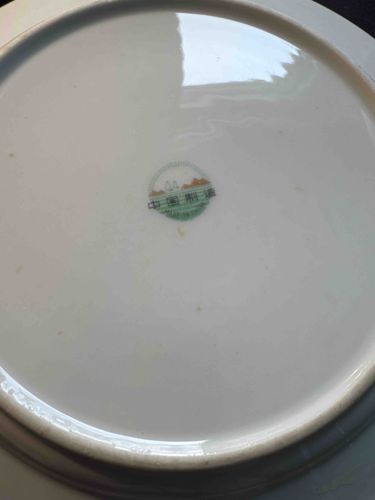
Submitted item photo
Submitted photo · June 25, 2026

User's notes

No additional notes provided.

AI analysis below

AI appraisal

AI analysis & estimate

AI-Generated · Verify before acting

Everything below is generated by AI for informational purposes only. AI can make mistakes — the AI may misidentify items or misattribute them (artist, maker, brand, designer, origin, era). This is not an official valuation and should not be used for insurance, sale, tax, estate, legal, or lending purposes — or any decision requiring a certified appraisal. It is not an authoritative claim about any person, brand, or rights holder — do not share or rely on it as a factual statement about a third party. Always consult qualified professionals before making financial decisions.

Read the full disclaimer

AI Identification

·Not independently authenticated·Verify before acting

Mid-20th Century Jingdezhen Chinese Porcelain Plate

Asian Ceramics and Porcelain

AI Estimated Value

·Not an official valuation·Verify before acting

$45 - $85

As of June 25, 2026

AI Item Analysis

·AI can make mistakes·Verify before acting
This item is the underside of a circular porcelain plate, likely manufactured in Jingdezhen, China. The base is white with a smooth, clear glaze over a fine-grained ceramic body. It features a prominent circular backstamp in the center consisting of green, brown, and white colors. The mark suggests a mid-20th century production era, likely 1960s to 1980s, containing Chinese characters and the English phrase MADE IN CHINA. This specific style of 'Liling' or 'Red Flag' style marking was common for export ware during the People's Republic of China era. Physically, the plate shows a smooth, unglazed foot rim which displays a slight yellowish patina from age and contact with surfaces. The glaze on the base appears relatively consistent, although some minor kiln dust or iron spots (small brown flecks) are visible, which is typical for mass-produced porcelain of this period. There are no immediate signs of significant structural damage such as cracks or large chips visible in this view, though some light surface scratching and minor rim wear are evident. The craftsmanship represents a standard industrial export quality, intended for both domestic use and international trade during the late Cultural Revolution or early Reform periods.
AI Appraisal Report

·AI can make mistakes·Verify before acting
Based on my visual examination of the underside of this circular porcelain plate, I have identified it as a mid-to-late 20th-century export piece from Jingdezhen, China. The green and brown circular backstamp featuring 'MADE IN CHINA' in English, accompanied by simplified Chinese characters, is emblematic of the state-run kiln production popularized between the 1960s and 1980s. The body displays the characteristic fine grain of Jingdezhen kaolin, while the minor iron spots and kiln debris indicate a standard industrial grade rather than imperial or high-artisan quality. The item appears to be in 'Good' vintage condition. The unglazed foot rim shows expected oxidation and shelf wear consistent with its age. While no structural fractures are visible from this angle, the presence of light surface scratches suggests it was utilized as functional dinnerware rather than a display-only cabinet piece. The market for mid-century Chinese export porcelain is currently saturated. While these pieces are valued for their durability and cultural aesthetic, they were mass-produced in the millions. Comparables salvaged from 'Rice-Grain' patterns or 'Wan Shou Wu Jiang' sets typically sell in this price range at auction or through secondary vintage markets. Rarity is low, as this stamp represents high-volume output from the 'Red Flag' or similar state factories. Note: This appraisal is based strictly on photographic evidence. A definitive authentication would require a physical inspection to check for resonance (ring test), translucency under UV light to detect professional repairs, and tactile verification of the glaze thickness. Provenance documentation regarding its import history would further solidify its dating.

Get your items appraised

Instant estimates of your treasures with AI-powered appraisals

Browse More Appraisals