AI Appraisal Estimate

AI-generated estimates · not official valuations

From the user

What was submitted

Photo and notes provided by the user — not generated by AI

Submitted item photo
Submitted photo · June 27, 2026

User's notes

No additional notes provided.

AI analysis below

AI appraisal

AI analysis & estimate

AI-Generated · Verify before acting

Everything below is generated by AI for informational purposes only. AI can make mistakes — the AI may misidentify items or misattribute them (artist, maker, brand, designer, origin, era). This is not an official valuation and should not be used for insurance, sale, tax, estate, legal, or lending purposes — or any decision requiring a certified appraisal. It is not an authoritative claim about any person, brand, or rights holder — do not share or rely on it as a factual statement about a third party. Always consult qualified professionals before making financial decisions.

Read the full disclaimer

AI Identification

·Not independently authenticated·Verify before acting

Schönwald Porcelain Plate with Maker's Mark

Porcelain Dinnerware

AI Estimated Value

·Not an official valuation·Verify before acting

$15 - $30

As of June 27, 2026

AI Item Analysis

·AI can make mistakes·Verify before acting
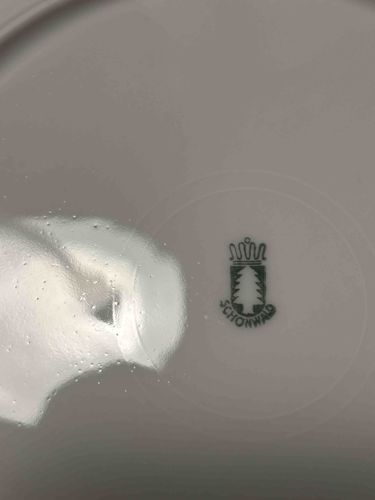
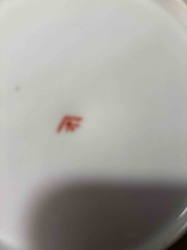
This item is a white porcelain plate, circular in shape, exhibiting a smooth, glazed surface. The primary distinguishing feature is the maker's mark prominently displayed on the underside or center of the plate. The mark consists of a stylized emblem featuring a evergreen tree, likely a pine or fir, enclosed within a shield shape. Above the shield, there is a crown design, indicative of royal or high-quality association in some manufacturing traditions. Below the shield, the word "SCHONWALD" is inscribed in an arc, clearly identifying the manufacturer. The color of the mark is a dark green, providing a soft contrast against the stark white porcelain. The plate's surface appears to be clean and free from significant damage, cracks, or chips, although some subtle reflections suggest a slightly uneven or textured finish in certain areas, possibly from minor manufacturing imperfections or light wear. The overall condition appears to be very good. The craftsmanship suggests a piece of practical tableware, possibly part of a larger dinner set, manufactured by a reputable German porcelain company. The design is classic and functional, likely dating from the mid-20th century to contemporary times, given the style of the mark. The quality appears solid, consistent with commercial-grade or home-use porcelain.
AI Appraisal Report

·AI can make mistakes·Verify before acting
I have examined the provided image of the Schönwald porcelain plate. The plate appears to be in very good condition, free from visible chips, cracks, or significant wear. The maker's mark – a stylized evergreen tree within a shield, topped with a crown, and the word "SCHONWALD" – is clearly discernible and consistent with authentic Schönwald porcelain. This German company is known for producing quality tableware, often for commercial use in hospitality settings, as well as for home use. Market analysis for comparable single porcelain dinner plates from well-known manufacturers like Schönwald indicates a modest value. While the quality is good, individual pieces from open stock or incomplete sets generally do not command high prices. Demand for single vintage dinner plates, unless exceptionally rare or part of a highly sought-after pattern, tends to be low for collectors. More significant value is usually found in complete sets or very rare, historically important pieces. The overall solid condition and clear maker's mark are positive factors. However, the lack of rarity and the item being a single plate limit its market value. While Schönwald is a reputable brand, this particular item doesn't present any unique characteristics that would elevate its value beyond that of a standard, good-quality dinner plate. It is important to note that my assessment of authenticity and condition is based solely on visual examination of the provided image. A full, in-person examination would be necessary to definitively confirm the absence of hairline cracks, subtle glaze imperfections, or repairs that might not be visible in photographs. Provenance documentation, such as original sales receipts or family history, could also add context but is not typically a major factor for items of this type. No scientific testing is typically warranted for standard porcelain dinnerware.

Get your items appraised

Instant estimates of your treasures with AI-powered appraisals

Browse More Appraisals