Neoclassical Verdigris Resin Relief Vase
Decorative Arts / Home Decor

Neoclassical Verdigris Resin Relief Vase

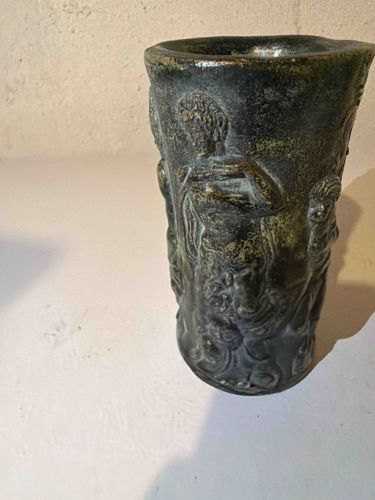
This item is a cylindrical decorative vessel or vase featuring a continuous high-relief frieze of Greco-Roman or Neoclassical figures. The piece is crafted to simulate aged bronze, characterized by a dark metallic base color with a heavy green and yellow verdigris-style patina applied across the surface. While intended to look like metal or stone, the soft modeling and surface texture suggest a cast synthetic resin or composite material. The central motif depicts a series of figures in classical drapery, including a prominent central figure with arms crossed or holding a garment. The construction shows a thick, somewhat irregular rim and a heavy base for stability. The condition appears fair to good as a decorative object, with significant intentional distressing to simulate antiquity. There is visible pitting and an uneven surface texture that may be part of the molding process or subsequent surface wear. No visible maker’s marks are present on the body, suggesting a mass-produced decorative piece, likely from the late 20th century. The craftsmanship is utilitarian, aiming for a theatrical or ornamental aesthetic rather than fine art quality.
Estimated Value

$40.00 - $65.00

Basic Information

Category

Decorative Arts / Home Decor

Appraised On

January 14, 2026

Estimated Value

$40.00 - $65.00

Item Description

This item is a cylindrical decorative vessel or vase featuring a continuous high-relief frieze of Greco-Roman or Neoclassical figures. The piece is crafted to simulate aged bronze, characterized by a dark metallic base color with a heavy green and yellow verdigris-style patina applied across the surface. While intended to look like metal or stone, the soft modeling and surface texture suggest a cast synthetic resin or composite material. The central motif depicts a series of figures in classical drapery, including a prominent central figure with arms crossed or holding a garment. The construction shows a thick, somewhat irregular rim and a heavy base for stability. The condition appears fair to good as a decorative object, with significant intentional distressing to simulate antiquity. There is visible pitting and an uneven surface texture that may be part of the molding process or subsequent surface wear. No visible maker’s marks are present on the body, suggesting a mass-produced decorative piece, likely from the late 20th century. The craftsmanship is utilitarian, aiming for a theatrical or ornamental aesthetic rather than fine art quality.
Get Your Items Appraised

Instant estimates of your treasures with AI-powered instant appraisals

Browse More Appraisals