AI Appraisal Estimate

AI-generated estimates · not official valuations

From the user

What was submitted

Photo and notes provided by the user — not generated by AI

Submitted item photo
Submitted photo · June 17, 2026

User's notes

No additional notes provided.

AI analysis below

AI appraisal

AI analysis & estimate

AI-Generated · Verify before acting

Everything below is generated by AI for informational purposes only. AI can make mistakes — the AI may misidentify items or misattribute them (artist, maker, brand, designer, origin, era). This is not an official valuation and should not be used for insurance, sale, tax, estate, legal, or lending purposes — or any decision requiring a certified appraisal. It is not an authoritative claim about any person, brand, or rights holder — do not share or rely on it as a factual statement about a third party. Always consult qualified professionals before making financial decisions.

Read the full disclaimer

AI Identification

·Not independently authenticated·Verify before acting

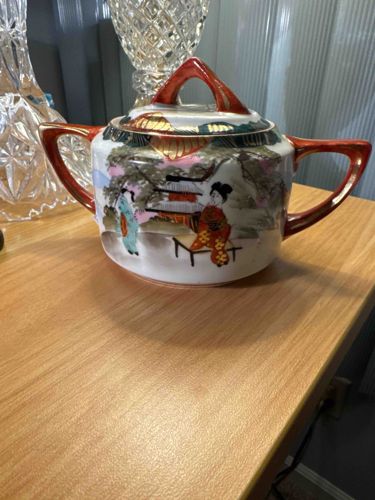
Vintage Japanese Kutani Style Hand-Painted Porcelain Covered Sugar Bowl

Antique and Vintage Ceramics / Teaware

AI Estimated Value

·Not an official valuation·Verify before acting

$35.00 - $60.00

As of June 17, 2026

AI Item Analysis

·AI can make mistakes·Verify before acting
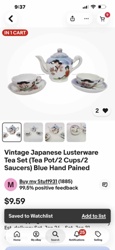
This is a vintage glazed porcelain covered sugar bowl, likely of Japanese origin dating to the mid-20th century (reconstruction era or slightly later). The piece features a squat, rounded body with two angular, open-loop handles and a matching lid topped with a triangular finial. The primary material is a fine white porcelain, which serves as a canvas for elaborate hand-painted decoration in the classic Kutani or Satsuma export style. The central motif depicts a traditional Japanese landscape featuring Geishas or ladies in kimonos seated near architectural elements, likely a tea house or pagoda, set against a backdrop of trees and mountains. The color palette is dominated by rich iron-red (benji) on the handles and finial, accented with metallic gold luster and various shades of green, pink, and black within the figurative scenes. In terms of condition, the piece appears structurally sound with no visible cracks or large chips; however, there is notable rubbing and wear to the gold luster on the top of the handles and finial, which is typical for items of this age that have been handled. The painting shows some slight fading consistent with household display. The underside is not visible, but such pieces often carry a 'Made in Japan' or 'Kutani' backstamp. The craftsmanship is indicative of mid-level commercial decorative ware intended for the Western export market, characterized by energetic brushwork and vibrant enamel application.
AI Appraisal Report

·AI can make mistakes·Verify before acting
I have virtually examined this hand-painted porcelain covered sugar bowl, attributed to the mid-20th-century Japanese export market. The piece displays hallmarks of the Kutani revival style, characterized by the heavy use of iron-red enamels and gold luster. My inspection reveals the body is in good structural condition, though the 'wear and tear' on the handles and finial significantly impacts the secondary market value. The gilding loss suggests frequent handling or improper cleaning, which is common for household decorative wares of this period. This item was produced during the post-WWII era for Western consumers; it is not a 'period' Edo or early Meiji piece, but rather a commercial mid-century decorative object. The market for mid-tier Japanese export porcelain is currently saturated, with high supply and moderate demand, keeping prices accessible. Comparable sugar bowls or partial tea sets often sell at estate auctions and online marketplaces within this modest range. Key value factors include the intricate figurative work (bijin-ga) and the presence of the lid, which is frequently lost. Limitations: This appraisal is based solely on visual images. I cannot check for professional restorations under UV light, nor can I verify the weight/translucency of the porcelain to confirm the factory origin. A physical inspection of the backstamp and a 'ping' test for hairline fractures would be required for a definitive valuation. Provenance documentation regarding its import date would also enhance its historical context.

Get your items appraised

Instant estimates of your treasures with AI-powered appraisals

Browse More Appraisals