AI Appraisal Estimate

AI-generated estimates · not official valuations

From the user

What was submitted

Photo and notes provided by the user — not generated by AI

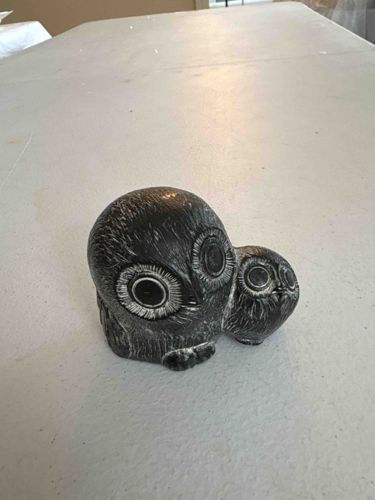
Submitted item photo
Submitted photo · June 17, 2026

User's notes

No additional notes provided.

AI analysis below

AI appraisal

AI analysis & estimate

AI-Generated · Verify before acting

Everything below is generated by AI for informational purposes only. AI can make mistakes — the AI may misidentify items or misattribute them (artist, maker, brand, designer, origin, era). This is not an official valuation and should not be used for insurance, sale, tax, estate, legal, or lending purposes — or any decision requiring a certified appraisal. It is not an authoritative claim about any person, brand, or rights holder — do not share or rely on it as a factual statement about a third party. Always consult qualified professionals before making financial decisions.

Read the full disclaimer

AI Identification

·Not independently authenticated·Verify before acting

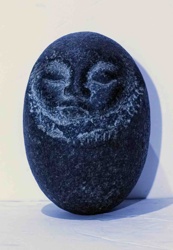
Inuit-Style Soapstone Carving of an Owl and Owlet

Sculpture and Fine Art

AI Estimated Value

·Not an official valuation·Verify before acting

$40 - $80

As of June 17, 2026

AI Item Analysis

·AI can make mistakes·Verify before acting
This is a hand-carved soapstone figurine depicting an adult owl and a smaller owlet nestled together, likely of Canadian Inuit or similar Indigenous origin. The piece is crafted from a dark, variegated soapstone, possibly steatite, featuring a deep charcoal to black base color with prominent white and grey striations and veining throughout the stone. The sculpture measures approximately 3 to 4 inches in height. The figures are stylized with rounded, bulbous bodies and large, concentric circular eyes that have been deeply incised to create a striking contrast against the dark stone. Fine, linear etched lines are used extensively across the surface to represent the texture of feathers. The carving exhibits a smooth, polished finish on the rounded surfaces, while the incised details retain a Chalky white appearance known as 'frosting,' which is a common characteristic of soapstone carving when the surface is scratched. While no specific maker's mark or syllabic signature is visible in the provided angle, such pieces often date from the mid-to-late 20th century. The condition appears well-maintained with no visible fractures or major chips; however, there are minor scuffs and surface scratches consistent with the soft nature of the material and age. The craftsmanship displays a charming, folk-art quality with a focus on form and expression rather than strictly anatomical accuracy.
AI Appraisal Report

·AI can make mistakes·Verify before acting
Based on my visual examination of the images provided, this hand-carved soapstone figurine depicts a charming owl and owlet motif, executed in a style evocative of Canadian Inuit art but likely falling into the category of 'Inuit-style' or tourist art rather than high-end master carving. The piece features characteristic dark, variegated steatite with extensive surface etching to suggest plumage. The condition appears sound, with only minor scuffing typical of soft stone of this vintage (likely late 20th century). However, there are significant limitations to a digital appraisal. True Inuit art is typically authenticated by an 'Igloo Tag' or specific syllabic signatures on the base, which are not visible here. The execution of the eyes and feathers, while appealing, lacks the refinement and specific cultural narrative distinctiveness found in investment-grade works by known masters like Kenojuak Ashevak or Nuna Parr. The 'frosting' inside the incisions and the overall finish suggest mass production for the souvenir market, possibly imported or made by non-Indigenous artisans mimicking the style. Market demand for genuine Inuit sculpture remains strong, but generic soapstone carvings have saturated the secondary market, keeping prices modest. Without provenance or a signature confirming a specific artist or community (e.g., Cape Dorset or Sanikiluaq), this piece is valued primarily for its decorative appeal rather than as fine art. To increase this valuation, I would need to physically inspect the base for faint marks and review any purchase history. As it stands, it is a delightful decorative object valued as a vintage collectible.

Get your items appraised

Instant estimates of your treasures with AI-powered appraisals

Browse More Appraisals