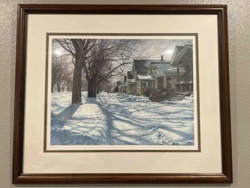
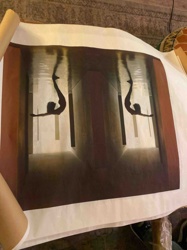
These notes were written by the person who submitted this item. Appraiser.AI has not verified them, and the AI's identification and estimate may rely on them.
AI Estimated Value
Not an official valuation
$1,500 - $2,800
AI estimate as of July 3, 2025 · verify with a professional before acting
AI-Generated · Verify before acting
Everything on this page is generated by AI for informational purposes only. AI can make mistakes — the AI may misidentify items or misattribute them (artist, maker, brand, designer, origin, era). This is not an official valuation and should not be used for insurance, sale, tax, estate, legal, or lending purposes — or any decision requiring a certified appraisal. It is not an authoritative claim about any person, brand, or rights holder — do not share or rely on it as a factual statement about a third party. Always consult qualified professionals before making financial decisions.
This analysis also relies on unverified notes provided by the user, which may be incomplete or inaccurate and could affect the result.
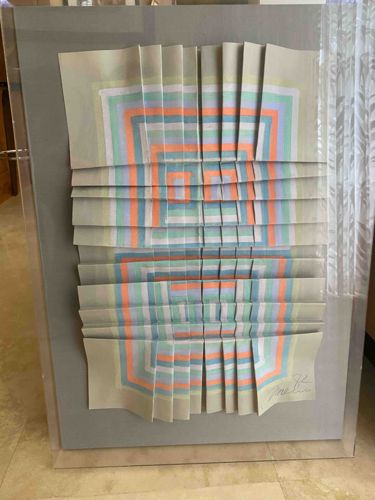
This item is a framed, three-dimensional mixed-media artwork, likely a serigraph or print on paper that has been manipulated into a relief sculpture. The piece features a repeating geometric pattern of concentric squares or rectanges, rendered in soft pastel hues including light blue, mint green, pale orange, and off-white, set against a muted grey background. The paper itself has been meticulously folded and pleated horizontally, creating a wavelike, sculptural effect that gives depth and movement to the flat graphic design. This folding technique accentuates the optical illusion of the concentric patterns, making them appear to recede and project. The artwork is housed within a clear acrylic or Plexiglas box frame, which protects the delicate paper folds and enhances its contemporary aesthetic. The overall condition is described as 'excellent,' with no visible wear, damage, or repairs, suggesting careful preservation. A discernible signature, possibly 'Jose Luis' or similar script, is located in the lower right corner of the print, indicating the artist. The precise age is unknown, but the geometric abstract style, use of pastel colors, and acrylic framing suggest a mid to late 20th-century origin, possibly aligning with Op Art or Kinetic Art movements that explored visual perception and dimensionality. The craftsmanship is evident in the precise folding and the clean presentation within the frame, reflecting a high-quality execution of the artistic concept.
AI Appraisal Report
Based on my examination of the provided description and visual cues, this Kinetic Geometric Paper Relief Sculpture presents as an exceptional example of its kind. The 'excellent' condition, with no visible wear or damage, significantly enhances its market appeal, suggesting meticulous care. The distinct kinetic and Op Art characteristics, combined with the subtle pastel palette, align with mid to late 20th-century artistic trends.
Market comparables for similar geometric paper reliefs by recognized artists in the Op and Kinetic Art movements typically range from $1,500 to $4,000, depending on artist prominence, scale, and rarity. The identifiable signature, possibly 'Jose Luis' or similar, is a crucial factor; if it can be definitively attributed to a listed artist, the value would lean towards the higher end of the range. The craftsmanship in the precise folding and presentation within the acrylic box frame speaks to high quality and reinforces its desirability among collectors of geometric abstraction.
Demand for well-preserved, visually engaging kinetic art remains steady among private collectors and institutions. Rarity is influenced by the artist's output and market presence.
It is imperative to note the limitations of image-based appraisal for authenticity. While the artwork appears consistent with its description, definitive authentication would require an in-person examination to verify the signature's authenticity, confirm the media (serigraph vs. other print forms), assess the paper's integrity and age, and inspect the framing for any hidden defects. Provenance documentation, such as exhibition history or past sales records, would also be vital for full authentication and value confirmation, especially if attributing to a specific artist. Without these, the appraisal remains provisional.