AI Appraisal Estimate

AI-generated estimates · not official valuations

From the user

What was submitted

Photo and notes provided by the user — not generated by AI

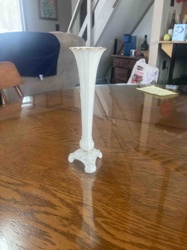
Submitted item photo
Submitted photo · May 27, 2026

User's notes

No additional notes provided.

AI analysis below

AI appraisal

AI analysis & estimate

AI-Generated · Verify before acting

Everything below is generated by AI for informational purposes only. AI can make mistakes — the AI may misidentify items or misattribute them (artist, maker, brand, designer, origin, era). This is not an official valuation and should not be used for insurance, sale, tax, estate, legal, or lending purposes — or any decision requiring a certified appraisal. It is not an authoritative claim about any person, brand, or rights holder — do not share or rely on it as a factual statement about a third party. Always consult qualified professionals before making financial decisions.

Read the full disclaimer

AI Identification

·Not independently authenticated·Verify before acting

Blue and White Porcelain Landscape Vase

Decorative Arts - Ceramics

AI Estimated Value

·Not an official valuation·Verify before acting

$400 - $800

As of May 27, 2026

AI Item Analysis

·AI can make mistakes·Verify before acting
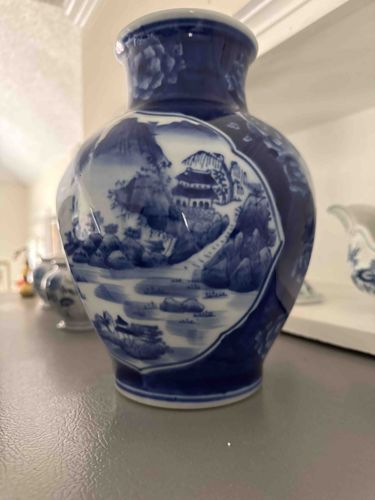
This is a globular-bodied porcelain vase featuring a short, flared neck and a powder-blue ground. The primary decorative elements are contained within a lobed cartouche or medallion, which displays a classic Chinese-style shan shui landscape. The scene depicts a tiered pagoda or pavilion nestled among jagged mountain peaks, overlooking a tranquil body of water with stylized horizontal ripples and small rocky outcrops. The painting is executed in underglaze cobalt blue with varying tonalities to suggest depth and shadow. The exterior of the vase, outside the white-ground medallions, is covered in a deep, mottled blue glaze that appears to be a 'powder blue' or 'blown' blue technique, further decorated with faint floral motifs or 'prunus' patterns. The construction shows a smooth, vitrified surface characteristic of fine porcelain. Regarding condition, the glaze appears glossy with some minor surface reflections, and there are no immediately visible cracks, chips, or major repairs from this angle. The style is reminiscent of Qing dynasty porcelain, particularly the Kangxi period, though without a view of the base (mark) or foot rim, it is likely a high-quality 20th-century decorative piece or reproduction in that classic style. The craftsmanship is evident in the precise linework of the landscape and the rich saturation of the cobalt pigments.
AI Appraisal Report

·AI can make mistakes·Verify before acting
Based on my visual examination of this porcelain vase, it presents as a handsomely executed decorative piece in the manner of the Kangxi period (1662–1722). The vase features a classic globular form with a 'powder blue' (soufflé) ground, interspersed with reserved lobed cartouches containing underglaze blue shanshui (mountain-water) landscapes. The cobalt tones in the painted panels show good variation, suggesting depth in the mountainous terrain and pagoda structures. However, there are indicators suggesting this is likely a later production, potentially late 19th-century or, more probable, mid-to-late 20th-century vintage (Republic period or later). The precision of the reserve outlines is somewhat uniform, and the glaze vitrification appears quite glassy. Without viewing the foot rim or base mark, I cannot confirm an earlier attribution. A period Kangxi piece of this form and decoration would command prices in the mid-thousands to low five figures. As it stands, I am treating this as a high-quality decorative reproduction. Condition appears excellent from the visual evidence, with no obvious hairline cracks, chips, or restoration, which supports the valuation. The market for Chinese-style blue and white porcelain remains robust for decorative purposes, though collector demand is strictly reserved for verifiable antique examples. To definitively authenticate this as an 18th or 19th-century antique, I would need to physically inspect the paste of the foot rim, examine the glaze for age-related wear (scratching) under magnification, and verify any reign marks. Lacking that, the value reflects its merit as a fine interior design object.

Get your items appraised

Instant estimates of your treasures with AI-powered appraisals

Browse More Appraisals