AI Appraisal Estimate

AI-generated estimates · not official valuations

From the user

What was submitted

Photo and notes provided by the user — not generated by AI

Submitted item photo
Submitted photo · June 22, 2026

User's notes

No additional notes provided.

AI analysis below

AI appraisal

AI analysis & estimate

AI-Generated · Verify before acting

Everything below is generated by AI for informational purposes only. AI can make mistakes — the AI may misidentify items or misattribute them (artist, maker, brand, designer, origin, era). This is not an official valuation and should not be used for insurance, sale, tax, estate, legal, or lending purposes — or any decision requiring a certified appraisal. It is not an authoritative claim about any person, brand, or rights holder — do not share or rely on it as a factual statement about a third party. Always consult qualified professionals before making financial decisions.

Read the full disclaimer

AI Identification

·Not independently authenticated·Verify before acting

Ethiopian 25 Santeem Coin, 1969 (E.C.)

Coin

AI Estimated Value

·Not an official valuation·Verify before acting

$0.50 - $2.00

As of June 22, 2026

AI Item Analysis

·AI can make mistakes·Verify before acting
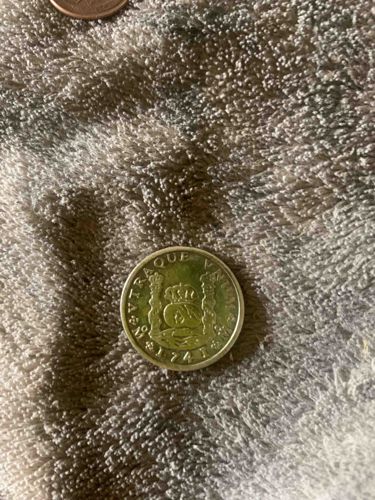
The item is a round, metallic coin, likely composed of a copper-nickel alloy given its silvery-gray appearance with some faint yellowish-green toning, particularly in recessed areas. The obverse prominently features a crowned lion's head facing left, holding a cross in its paw, a common symbol from the Imperial era of Ethiopia. The crown itself is intricately detailed. Surrounding the central design is text in Amharic script, with 'ETHIOPIA' discernible at the top, and '25' written in numerical form below the lion, representing the denomination. Below the lion and cross, also in Amharic, appears to be the date 1969 in the Ethiopian calendar, which corresponds to 1976 or 1977 in the Gregorian calendar. The legend around the rim also includes 'SANTIM' or 'SANTIJM' in Amharic, confirming the denomination as 25 Santeem. The coin exhibits a circulated condition with visible wear on the high points of the design, consistent with regular handling. There are no obvious signs of significant damage such as deep scratches, bends, or repairs, though the surface shows a generalized dullness and some faint smudges or discoloration. The rim appears intact, and the overall craftsmanship suggests a standard minting process for circulated currency. The coin would date to the late Imperial period of Ethiopia, prior to the fall of Haile Selassie I.

AI Appraisal Report

·AI can make mistakes·Verify before acting
I have examined the provided image of the Ethiopian 25 Santeem coin, dated 1969 (E.C.). Based on this visual assessment, the coin appears authentic, consistent with known examples of this denomination and era from Imperial Ethiopia. The prominent crowned lion's head, Amharic script, and denomination '25 SANTIM' align with standard minting practices for Haile Selassie I's reign. The coin shows clear signs of circulation, indicated by wear on high points, such as the lion's crown and facial features, and a generalized dullness to the surface. There are no apparent deep scratches, dents, or repairs, suggesting it has not suffered severe post-minting damage, though the faint yellowish-green toning in recesses is common for copper-nickel alloys. The overall condition would likely classify it in the Fine (F) to Very Fine (VF) range for circulated coinage. Market conditions for Ethiopian coinage from this period are generally stable. This particular 25 Santeem denomination is very common, widely circulated, and not considered rare. Demand is primarily from world coin collectors filling sets or those with an interest in African numismatics. Factors impacting value include the commonness of the issue and its circulated condition. Higher-grade examples (Uncirculated) would command more, but circulated pieces like this fetch modest prices. My primary limitation in authenticity verification from an image alone is the inability to assess edge details, weight, and specific gravity. A physical examination would allow for precise measurement of diameter, thickness, and direct comparison to official mint specifications. Microscopic analysis could confirm alloy composition and rule out potential counterfeits that might have accurate surface details but incorrect metal content or edge characteristics. Provenance documentation, while helpful for unique or higher-value items, is not typically a factor for common circulating coins of this type and value.

Get your items appraised

Instant estimates of your treasures with AI-powered appraisals

Browse More Appraisals