AI estimate as of August 15, 2025 · verify with a professional before acting
AI-Generated · Verify before acting
Everything on this page is generated by AI for informational purposes only. AI can make mistakes — the AI may misidentify items or misattribute them (artist, maker, brand, designer, origin, era). This is not an official valuation and should not be used for insurance, sale, tax, estate, legal, or lending purposes — or any decision requiring a certified appraisal. It is not an authoritative claim about any person, brand, or rights holder — do not share or rely on it as a factual statement about a third party. Always consult qualified professionals before making financial decisions.
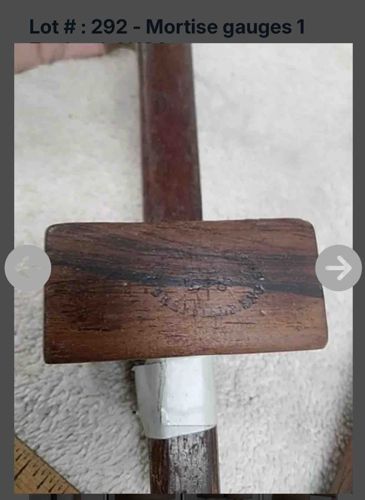
This appears to be an antique or vintage mortise gauge, a hand tool used in woodworking for marking mortises and tenons. The tool predominantly features a dark, rich brown hardwood, likely rosewood or a similar dense, exotic timber, known for its durability and attractive grain. The main body consists of a rectangular head or stock, measuring approximately 4-6 inches in width, with rounded corners. Visible on the face of the head is a worn, partially legible impressed maker's mark or stamp, indicating its origin. Extending from the head is a round shaft or beam, also made of the same dark wood, which would typically hold the marking pins (though not visible in this image) and be adjustable through the head to set the desired mortise width. The shaft is currently wrapped with a piece of light-colored tape or paper, partially obscuring the joint where it passes through the head, possibly indicating a repair or a temporary securing mechanism. The wood shows signs of age and use, including a prominent patina, minor surface scratches, and possibly some general wear consistent with its utilitarian purpose. The depth of color and grain variations within the wood suggest good quality material. The overall construction appears solid and well-crafted, indicative of a tool made for longevity and practical use by a craftsman. Without further information, the exact age is difficult to pinpoint, but its design and material suggest it could be from the late 19th to early 20th century.
AI Appraisal Report
Upon visual examination of the provided images, this item is identified as a vintage, possibly antique, mortise gauge. The tool is crafted from a high-quality, dense hardwood, likely rosewood or a similar exotic timber, judging by the deep color and fine grain. The stock and beam exhibit a rich patina and signs of honest wear, such as minor scratches, which are consistent with its age and utilitarian function. Its construction appears to be of a high standard, typical of late 19th or early 20th-century toolmaking. The maker's mark, though partially illegible, is a critical factor; identifiable marks from reputable makers like Stanley, Marples, or Mathieson significantly increase value. Currently, the market for vintage hand tools is steady, with strong interest from both collectors and user-craftsmen. Comparable rosewood gauges in good, usable condition typically fetch prices in the range provided. However, two factors temper this item's value. First, the piece of tape or paper wrapped around the beam's entry point into the stock strongly suggests a repair or a crack in the wood, which significantly detracts from its value and structural integrity. Second, the marking pins are not visible and may be missing or damaged. For a definitive authentication and valuation, a physical inspection is required. This would allow for an attempt to identify the maker's mark, assess the nature and extent of the suspected damage beneath the tape, and confirm the presence and condition of the marking pins. Without this hands-on assessment, the authenticity and condition can only be preliminarily judged.