AI Appraisal Estimate

AI-generated estimates · not official valuations

From the user

What was submitted

Photo and notes provided by the user — not generated by AI

Submitted item photo
Submitted photo · June 10, 2026

User's notes

No additional notes provided.

AI analysis below

AI appraisal

AI analysis & estimate

AI-Generated · Verify before acting

Everything below is generated by AI for informational purposes only. AI can make mistakes — the AI may misidentify items or misattribute them (artist, maker, brand, designer, origin, era). This is not an official valuation and should not be used for insurance, sale, tax, estate, legal, or lending purposes — or any decision requiring a certified appraisal. It is not an authoritative claim about any person, brand, or rights holder — do not share or rely on it as a factual statement about a third party. Always consult qualified professionals before making financial decisions.

Read the full disclaimer

AI Identification

·Not independently authenticated·Verify before acting

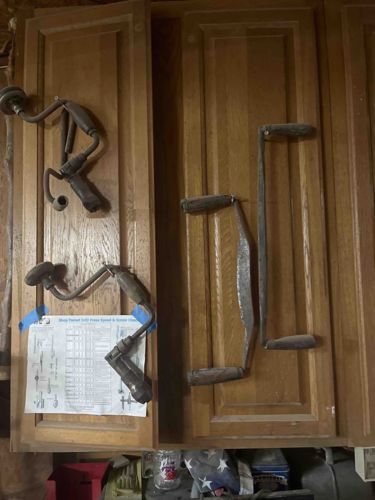
Collection of Vintage Hand Augers and Woodworking Tools

Antique Hand Tools / Woodworking Equipment

AI Estimated Value

·Not an official valuation·Verify before acting

$125 - $225

As of June 10, 2026

AI Item Analysis

·AI can make mistakes·Verify before acting
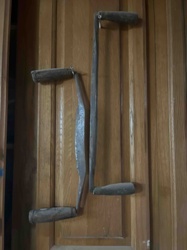
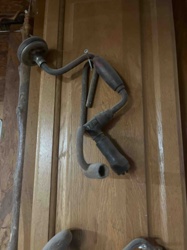
This collection features several early 20th-century woodworking tools, specifically three hand-cranked bit braces and one tall wooden-framed tool which may be a specialized drill or clamp. The tools are constructed primarily of forged steel frames with turned wooden handles and pommels (heads). The bit braces exhibit a classic U-shaped crank design, featuring a top circular head that is pressed against the chest or hand, a central wooden handle for rotating the shaft, and a chuck at the base for securing square-shank auger bits. The metal surfaces across all items show a heavy, dark brown patina and surface oxidation, indicative of significant age and storage in a non-climate-controlled environment. The wooden components appear to be made from a dense hardwood like beech or oak, showing significant darkening from handled oils, grime, and environmental exposure. One of the braces shows a more complex ratchet mechanism near the chuck, suggesting it is a later model (circa 1890-1930). There are no immediately visible maker's marks, though such stamps (like 'Stanley' or 'Millers Falls') are typically found on the sweep of the metal crank or the chuck collar. The tools show signs of heavy use, including surface scoring on the wood and extensive rust, but the structural integrity of the metal frames appear intact without major fractures. These represent essential late-industrial hand tools used before the mass adoption of electric power tools.
AI Appraisal Report

·AI can make mistakes·Verify before acting
I have virtually examined this collection of four early 20th-century woodworking tools. The group includes three forged steel bit braces and a wooden-framed hand auger. My visual inspection confirms a deep, authentic ferric oxide patina and significant age-related wear on the hardwood grips, consistent with period-correct tools from the 1890–1930 era. The presence of a ratcheting mechanism on one brace suggests a more advanced industrial design, while the others remain classic 'sweep' patterns. The wood components show no signs of modern synthetic finishes, supporting their antique status. The market for common antique hand tools is currently saturated. While structurally sound, the heavy oxidation significantly reduces the value to collectors who prefer 'user' tools or high-conditioned museum pieces. Comparables for standard unsigned American braces (Stanley or Millers Falls lower-tier lines) typically fetch $20–$45 each in this condition. The upright wooden-framed auger adds unique character, elevating the set's decorative appeal for the 'rustic industrial' interior design market. Limitations: My assessment is based solely on digital images. A physical inspection is required to check for hairline fractures in the forged steel and to verify if the chuck mechanisms are seized or functional. I cannot definitively identify manufacturers without cleaning the 'sweep' and chuck collars to reveal stamped marks. To fully authenticate, I would need to inspect for 'sweat' marks from original assembly and verify wood species via grain density. No further scientific testing is recommended given the items' market value, but provenance regarding specific regional craftsmanship could marginally increase the estimation.

Get your items appraised

Instant estimates of your treasures with AI-powered appraisals

Browse More Appraisals