AI estimate as of December 15, 2025 · verify with a professional before acting
AI-Generated · Verify before acting
Everything on this page is generated by AI for informational purposes only. AI can make mistakes — the AI may misidentify items or misattribute them (artist, maker, brand, designer, origin, era). This is not an official valuation and should not be used for insurance, sale, tax, estate, legal, or lending purposes — or any decision requiring a certified appraisal. It is not an authoritative claim about any person, brand, or rights holder — do not share or rely on it as a factual statement about a third party. Always consult qualified professionals before making financial decisions.
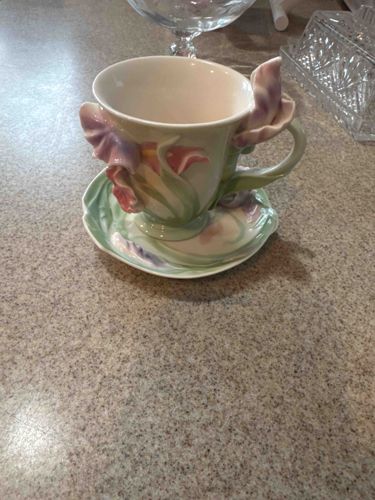
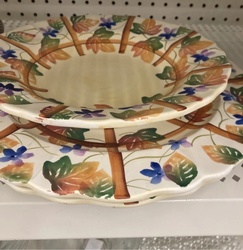
This is a ceramic teacup and saucer set, prominently featuring relief decorations of floral and botanical motifs. The teacup is off-white or very light cream on the interior, with its exterior and the matching saucer adorned with sculpted elements depicting irises or similar flowers in shades of lavender, light purple, and reddish-pink, complemented by green leaves and stems. The overall color palette is soft and pastel. The cup has a traditional handle, also in a light green hue, seamlessly integrated into the floral design. The flowers are not merely painted but are three-dimensional, standing proud from the surface of both the cup and the saucer, creating a tactile and visually rich experience. The saucer echoes the cup's design with flowing green leaves and smaller floral accents. The construction appears to be porcelain or fine ceramic, indicative of decorative tableware rather than everyday use due to its delicate embellishments. There are no visible chips, cracks, or repairs from the provided image, suggesting good to excellent condition. The surface has a glazed finish, giving it a subtle sheen. Without maker's marks, it's challenging to pinpoint exact manufacturing details or age, but the style suggests a contemporary decorative piece, possibly from the late 20th or early 21st century, designed to evoke a sense of nature and whimsical charm. The craftsmanship is notable for the intricate sculpted details and the harmonious color application.
AI Appraisal Report
Upon visual examination of the provided image, I assess this Relief Decorated Floral Teacup and Saucer Set to be in excellent condition. There are no observable chips, cracks, or repairs, and the glazed finish appears intact and lustrous. The relief decoration is well-defined and the colors vibrant, suggesting minimal handling or use. Authenticity, in terms of its claimed decorative nature and composition as porcelain/fine ceramic, seems plausible from the visual cues; however, definitive authentication of material and origin would necessitate an in-person physical inspection, including tactile assessment and potentially specific gravity testing or spectroscopic analysis. Without a clear maker's mark, pinpointing the manufacturer or precise age is impossible solely from images.
Market conditions for decorative teacup sets with relief floral motifs generally show a steady, though not exceptionally high, demand. Comparable items, often from known brands like Lefton, Andrea by Sadek, or unmarked decorative porcelain, typically retail in the $30-$80 range for a single cup and saucer, depending on the intricacy and quality. The three-dimensional floral elements and harmonious pastel palette of this particular set enhance its aesthetic appeal, placing it towards the higher end of that range for unmarked pieces. Demand is primarily from collectors of decorative tableware, gift-givers, or individuals seeking unique accent pieces. Rarity is difficult to ascertain without more information, but similar contemporary decorative ceramic floral sets are not uncommon. Factors impacting value include the excellent condition and attractive, detailed craftsmanship. The lack of provenance or a recognized maker's mark limits its value, as does its likely contemporary decorative origin rather than antique status. For full authentication and to potentially uncover a hidden provenance that could significantly increase value, I would require an in-hand examination to scrutinize for impressed or painted marks, assess the overall weight and feel, and potentially conduct blacklight testing for repairs or age-related anomalies.