Rough Red Garnet Specimen
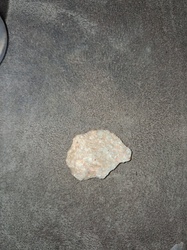
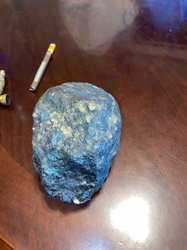
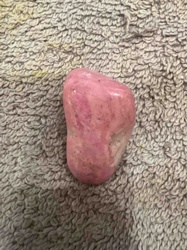
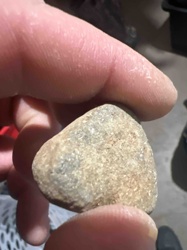
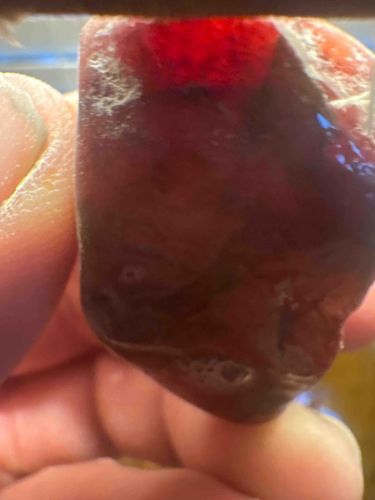
This specimen is a rough, un-cut gemstone appearing to be a variety of garnet, possibly pyrope or almandine, given its deep reddish-maroon hue. The item is shown being held between two fingers, suggesting a size of approximately 15 to 25 millimeters. Physically, the stone exhibits a waxy to vitreous luster on its somewhat smoothed exterior surfaces, though it retains an irregular, non-symmetrical shape typical of a raw water-worn pebble or rough mine specimen. The color is highly saturated, showing a deep crimson red when backlit, transitioning to a dark, nearly opaque brownish-red in thicker sections. Notable features include internal inclusions and some surface pitting or 'flea bites' visible on the lower portion, which are common in natural raw stones. The condition appears to be untreated and natural, with no visible evidence of mechanical polishing, though some natural river-wear may have softened the original crystal edges. There are no maker's marks or stamps as this is a natural geological object. Such specimens are valued based on their clarity, weight in carats, and potential for faceting, as well as their characteristic dodecahedral crystal habit which is slightly obscured here by the specimen's rounded nature.
AI-Generated Appraisal Disclaimer
Estimated Value
$15 - $35
Basic Information
Category
Gems & Minerals
Appraised On
January 2, 2026
Estimated Value
$15 - $35
Item Description
This specimen is a rough, un-cut gemstone appearing to be a variety of garnet, possibly pyrope or almandine, given its deep reddish-maroon hue. The item is shown being held between two fingers, suggesting a size of approximately 15 to 25 millimeters. Physically, the stone exhibits a waxy to vitreous luster on its somewhat smoothed exterior surfaces, though it retains an irregular, non-symmetrical shape typical of a raw water-worn pebble or rough mine specimen. The color is highly saturated, showing a deep crimson red when backlit, transitioning to a dark, nearly opaque brownish-red in thicker sections. Notable features include internal inclusions and some surface pitting or 'flea bites' visible on the lower portion, which are common in natural raw stones. The condition appears to be untreated and natural, with no visible evidence of mechanical polishing, though some natural river-wear may have softened the original crystal edges. There are no maker's marks or stamps as this is a natural geological object. Such specimens are valued based on their clarity, weight in carats, and potential for faceting, as well as their characteristic dodecahedral crystal habit which is slightly obscured here by the specimen's rounded nature.
Related Tags
Get Your Items Appraised
Instant estimates of your treasures with AI-powered instant appraisals