AI estimate as of November 4, 2025 · verify with a professional before acting
AI-Generated · Verify before acting
Everything on this page is generated by AI for informational purposes only. AI can make mistakes — the AI may misidentify items or misattribute them (artist, maker, brand, designer, origin, era). This is not an official valuation and should not be used for insurance, sale, tax, estate, legal, or lending purposes — or any decision requiring a certified appraisal. It is not an authoritative claim about any person, brand, or rights holder — do not share or rely on it as a factual statement about a third party. Always consult qualified professionals before making financial decisions.
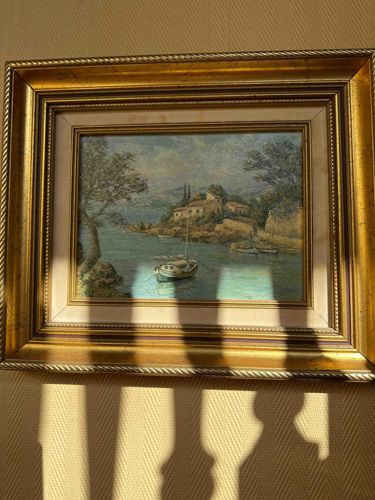
This item is a framed painting depicting a vibrant Mediterranean seascape scene. The artwork features a coastal village or settlement with white or light-colored buildings nestled among green trees and rocky outcroppings, overlooking a tranquil bay. The water exhibits shades of turquoise and light blue, indicating clear, shallow conditions, with a small sailboat anchored in the foreground and other boats visible further in the middle ground. The sky is a soft blue with hints of clouds. The painting appears to be executed in oil or acrylic on canvas or board, characterized by some visible brushstrokes, suggesting a textured surface. The overall color palette is bright and inviting, typical of Mediterranean landscapes. The painting is housed within a substantial, ornate gilded frame. The frame features a classic design with a prominent outer band adorned with a rope or cable-like pattern, followed by a smoother, slightly beveled inner section, and an innermost thin gold liner that directly abuts a cream-colored or off-white fabric mat (possibly linen or velvet). The gilding shows some areas of wear or patina, consistent with age, particularly on the raised elements. The entire ensemble, including the frame and mat, suggests a mid-20th century to late 20th century aesthetic. No specific artist's signature or maker's marks are discernible from the provided image. The visible condition issues are minor, primarily the natural aging of the frame's finish, and the painting itself appears to be in good condition, though detailed inspection for craquelure or discoloration is not possible from this image. The presence of strong sunlight casting striped shadows across the lower portion of the image suggests it is displayed indoors, perhaps near a window.
AI Appraisal Report
I have examined the provided image of this Framed Mediterranean Seascape Painting. The artwork depicts a pleasant coastal scene with white buildings, green trees, and clear blue water, executed in what appears to be oil or acrylic with visible brushstrokes, suggesting a textured surface. The bright palette is characteristic of Mediterranean landscapes. The painting is housed within a substantial, ornate gilded frame with a classic design and a fabric mat, consistent with a mid to late 20th-century aesthetic.
Based on visual inspection, the painting itself appears to be in good condition, showing no obvious signs of significant damage like tears, punctures, or extensive discoloration, although a detailed inspection for craquelure requires physical examination. The ornate gilded frame shows expected wear and patina on its raised elements, which is consistent with its age and adds to its character rather than detracting significantly from its value.
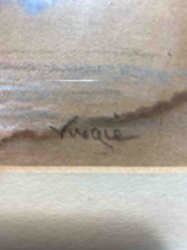
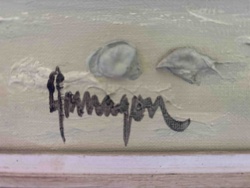
Authenticity of the artist, if any, cannot be determined from the image alone as no signature is visible. Without provenance or a discernible artist, this piece falls into the category of decorative art. Market conditions for framed decorative seascapes from the mid to late 20th century are generally stable but not exceptionally strong for unsigned works. Comparables typically include other well-executed, aesthetically pleasing landscapes or seascapes from this period by unknown or less prominent artists.
Demand for such pieces is driven primarily by their decorative appeal rather than artistic significance or rarity. The quality of execution, attractive subject matter, and the substantial, period-appropriate frame enhance its desirability. Factors that impact value positively include the appealing subject and the good overall presentation. The lack of an identifiable artist or provenance limits the upper end of its valuation.
Limitations in authenticity verification are significant without a physical examination. To definitively determine authorship, an in-person inspection would be essential to locate any hidden signatures or artist marks. Differentiating between oil and acrylic would also require physical examination. Furthermore, scientific testing (e.g., pigment analysis, UV light examination) and provenance documentation would be crucial for complete authentication and a more precise valuation, especially if an artist were to be identified.