AI Appraisal Estimate

AI-generated estimates · not official valuations

From the user

What was submitted

Photo and notes provided by the user — not generated by AI

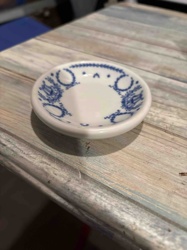
Submitted item photo
Submitted photo · June 14, 2026

User's notes

No additional notes provided.

AI analysis below

AI appraisal

AI analysis & estimate

AI-Generated · Verify before acting

Everything below is generated by AI for informational purposes only. AI can make mistakes — the AI may misidentify items or misattribute them (artist, maker, brand, designer, origin, era). This is not an official valuation and should not be used for insurance, sale, tax, estate, legal, or lending purposes — or any decision requiring a certified appraisal. It is not an authoritative claim about any person, brand, or rights holder — do not share or rely on it as a factual statement about a third party. Always consult qualified professionals before making financial decisions.

Read the full disclaimer

AI Identification

·Not independently authenticated·Verify before acting

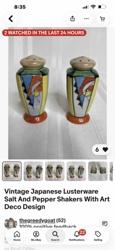
Vintage Japanese Lusterware Salt and Pepper Shakers

Vintage Kitchenware / Collectible Ceramics

AI Estimated Value

·Not an official valuation·Verify before acting

$10 - $25

As of June 14, 2026

AI Item Analysis

·AI can make mistakes·Verify before acting
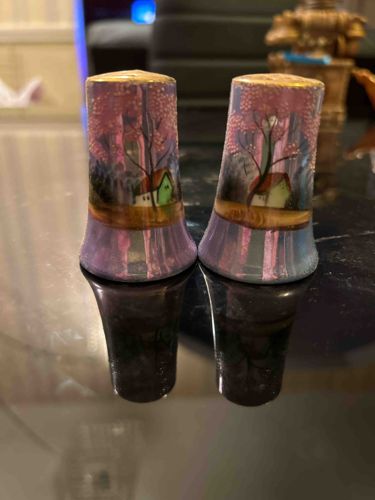
This pair of salt and pepper shakers represents classic Japanese lusterware, likely dating from the mid-20th century (c. 1940s-1950s), often associated with 'Occupied Japan' or the post-war export era. The shakers feature a cylindrical, slightly flared 'thimble' or 'cap' shape. Each piece is crafted from porcelain with an iridescent luster glaze finish that reflects light in shades of lavender, blue, and pink. The hand-painted decorative scene depicts a charming landscape with a small, green-gabled cottage nestled beside a deciduous tree with pink blossoms, set against a background of stylized vertical brushstrokes suggesting a forest or sunset sky. The top rims are accented with a hand-applied gold gilt band. The craftsmanship is typical of high-volume export porcelain from the Nagoya or Seto regions, characterized by quick, expressive brushwork and thin ceramic walls. Both pieces appear to be in good vintage condition, exhibiting no major chips or cracks, though there is minor loss to the gold gilding on the top rims and some slight surface wear consistent with age and use. While no maker's mark is visible in this orientation, these sets typically featured 'Made in Japan' stamps on the bottom cork-seal area. The iridescent finish is well-preserved, maintaining its characteristic pearlescent sheen without significant fading or crazing.
AI Appraisal Report

·AI can make mistakes·Verify before acting
Based on my visual examination of these salt and pepper shakers, I identify them as authentic Japanese lusterware, typical of export ceramics produced during the mid-20th century, specifically the post-war era (late 1940s to 1950s). The specific 'thimble' form and hand-painted landscape motif featuring a cottage against an iridescent lavender-blue glaze are hallmarks of this period, commonly associated with the Nagoya region production. The iridescence remains strong, displaying the characteristic pearlescent sheen that makes this style collectible. Condition is the primary value driver for these relatively common items. I note that the ceramic bodies appear intact with no visible structural cracks or major chips. However, as noted in the description, there is visible wear to the hand-applied gold gilding on the rims, which is standard for utilitarian kitchenware of this age. The artwork remains vibrant, though the execution shows the hurried brushwork typical of mass-produced export wares rather than fine art pottery. The market for mid-century Japanese lusterware is currently soft, flooded with similar items. While collectors of 'Occupied Japan' items (if marked as such) drive prices slightly higher, unmarked sets or those simply stamped 'Japan' trade at modest entry-level prices. These are charming decorative pieces rather than high-value investments. To fully confirm attribution, I would need to physically inspect the base for a red or black ink stamp (e.g., 'Made in Occupied Japan' or a specific kiln mark like Noritake or Takito, though unlikely for this grade). Without a rare maker's mark or the specific 'Occupied' designation, the value remains purely decorative.

Get your items appraised

Instant estimates of your treasures with AI-powered appraisals

Browse More Appraisals