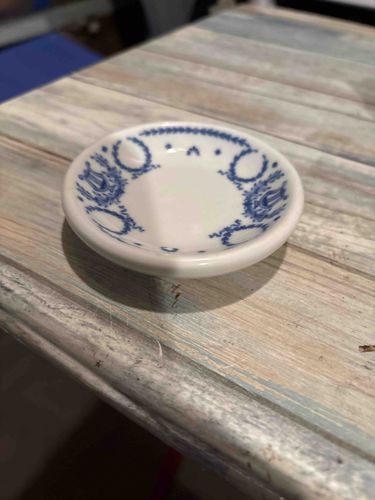
Vintage Blue and White Ceramic Butter Pat
This item is a small, circular ceramic dish, commonly identified as a butter pat or individual salt cellar. It features a glazed white ceramic body decorated with a classic cobalt blue transferware pattern. The design consists of a Repeating neo-classical border featuring alternating lyres and oval laurel wreaths connected by delicate swags or festoons. These motifs are characteristic of late 19th to early 20th-century aesthetic movements, drawing inspiration from Greco-Roman iconography. The dish is small in scale, likely measuring between 2.5 to 3 inches in diameter, and exhibits a shallow, slightly concave well with a rounded rim. The transfer application shows crisp detailing in the blue pigment against the creamy white ground, which indicates a degree of manufacturing quality. Condition-wise, the glaze appears intact and remarkably glossy with no evidence of major chips, cracks, or heavy crazing visible on the upper surface. The underside is not visible, making it impossible to confirm specific maker's marks or stamps, though the style is reminiscent of English or American ironstone manufacturers such as Wedgwood or Johnson Brothers. The simple form and durable material suggest it was part of a larger formal dinner service intended for daily or semi-formal use.

AI-Generated Appraisal Disclaimer
Estimated Value
$25.00 - $45.00
Basic Information
Category
Vintage Kitchenware & Collectible Ceramics
Appraised On
February 3, 2026
Estimated Value
$25.00 - $45.00
Item Description
This item is a small, circular ceramic dish, commonly identified as a butter pat or individual salt cellar. It features a glazed white ceramic body decorated with a classic cobalt blue transferware pattern. The design consists of a Repeating neo-classical border featuring alternating lyres and oval laurel wreaths connected by delicate swags or festoons. These motifs are characteristic of late 19th to early 20th-century aesthetic movements, drawing inspiration from Greco-Roman iconography. The dish is small in scale, likely measuring between 2.5 to 3 inches in diameter, and exhibits a shallow, slightly concave well with a rounded rim. The transfer application shows crisp detailing in the blue pigment against the creamy white ground, which indicates a degree of manufacturing quality. Condition-wise, the glaze appears intact and remarkably glossy with no evidence of major chips, cracks, or heavy crazing visible on the upper surface. The underside is not visible, making it impossible to confirm specific maker's marks or stamps, though the style is reminiscent of English or American ironstone manufacturers such as Wedgwood or Johnson Brothers. The simple form and durable material suggest it was part of a larger formal dinner service intended for daily or semi-formal use.
Get Your Items Appraised
Instant estimates of your treasures with AI-powered instant appraisals