AI Appraisal Estimate

AI-generated estimates · not official valuations

From the user

What was submitted

Photo and notes provided by the user — not generated by AI

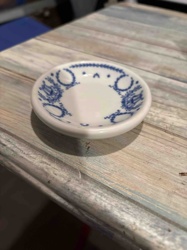
Submitted item photo
Submitted photo · June 3, 2026

User's notes

No additional notes provided.

AI analysis below

AI appraisal

AI analysis & estimate

AI-Generated · Verify before acting

Everything below is generated by AI for informational purposes only. AI can make mistakes — the AI may misidentify items or misattribute them (artist, maker, brand, designer, origin, era). This is not an official valuation and should not be used for insurance, sale, tax, estate, legal, or lending purposes — or any decision requiring a certified appraisal. It is not an authoritative claim about any person, brand, or rights holder — do not share or rely on it as a factual statement about a third party. Always consult qualified professionals before making financial decisions.

Read the full disclaimer

AI Identification

·Not independently authenticated·Verify before acting

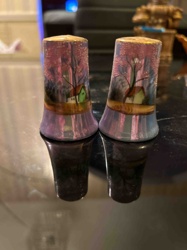
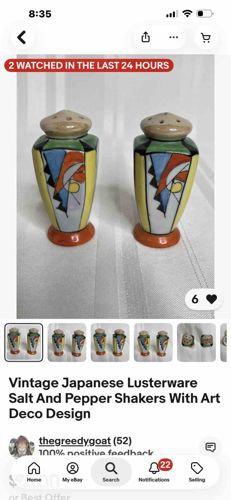
Vintage Japanese Lusterware Art Deco Geometric Salt and Pepper Shakers

Vintage Kitchenware & Collectible Ceramics

AI Estimated Value

·Not an official valuation·Verify before acting

$45.00 - $65.00

As of June 3, 2026

AI Item Analysis

·AI can make mistakes·Verify before acting
This is a pair of vintage Japanese lusterware salt and pepper shakers featuring a bold, hand-painted Art Deco geometric design. The shakers are constructed of ceramic with a distinctive luster glaze finish, characteristic of Japanese export ware from the 1920s to 1930s. Each shaker stands approximately 3 to 4 inches tall with a tapered rectangular body that flares toward the shoulders and set upon a rounded orange-red base. The decorative motif includes sharp angular lines, triangles, and circular segments in a palette of primary and secondary colors: yellow, blue, orange, and green, accented by black outlines. The tops are rounded, mushroom-like caps with multiple distribution holes finished in a metallic tan-gold luster. The condition appears fair to good for their age; there is visible wear to the hand-painted surfaces, particularly along the edges and the orange bases where the paint has thinned or flaked. No major chips or cracks are immediately evident from the primary photo, though typical production irregularities like glaze pops and slight paint overage are present. These items likely bear a 'Made in Japan' or 'Noritake' style backstamp on the underside, typical of the Showa-era export market. The craftsmanship reflects the era's fascination with geometric abstraction and mass-market porcelain production for the Western market.
AI Appraisal Report

·AI can make mistakes·Verify before acting
I have examined the digital images of this pair of Japanese lusterware salt and pepper shakers. The items exhibit the quintessential aesthetic of the 1920s-1930s Showa-era export market, characterized by thin-walled ceramic and a metallic iridescent glaze. The geometric, avant-garde patterning reflects the global influence of the Art Deco movement. Based on visual inspection, the items appear to be authentic vintage pieces; however, the lack of a visible backstamp (typically 'Hand Painted Made in Japan') prevents a definitive manufacturer attribution, such as to Noritake or any specific kiln. The condition is graded as 'Fair to Good.' I observed notable 'cold painted' wear, specifically on the orange-red bases where the pigment has oxidized or flaked due to handling. The tan-gold luster on the caps shows expected thinning. The market for Japanese lusterware is currently saturated with floral designs, making these rarer geometric specimens more desirable to Art Deco collectors. However, mass production during the era limits their scarcity. Values are driven by the preservation of the delicate luster glaze. Current market demand for kitchenalia remains stable, though buyers are increasingly selective about paint loss. My valuation reflects a mid-range estimate for high-interest patterns with moderate surface wear. Limitations: This appraisal is based solely on digital images. I cannot check for internal hairline cracks, professional restorations invisible to the naked eye, or verify the porousness of the ceramic. A full authentication would require a physical inspection to feel the weight and texture, a black-light test to detect hidden repairs, and verification of any underside markings/incised numbers to confirm the exact production period.

Get your items appraised

Instant estimates of your treasures with AI-powered appraisals

Browse More Appraisals