AI Appraisal Estimate

AI-generated estimates · not official valuations

From the user

What was submitted

Photo and notes provided by the user — not generated by AI

Submitted item photo
Submitted photo · June 12, 2026

User's notes

No additional notes provided.

AI analysis below

AI appraisal

AI analysis & estimate

AI-Generated · Verify before acting

Everything below is generated by AI for informational purposes only. AI can make mistakes — the AI may misidentify items or misattribute them (artist, maker, brand, designer, origin, era). This is not an official valuation and should not be used for insurance, sale, tax, estate, legal, or lending purposes — or any decision requiring a certified appraisal. It is not an authoritative claim about any person, brand, or rights holder — do not share or rely on it as a factual statement about a third party. Always consult qualified professionals before making financial decisions.

Read the full disclaimer

AI Identification

·Not independently authenticated·Verify before acting

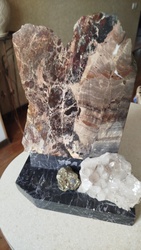
Mineral specimen consistent with a rutilated or hematoid quartz crystal

Mineral Specimens

AI Estimated Value

·Not an official valuation·Verify before acting

$10.00 – $25.00

As of June 12, 2026

AI Item Analysis

·AI can make mistakes·Verify before acting
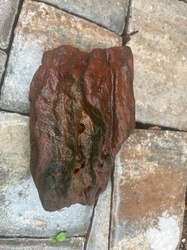
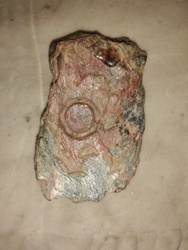
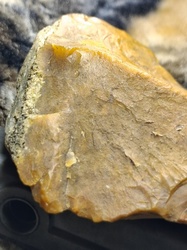
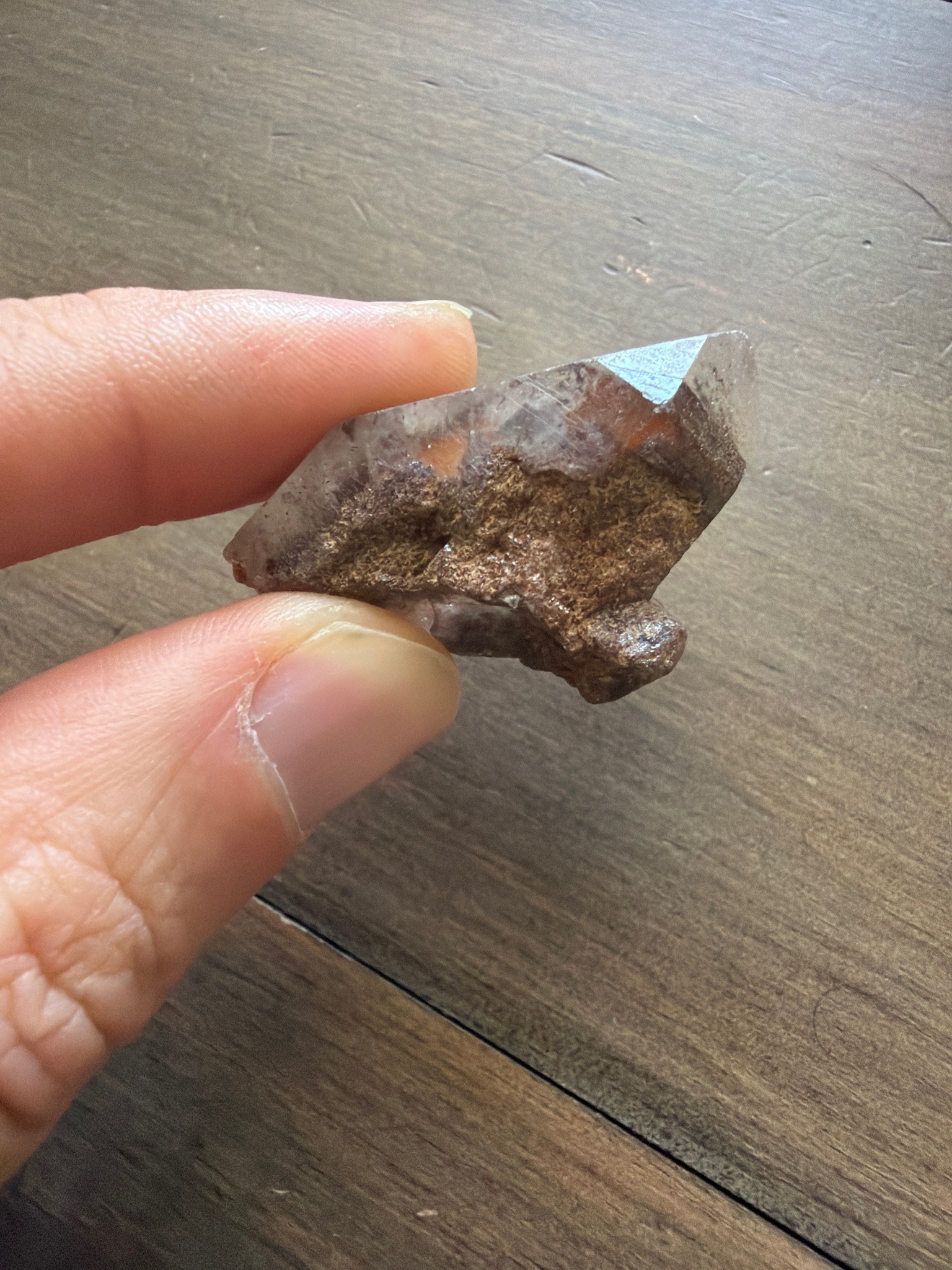
This item is a crystalline mineral specimen, appearing consistent with a species of quartz. The piece features a distinct, transparent to translucent hexagonal termination at one end, which exhibits smooth, reflective crystal faces. Within the body of the crystal and along its base, there are significant dark brown to reddish-brown mineral inclusions. These inclusions appear as fibrous or granular masses, which are stylistically consistent with minerals like rutile or hematite commonly found within geode fragments or individual quartz points. The specimen is small enough to be held between two fingers, suggesting a length of approximately one to one and a half inches. The overall structure includes a rough, unpolished matrix at the bottom, which transitions into the clearer crystal tip. There are visible internal fractures and 'veils' within the clearer portion, as well as minor abrasions or chips along the edges of the crystal faces, which is typical for raw mineral specimens. Because no expert geological testing (such as hardness or streak tests) can be performed via photography, this identification as quartz-based is a hypothesis based on typical growth habits. The exact chemical composition of the internal brown inclusions remains unverified without physical analysis.

AI Appraisal Report

·AI can make mistakes·Verify before acting
Based on my examination of the provided image, I have analyzed this specimen as a hypothesize quartz crystal featuring dark inclusions. The visible habits, such as the hexagonal termination and internal veils, are consistent with quartz, while the internal reddish-brown masses are stylistically consistent with rutile or hematite. However, I cannot verify the exact chemical composition or mineral species from a photograph; physical diagnostic tests like a Mohs hardness test or specific gravity analysis would be required to rule out high-quality glass or other mineral simulants. The value estimate is based on the assumption that this is a natural mineral specimen. Crystals of this size (approximately one to 1.5 inches) with some face abrasions and a rough matrix are common in the mineral market. The presence of inclusions generally adds interest, but the current condition shows minor chips that slightly temper the value. In the general market for mid-range mineral specimens, items with these characteristics typically sell in the provided range. If this item were to be revealed as a glass reproduction or a more common mineral through physical testing, the value would likely drop below $5.00. Conversely, if an in-person examination by a gemologist confirmed the inclusions as a rare or aesthetically superior form of rutilation, the value might reach the higher end of the spectrum. To confirm this hypothesis, I recommend a physical inspection by a mineralogist to verify the crystal's structure and the nature of the internal inclusions.

Get your items appraised

Instant estimates of your treasures with AI-powered appraisals

Browse More Appraisals