AI Appraisal Estimate

AI-generated estimates · not official valuations

From the user

What was submitted

Photo and notes provided by the user — not generated by AI

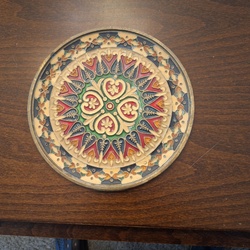
Submitted item photo
Submitted photo · May 25, 2026

User's notes

No additional notes provided.

AI analysis below

AI appraisal

AI analysis & estimate

AI-Generated · Verify before acting

Everything below is generated by AI for informational purposes only. AI can make mistakes — the AI may misidentify items or misattribute them (artist, maker, brand, designer, origin, era). This is not an official valuation and should not be used for insurance, sale, tax, estate, legal, or lending purposes — or any decision requiring a certified appraisal. It is not an authoritative claim about any person, brand, or rights holder — do not share or rely on it as a factual statement about a third party. Always consult qualified professionals before making financial decisions.

Read the full disclaimer

AI Identification

·Not independently authenticated·Verify before acting

Embossed Pewter Decorative Wall Plate - Pastoral Harvest Scene

Antique Metalware / Decorative Arts

AI Estimated Value

·Not an official valuation·Verify before acting

$150 - $250

As of May 25, 2026

AI Item Analysis

·AI can make mistakes·Verify before acting
This is a circular decorative wall plate crafted from a heavy metal alloy, likely pewter, given its characteristic dull grey luster and matte finish. The plate features a deep repoussé or cast center medallion depicting a highly detailed pastoral scene. The central motif captures a group of children and a woman in a rural, agricultural setting; specific figures include a standing woman, a girl with a basket, and younger children engaged with nature, accompanied by a small goat. The background shows textured foliage and wheat stalks. The wide outer rim is embellished with a repeating ornamental pattern composed of stylized floral motifs and fleur-de-lis elements, which frame the central narrative. The construction shows high-relief craftsmanship, providing a three-dimensional quality to the figures. The metal displays a natural aged patina with slight oxidation in recessed areas, which enhances the visual depth of the scene. No visible manufacturer marks are seen on the front, but the style is indicative of continental European (specifically German or Austrian) metalware from the late 19th to early 20th century. The condition appears sound with no significant warping, though minor surface scratches and localized tarnish are present consistent with age and typical display use.
AI Appraisal Report

·AI can make mistakes·Verify before acting
I have examined the submitted digital images of the Embossed Pewter Pastoral Wall Plate. The item displays high-relief craftsmanship consistent with German or Austrian Zinn (pewter) manufacturing from the late 19th-century Historicism or early 20th-century Art Nouveau periods. The repoussé central medallion shows an idealized rural scene with respectable anatomical proportions and atmospheric depth. The oxidation pattern in the recessed areas suggests a genuine aged patina rather than a chemical spray-on finish. Market conditions for domestic pewter have stabilized at a lower tier compared to precious metals. Comparables for unsigned 19th-century European pewter plates frequently appear in the $100 to $300 range. The value is driven by the complexity of the pastoral narrative and the dimensional quality of the casting, which is superior to mid-2010s reproductions. However, the lack of a visible touchmark (maker's mark) limits its value to decorative rather than fine-art investment status. Determination of authenticity from images alone is preliminary. To provide a definitive certification, I would need a physical inspection to verify the metal's weight and 'ring' when struck, as modern cast aluminum or pot-metal alloys can visually mimic pewter. I would also examine the reverse side for hallmarks or 'Gesetzlich Geschützt' markings. Scientific testing using X-ray fluorescence (XRF) could determine the exact lead/tin ratio, which helps date the piece. Provenance documentation regarding its origin in Europe would further solidify its historical value.

Get your items appraised

Instant estimates of your treasures with AI-powered appraisals

Browse More Appraisals