AI Appraisal Estimate

AI-generated estimates · not official valuations

From the user

What was submitted

Photo and notes provided by the user — not generated by AI

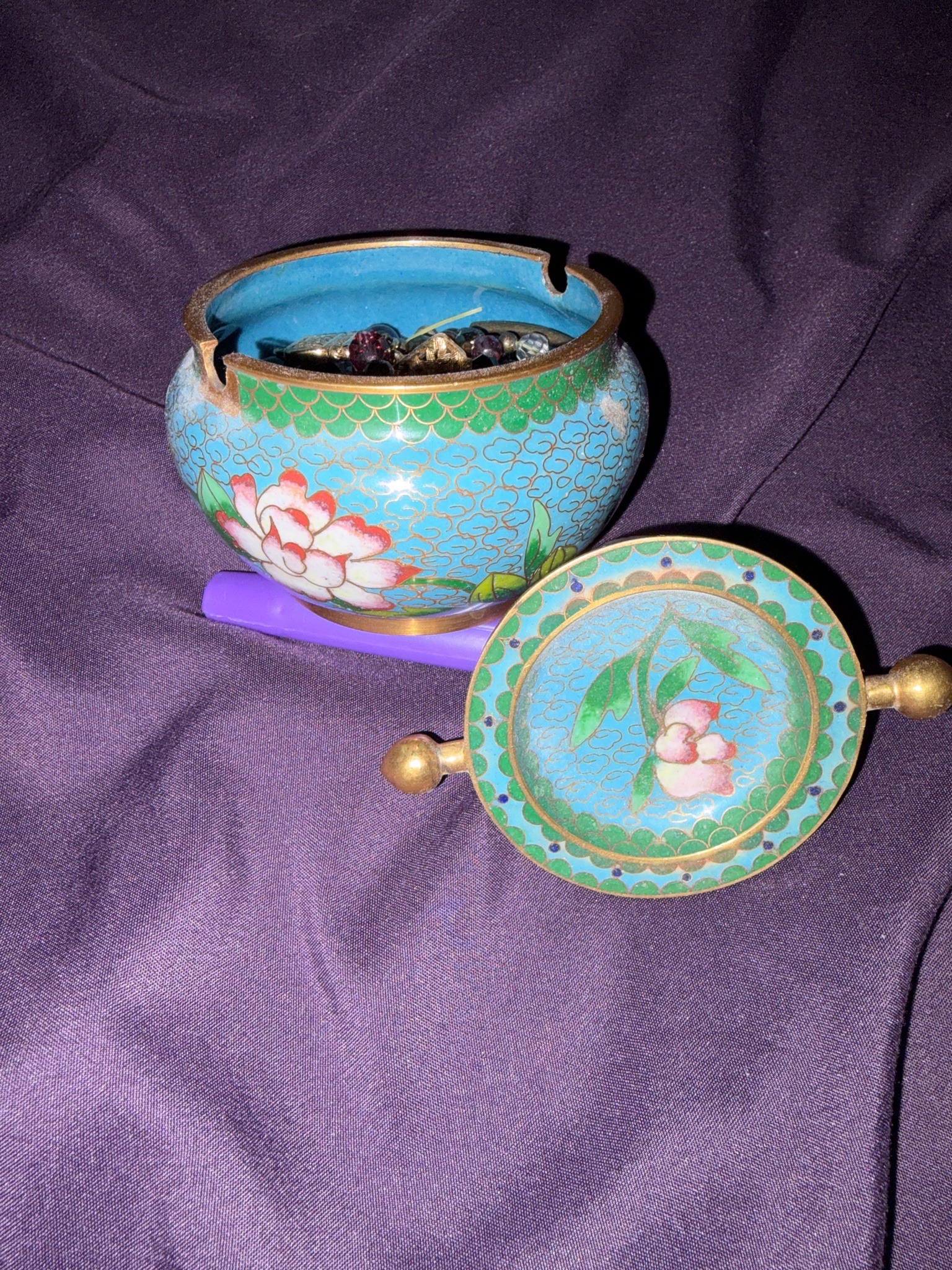
Submitted item photo
Submitted photo · July 21, 2026

User's notes

No additional notes provided.

AI analysis below

AI appraisal

AI analysis & estimate

AI-Generated · Verify before acting

Everything below is generated by AI for informational purposes only. AI can make mistakes — the AI may misidentify items or misattribute them (artist, maker, brand, designer, origin, era). This is not an official valuation and should not be used for insurance, sale, tax, estate, legal, or lending purposes — or any decision requiring a certified appraisal. It is not an authoritative claim about any person, brand, or rights holder — do not share or rely on it as a factual statement about a third party. Always consult qualified professionals before making financial decisions.

Read the full disclaimer

AI Identification

·Not independently authenticated·Verify before acting

Chinese cloisonné-style enameled metal covered jar

Decorative Arts

AI Estimated Value

·Not an official valuation·Verify before acting

$40–$80

As of July 21, 2026

AI Item Analysis

·AI can make mistakes·Verify before acting
This object consists of a globular jar with a matching lid, appearing to be crafted from metal with polychrome enamel decoration. The exterior is decorated in a manner consistent with the cloisonné technique, featuring fine brass-toned wires that form intricate patterns on a sky-blue background. The main motif includes pink and white lotus flowers and green leaves. The jar’s rim features small notches, which can be found in examples of mid-to-late 20th-century decorative ashtrays or vanity jars. The interior and base of the lid are finished in a solid light blue enamel. The lid is characterized by two brass-toned sphere finials or handles. The object shows several signs of age and handled use, including visible pitting in the enamel, surface abrasions, and areas where the enamel has flaked away to reveal the metal underneath. There is also a noticeable dulling of the metal rims and finials. No maker’s marks or signatures are visible in the image to provide a firm origin; the identification as Chinese cloisonné-style is based on stylistic characteristics common in export wares of the late 19th or 20th century. This item should be inspected in person by an expert to determine its exact age and material composition.
AI Appraisal Report

·AI can make mistakes·Verify before acting
Based on the provided image, I have examined this globular covered jar featuring polychrome enamel. Visually, the object appears to be a Chinese export-style cloisonné vessel, likely dating to the mid-to-late 20th century. I can observe a sky-blue ground with lotus motifs and brass-toned wirework. However, from a photograph alone, I cannot verify the exact metal composition or whether the enamel is kiln-fired or a cold-painted substitute. The presence of notches on the rim suggests it may have been designed as a decorative ashtray or vanity piece rather than a traditional ceremonial jar. The visible condition issues—including enamel pitting, flaking, and surface abrasions—significantly impact the value. Market demand for 20th-century decorative cloisonné is generally stable but moderate, with collectors prioritizing items in pristine condition. My estimate of $40–$80 is based on the assumption that this is a mass-produced export piece. To confirm this attribution, a physical inspection would be required to examine the weight, the consistency of the solder under the enamel, and to search for any faint maker's marks on the underside. If this item were determined to be an early 19th-century or older piece with significant provenance, the value could increase substantially; conversely, if the materials are found to be modern synthetic resins instead of true enamel, the value would likely fall below $20. Without a physical examination and scientific testing of the metal and glass content, this appraisal remains a hypothesis based on visual characteristics typical of mid-century decorative wares.

Get your items appraised

Instant estimates of your treasures with AI-powered appraisals

Browse More Appraisals