AI Appraisal Estimate

AI-generated estimates · not official valuations

From the user

What was submitted

Photo and notes provided by the user — not generated by AI

Submitted item photo
Submitted photo · June 20, 2026

User's notes

No additional notes provided.

AI analysis below

AI appraisal

AI analysis & estimate

AI-Generated · Verify before acting

Everything below is generated by AI for informational purposes only. AI can make mistakes — the AI may misidentify items or misattribute them (artist, maker, brand, designer, origin, era). This is not an official valuation and should not be used for insurance, sale, tax, estate, legal, or lending purposes — or any decision requiring a certified appraisal. It is not an authoritative claim about any person, brand, or rights holder — do not share or rely on it as a factual statement about a third party. Always consult qualified professionals before making financial decisions.

Read the full disclaimer

AI Identification

·Not independently authenticated·Verify before acting

Glazed Terracotta Cooking Dish or Baking Stone

Kitchenware & Earthenware

AI Estimated Value

·Not an official valuation·Verify before acting

$45 - $75

As of June 20, 2026

AI Item Analysis

·AI can make mistakes·Verify before acting
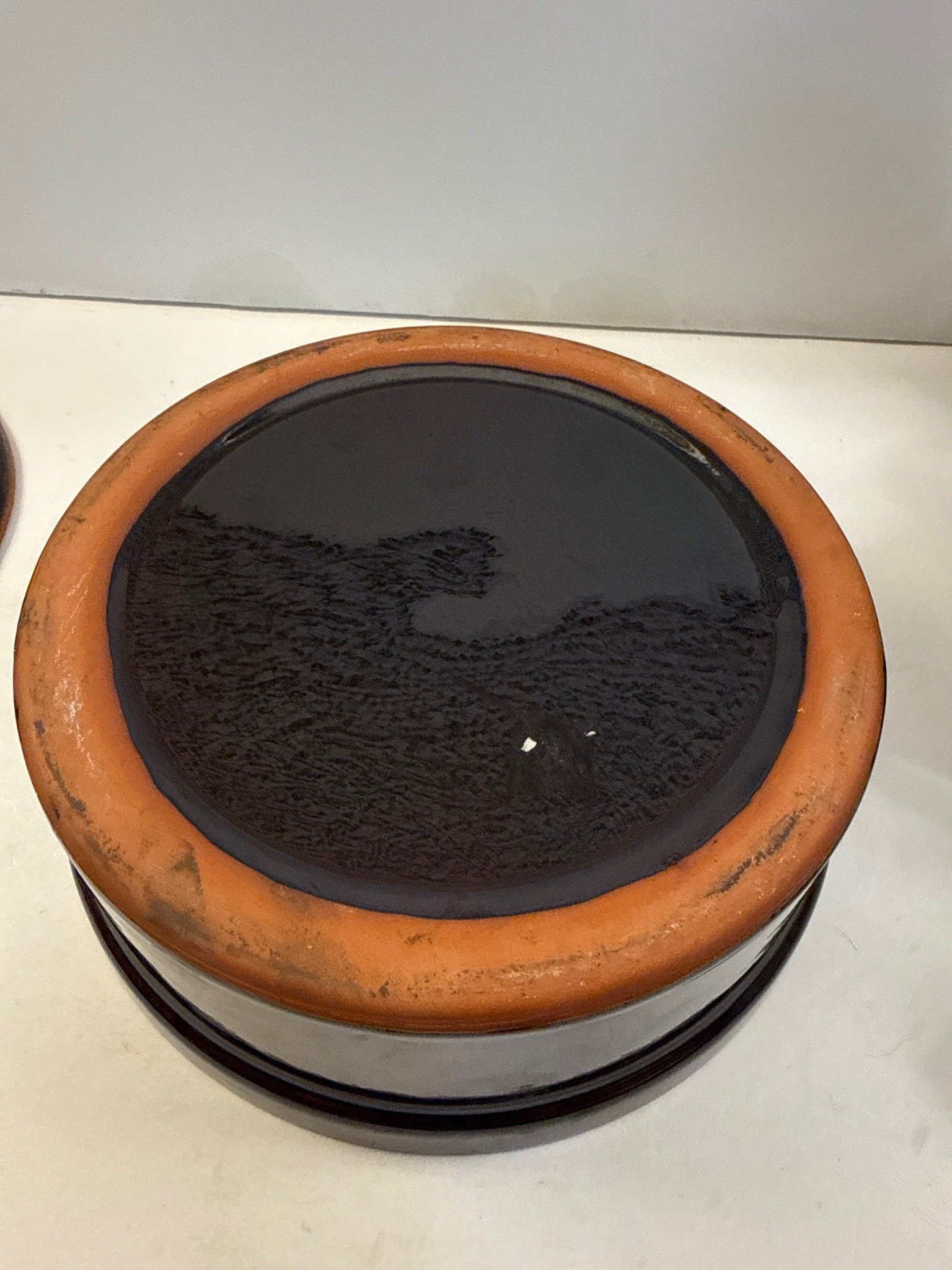
This item is a circular terracotta ceramic vessel, shown from the underside, designed for culinary use. The piece features an unglazed, wide outer rim of natural reddish-orange terracotta clay, which provides a tactile, high-friction surface common in baking stones and traditional earthenware. The central portion of the base is treated with a dark, chocolate-brown to black vitrified glaze. Notably, the glaze application on the bottom shows significant textural irregularities, including a distinctive bubbling or 'crawling' effect that creates a rugged, volcanic-like surface. This texture might be an intentional design choice for heat distribution or a result of the manufacturing firing process. The vertical sides of the vessel appear to be finished in a reflective, smooth dark glaze consistent with the center. Condition-wise, the unglazed rim shows moderate signs of use including scuffing, darkening from heat exposure, and minor surface abrasions. There are small white specks or mineral deposits on the glazed center, and the overall construction suggests a sturdy, mid-to-late 20th-century utilitarian kitchenware item. The craftsmanship reflects functional pottery, possibly from a region known for flameproof ceramics such as Spain or Italy.
AI Appraisal Report

·AI can make mistakes·Verify before acting
I have examined this circular terracotta cooking vessel via high-resolution imagery. The item displays characteristics consistent with mid-to-late 20th-century flameproof cookware, likely of Mediterranean origin such as Spain (Cazuela) or Italy. The piece features a characteristic unglazed terracotta rim and a dark, vitrified lead-safe or manganese glaze. The 'crawling' or bubbling texture on the base is common in utilitarian earthenware where glaze is applied quickly to functional surfaces; while it adds character, it is technically a firing flaw rather than a decorative 'lava' glaze. The item shows moderate signs of use, including carbonization and abrasions on the unglazed foot, which confirms its history as a functional kitchen tool rather than a display piece. The market for vintage utilitarian earthenware remains stable, driven by the 'slow food' movement and interest in rustic kitchen decor. Comparables found in secondary markets and estate sales typically realize prices within the $40 to $80 range depending on the specific maker's mark, which is not visible here. While this piece is a fine example of traditional craftsmanship, it is a mass-produced item rather than a unique work of art, limiting its rarity. From this visual inspection alone, I cannot verify the chemical composition of the glaze to ensure it is cadmium/lead-free for modern food use. Furthermore, without a visible maker's mark or provenance documentation, the exact region of origin remains speculative. A physical inspection would be required to check for hairline fractures (ringing the clay) and to verify if any underside marks were obscured by the heavy glaze application.

Get your items appraised

Instant estimates of your treasures with AI-powered appraisals

Browse More Appraisals