AI Appraisal Estimate

AI-generated estimates · not official valuations

From the user

What was submitted

Photo and notes provided by the user — not generated by AI

Submitted item photo
Submitted photo · June 6, 2026

User's notes

Disinter and Co

AI analysis below

AI appraisal

AI analysis & estimate

AI-Generated · Verify before acting

Everything below is generated by AI for informational purposes only. AI can make mistakes — the AI may misidentify items or misattribute them (artist, maker, brand, designer, origin, era). This is not an official valuation and should not be used for insurance, sale, tax, estate, legal, or lending purposes — or any decision requiring a certified appraisal. It is not an authoritative claim about any person, brand, or rights holder — do not share or rely on it as a factual statement about a third party. Always consult qualified professionals before making financial decisions.

Note

This analysis also relies on unverified notes provided by the user, which may be incomplete or inaccurate and could affect the result.

Read the full disclaimer

AI Identification

·Not independently authenticated·Verify before acting

Ceramic Teapot

Kitchenware / Tableware

AI Estimated Value

·Not an official valuation·Verify before acting

$5-15

As of June 6, 2026

AI Item Analysis

·AI can make mistakes·Verify before acting
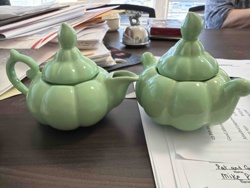
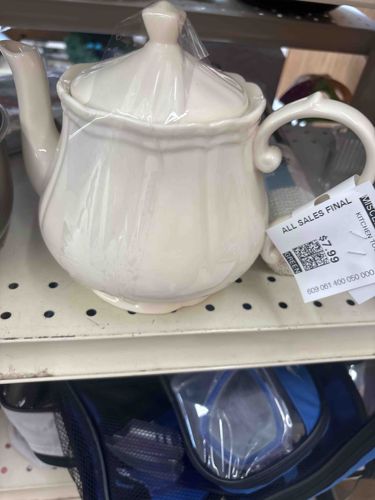
This item is an off-white or cream-colored ceramic teapot with a glossy finish. It features a fluted or paneled design around the body, giving it a subtly ornate appearance. The teapot has a slender, gracefully curved spout and a decorative, scrolled handle, which appears to be integrally molded with the body. The lid is also fluted and culminates in a small, finial-like knob for easy removal. The entire teapot, including the lid, is encased in clear plastic wrap, suggesting it is either new, unused, or being sold in a manner to protect its surface. No significant visible damage such as chips, cracks, or extensive wear is apparent, likely due to the protective wrapping. The craftsmanship appears to be of standard quality for mass-produced ceramic kitchenware, with smooth curves and uniform glazing. There are no discernible maker's marks or signatures visible through the plastic wrap or in the provided images. Given its style, it likely dates from the late 20th century to contemporary times. The context of the image, showing a retail price tag of $7.99 with 'ALL SALES FINAL', indicates it is likely from a thrift store or a discounted merchandise outlet.
AI Appraisal Report

·AI can make mistakes·Verify before acting
Upon my virtual examination of this cream-colored ceramic teapot, I note its generally good condition, as evidenced by the lack of visible chips, cracks, or significant wear. The presence of clear plastic wrapping suggests an effort to protect its surface, reinforcing the idea of its unused or well-preserved state. Authenticity, in the sense of a specific manufacturer or artisan, cannot be definitively ascertained from the images. There are no discernible maker's marks, and the style appears to be mass-produced, likely from the late 20th century to contemporary times. The fluted design and decorative handle suggest standard commercial kitchenware rather than a rare or artisanal piece. In terms of market conditions, items of this nature, without notable provenance or unique design elements, typically fall into the budget-friendly category of home goods. Comparables would include similar new or thrifted ceramic teapots from popular department stores or discount retailers. Demand for such functional yet decorative teapots is relatively stable but not high enough to drive significant value appreciation. Rarity is not a factor here; this style and material are common. The most significant factor impacting its value is its likely mass-produced origin and lack of unique identifiers or artistic merit. The retail tag of $7.99 with 'ALL SALES FINAL' at a thrift or discount outlet provides a strong indication of its low market value as a used or surplus item. Limitations in authenticity verification are substantial without a physical inspection. I cannot confirm the exact material composition, inspect for hairline cracks or minor imperfections obscured by the plastic, or search for hidden maker's marks or production codes. Provenance documentation, such as original purchase receipts or manufacturing details, would be necessary for full authentication of origin, if such details were ever recorded. Scientific testing would be excessive and unnecessary for an item of this type and value.

Get your items appraised

Instant estimates of your treasures with AI-powered appraisals

Browse More Appraisals