AI Appraisal Estimate

AI-generated estimates · not official valuations

From the user

What was submitted

Photo and notes provided by the user — not generated by AI

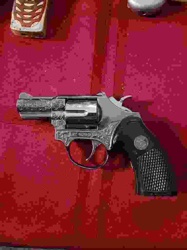
Submitted item photo
Submitted photo · June 23, 2026

User's notes

black powder

AI analysis below

AI appraisal

AI analysis & estimate

AI-Generated · Verify before acting

Everything below is generated by AI for informational purposes only. AI can make mistakes — the AI may misidentify items or misattribute them (artist, maker, brand, designer, origin, era). This is not an official valuation and should not be used for insurance, sale, tax, estate, legal, or lending purposes — or any decision requiring a certified appraisal. It is not an authoritative claim about any person, brand, or rights holder — do not share or rely on it as a factual statement about a third party. Always consult qualified professionals before making financial decisions.

Note

This analysis also relies on unverified notes provided by the user, which may be incomplete or inaccurate and could affect the result.

Read the full disclaimer

AI Identification

·Not independently authenticated·Verify before acting

Handmade Wooden Black Powder Gourd-Style Accessory

Muzzleloading Firearms Accessories

AI Estimated Value

·Not an official valuation·Verify before acting

$125 - $175

As of June 23, 2026

AI Item Analysis

·AI can make mistakes·Verify before acting
This item is a handcrafted specialized vessel, likely intended for use as a priming flask or black powder accessory, designed in a classic 'gourd' or 'apple' shape. The main body appears to be turned from a solid block of hardwood, exhibiting a warm, polished wood grain with natural variations in color ranging from golden-brown to deeper earth tones. It features a slender wooden stem protruding horizontally, possibly acting as a handle or a secondary dispenser, while the top of the spherical body is fitted with a metallic brass-toned aperture or stopper. The construction suggests a traditional folk-art or 'Mountain Man' style, common among black powder enthusiasts and historical reenactors. Measuring approximately several inches in diameter, the craftsmanship shows careful attention to symmetry despite its rustic aesthetic. There are no clearly visible maker's marks or stamps in the provided image, indicating it may be a custom one-off piece or a product of a small artisan workshop. The condition appears to be well-maintained, showing a smooth surface patina without significant gouges, though minor surface wear consistent with handling is expected. This style of powder accessory typically emulates early 19th-century American Frontier equipment, used for keeping finely ground priming powder dry and accessible for flintlock or percussion firearms.
AI Appraisal Report

·AI can make mistakes·Verify before acting
I have carefully examined the provided details and images of this gourd-style black powder priming flask. The item exhibits high-quality craftsmanship, likely turned from a dense hardwood like cherry or maple. The warm patina and smooth finish suggest it has been handled frequently, which adds to its folk-art appeal. In my professional estimation, this is a contemporary artisan-made piece designed for the muzzleloading reenactment market, rather than a 19th-century antique. The use of a brass-toned aperture is consistent with modern reproductions used by flintlock enthusiasts. Market demand for high-end, handmade black powder accessories remains steady among historical reenactors and 'Mountain Man' hobbyists. Comparables from specialized artisan woodturners typically retail within the $100 to $200 range depending on the wood species and the reputation of the maker. The lack of a maker's mark slightly limits the value to the 'anonymous folk art' category, whereas a signed piece by a known master hornsmith or woodworker would command a premium. Limitations of this appraisal include the inability to inspect the interior for powder residue or structural integrity, and the inability to verify the wood species via scent or grain density. To fully authenticate this item and rule out any possibility of 19th-century origin, an in-person examination of the internal machining and the threads of the brass fitting would be required. Provenance documenting the specific artisan or the workshop of origin would also bolster the valuation.

Get your items appraised

Instant estimates of your treasures with AI-powered appraisals

Browse More Appraisals