AI estimate as of October 28, 2025 · verify with a professional before acting
AI-Generated · Verify before acting
Everything on this page is generated by AI for informational purposes only. AI can make mistakes — the AI may misidentify items or misattribute them (artist, maker, brand, designer, origin, era). This is not an official valuation and should not be used for insurance, sale, tax, estate, legal, or lending purposes — or any decision requiring a certified appraisal. It is not an authoritative claim about any person, brand, or rights holder — do not share or rely on it as a factual statement about a third party. Always consult qualified professionals before making financial decisions.
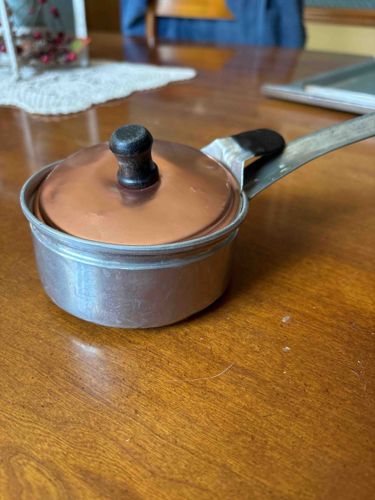
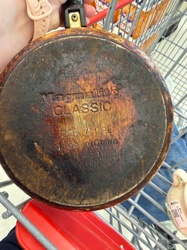
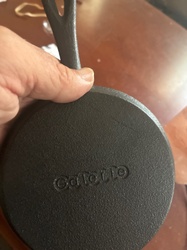
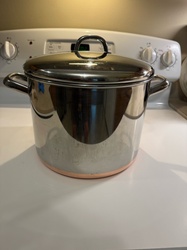
This is a small, miniature saucepan, approximately 2-3 inches in diameter, constructed from two different metals: aluminum for the base and a bright, polished copper for the lid. The base of the saucepan appears to be made of brushed or worn aluminum, displaying a matte, silvery-gray finish with some visible scuffing and minor surface scratches indicative of use or age. The exterior of the aluminum body shows minimal denting, maintaining its circular form. The handle of the saucepan is also made of aluminum, extending outward from the side with a slight upward curve. It features a small, black, presumably bakelite or wooden, thumb rest or grip near its attachment point to the pan body. The handle itself shows some surface wear and minor discoloration, consistent with aging aluminum. The lid is domed and crafted from copper, exhibiting a warm, reddish-brown hue. It has a slightly raised rim that fits snugly into the aluminum pot. At the center of the lid is a small, rounded, dark-colored finial, likely made of wood or bakelite, serving as a knob for easy lifting. This finial has a smooth, glossy appearance and shows no significant damage. The overall condition suggests that while it has been handled, it is relatively well-preserved for a miniature item. There are no visible manufacturer's marks, signatures, or stamps evident in the provided image. Given its size and construction, it is likely a decorative piece, a child's toy, or part of a miniature kitchen set, possibly dating from the mid-20th century.
AI Appraisal Report
I have visually examined this Miniature Copper and Aluminum Saucepan with Lid. The item presents as a small, likely decorative or toy, saucepan, approximately 2-3 inches in diameter. The aluminum base shows expected wear for its presumed age, including scuffing and minor scratches, but maintains its form well. The copper lid retains its warm hue and appears well-fitted. The black finial and thumb rest are intact and show no significant damage. The overall condition is good, considering it's a miniature and likely handled item. While authenticity for these types of items typically isn't a complex issue, its construction from two distinct metals (aluminum base, copper lid) and bakelite/wood accents is consistent with mid-20th-century miniature cookware. There are no maker's marks, which is common for such pieces and does not detract from its value.
Market conditions for miniature cookware, particularly those without significant provenance or artisan marks, are generally moderate. Comparable items, often found in antique toy or dollhouse collections, range from $10 to $75 depending on condition, material, and perceived age. Demand is niche, appealing primarily to collectors of miniatures, dollhouse enthusiasts, or those seeking vintage kitchenalia. While not exceptionally rare, well-preserved examples like this one are always more desirable. The main factor impacting value here is its decorative appeal and condition. Without any specific manufacturer identification or historical documentation (provenance), it remains a general vintage miniature. An in-person examination would allow me to confirm material composition (especially of the black elements), assess the exact type and depth of wear, and search for extremely subtle markings that might not be visible in an image.