AI estimate as of September 6, 2026 · verify with a professional before acting
AI-Generated · Verify before acting
Everything on this page is generated by AI for informational purposes only. AI can make mistakes — the AI may misidentify items or misattribute them (artist, maker, brand, designer, origin, era). This is not an official valuation and should not be used for insurance, sale, tax, estate, legal, or lending purposes — or any decision requiring a certified appraisal. It is not an authoritative claim about any person, brand, or rights holder — do not share or rely on it as a factual statement about a third party. Always consult qualified professionals before making financial decisions.
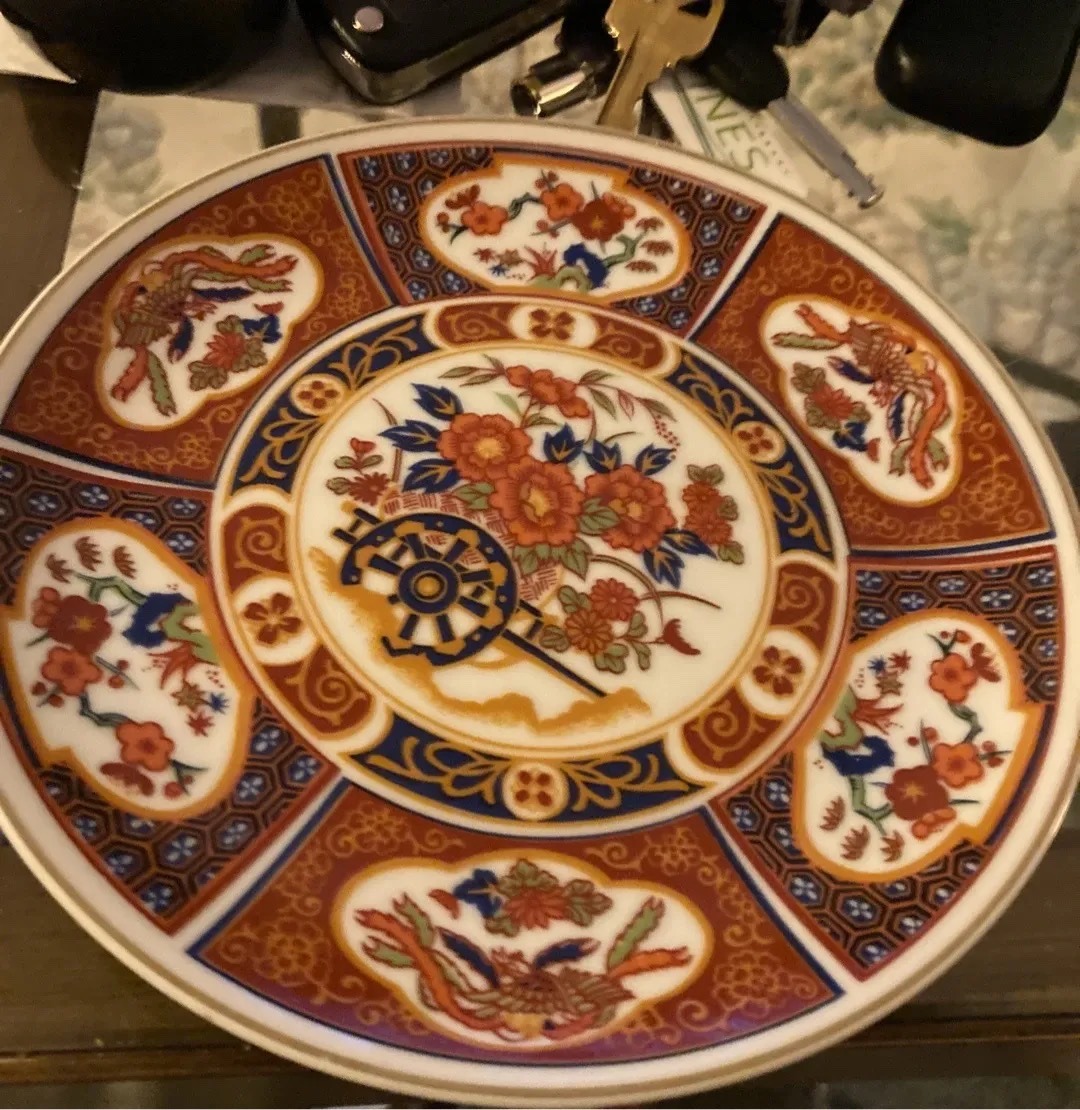
This is a round, ceramic decorative plate featuring a classic Japanese Imari-style aesthetic with a traditional color palette dominated by iron red, cobalt blue, gold, and white. The composition is sectioned into distinct geometric and floral panels surrounding a central medallion. The central design depicts a floral arrangement featuring stylized orange-red chrysanthemums or peonies alongside blue leafy stems, set against a circular white background framed by intricate blue and gold scrollwork. The outer rim is divided into alternating trapezoidal panels containing either dense geometric brocade patterns in red and blue or white cartouches filled with floral sprays and mythical bird-like creatures (phoenix or ho-oh motifs). The glaze is glossy and smooth with fine polychrome enamel details applied over the white porcelain base. The rim shows a thin gilt line, though some wear and fading of the gilding is visually apparent upon closer inspection. There are no visible maker's marks, stamps, or signatures on the visible surface, and the underside is not shown. The overall stylistic elements, color scheme, and compartmentalized layout are consistent with traditional Imari porcelain production, often associated with the late Edo to Meiji periods, though the exact age, maker, and authenticity remain unverified from the photographic evidence alone. The identification relies entirely on visual stylistic comparisons rather than physical inspection, hallmarks, or documented provenance.
AI Appraisal Report
Based on what I can see in the provided image, this round decorative plate displays a classic Japanese Imari-style aesthetic with a traditional color palette of iron red, cobalt blue, gold, and white, featuring compartmentalized geometric and floral panels alongside central floral motifs. The glaze appears glossy with fine polychrome enamel details, and the rim shows minor wear to the gilding. However, I can't verify from a photo alone whether the piece is a late Edo to Meiji period production or a later decorative replica, as there are no visible maker's marks, stamps, or signatures on the shown surface, and the underside is not depicted. My valuation of $300-$600 assumes the working hypothesis that the piece possesses the age and traditional manufacture consistent with late 19th-century Imari export wares. In current decorative arts markets, traditional Japanese Imari-style porcelain maintains steady demand among collectors of Asian ceramics, though values fluctuate based on condition, age, and quality of hand-painting. If the item were to turn out to be a later 20th-century decorative copy, reproduction, or made simply 'in the style of' rather than a period piece, the value would significantly decrease, typically dropping to the $50-$150 range. To confirm authenticity, proper age, and exact provenance, would need physical inspection to confirm the paste, glaze characteristics, wear patterns, and any hidden marks on the reverse side.