AI Appraisal Estimate

AI-generated estimates · not official valuations

From the user

What was submitted

Photo and notes provided by the user — not generated by AI

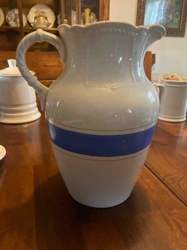
Submitted item photo
Submitted photo · June 25, 2026

User's notes

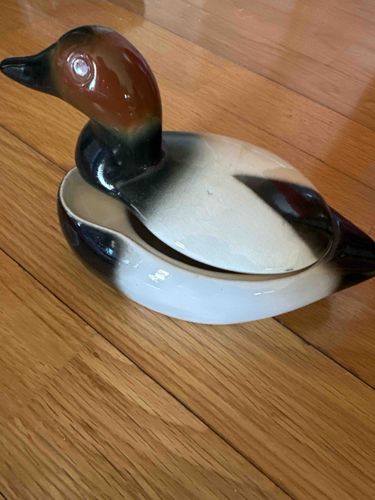
Ceramic duck container

AI analysis below

AI appraisal

AI analysis & estimate

AI-Generated · Verify before acting

Everything below is generated by AI for informational purposes only. AI can make mistakes — the AI may misidentify items or misattribute them (artist, maker, brand, designer, origin, era). This is not an official valuation and should not be used for insurance, sale, tax, estate, legal, or lending purposes — or any decision requiring a certified appraisal. It is not an authoritative claim about any person, brand, or rights holder — do not share or rely on it as a factual statement about a third party. Always consult qualified professionals before making financial decisions.

Note

This analysis also relies on unverified notes provided by the user, which may be incomplete or inaccurate and could affect the result.

Read the full disclaimer

AI Identification

·Not independently authenticated·Verify before acting

Vintage Mid-Century Ceramic Duck Tureen

Vintage Ceramics and Tableware

AI Estimated Value

·Not an official valuation·Verify before acting

$45.00 - $85.00

As of June 25, 2026

AI Item Analysis

·AI can make mistakes·Verify before acting
This item is a vintage ceramic container or small tureen designed in the stylized form of a duck, likely modeled after a Canvasback or Mallard. The piece consists of two primary components: a hollow base forming the body of the bird and a removable lid that integrates the head, neck, and upper back. It is finished with a high-gloss glaze featuring a striking color palette of deep burnt orange on the head, fading into a charcoal black gradient at the neck and tail, with a cream-white center body. The construction reflects mid-20th-century ceramic manufacturing techniques, often seen in pieces from the 1950s to 1970s. The glaze appears uniform with high reflectivity, though there is a visible misalignment in the lid seating which suggests a hand-finished or semi-mass-produced origin. Notable characteristics include the simplified, aerodynamic silhouette typical of the Mid-Century Modern style. There are no immediately visible cracks or chips in the image, though close inspection of the inner rim would be necessary to confirm total condition. This functional decorative object represents the popular wildlife-themed kitchenware movement of its era, characterized by smooth transitions of color and a lack of intricate surface texture in favor of a clean, sculptural aesthetic.
AI Appraisal Report

·AI can make mistakes·Verify before acting
Based on my visual examination of this Mid-Century Modern ceramic duck tureen, I have assessed it as a production piece likely originating from the 1960s or 1970s. The aesthetic—characterized by its ombré airbrushed glaze and streamlined silhouette—is consistent with high-gloss wildlife ceramics produced by manufacturers such as Blue Mountain Pottery or provincial Japanese exporters of the era. The condition appears to be 'Good to Very Good' for its age; while the exterior glaze maintains high reflectivity and vibrant pigment, the slight misalignment of the lid suggests standard mass-production tolerances rather than a bespoke artisan error. Market demand for MCM kitchenware remains steady, though saturation of unbranded duck motifs keeps the price accessible. Comparable sales for similar unbranded avian tureens typically fall in the double-digit range. The value is buoyed by its functional decorative appeal but limited by the lack of a visible maker's mark or signed attribution. It is important to note that this appraisal is based on photographic evidence only. A physical inspection would be required to identify internal hairline fractures, crazing, or chips beneath the rim which are common in ceramics of this age. Full authentication of its origin would require a physical search for embossed markings on the base or original paper labels. Without provenance or a confirmed manufacturer mark, this item is valued as a decorative collectible rather than a rare fine art piece.

Get your items appraised

Instant estimates of your treasures with AI-powered appraisals

Browse More Appraisals