AI Appraisal Estimate

AI-generated estimates · not official valuations

From the user

What was submitted

Photo and notes provided by the user — not generated by AI

Submitted item photo
Submitted photo · May 27, 2026

User's notes

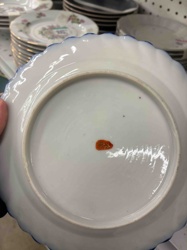
Marking: Texas

AI analysis below

AI appraisal

AI analysis & estimate

AI-Generated · Verify before acting

Everything below is generated by AI for informational purposes only. AI can make mistakes — the AI may misidentify items or misattribute them (artist, maker, brand, designer, origin, era). This is not an official valuation and should not be used for insurance, sale, tax, estate, legal, or lending purposes — or any decision requiring a certified appraisal. It is not an authoritative claim about any person, brand, or rights holder — do not share or rely on it as a factual statement about a third party. Always consult qualified professionals before making financial decisions.

Note

This analysis also relies on unverified notes provided by the user, which may be incomplete or inaccurate and could affect the result.

Read the full disclaimer

AI Identification

·Not independently authenticated·Verify before acting

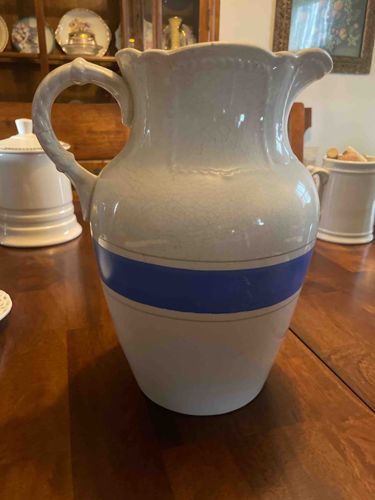
Vintage Texas Ironstone Water Pitcher

Vintage Ceramics and Tableware

AI Estimated Value

·Not an official valuation·Verify before acting

$45 - $65

As of May 27, 2026

AI Item Analysis

·AI can make mistakes·Verify before acting
This is a large, vintage ceramic water pitcher, likely dating from the mid-20th century. Constructed from heavy-bodied white ironstone or earthenware, the pitcher features a classic utilitarian form with a wide, bulbous body tapering toward a stable base. The vessel is finished in a creamy white glaze characterized by significant all-over crazing, which is a network of fine cracks in the glaze layer indicative of age and moisture exposure. The decorative highlight is a thick, horizontal cobalt blue band encircling the midline, bordered by thin gold or metallic pinstripes that show signs of minor wear and fading. The pitcher features a ruffled or scalloped rim with beaded relief detailing along the edge and a large, ornate handle with twig-like or faux-bois texturing for enhanced grip. Based on the user-provided mark of 'Texas,' this likely refers to the 'Texas' pattern or maker associated with American ironstone producers from the 1940s-1960s. The overall condition shows signs of use and age, including the aforementioned crazing and some light surface staining typical of antique utility ware, but the structure appears sound without major visible chips or cracks in the primary image view.
AI Appraisal Report

·AI can make mistakes·Verify before acting
I have carefully examined the provided images and descriptions of this vintage ironstone water pitcher. The piece features the classic 'Texas' pattern, common among mid-20th-century American potteries, particularly those producing heavy-duty utility ware. The aesthetic is characterized by its robust form, faux-bois handle, and the cobalt blue horizontal band accented by gold pinstripes. From a visual standpoint, the piece appears authentic to the 1940s-1960s era. The condition shows significant all-over crazing, which is typical for porous ironstone of this age, though it does lower the value compared to a 'mint' specimen. The fading on the gold pinstripes suggests regular domestic use. On the current secondary market, such as online auctions and regional antique malls, demand for mid-century American ironstone remains steady but localized. Collectors often seek these for farmhouse-style decor rather than as investment-grade antiques. Factors affecting value include the attractive scalloped rim and the popularity of cobalt blue accents. However, the prevalence of this specific pattern and the visible wear prevent it from reaching a higher price bracket. For a full authentication, a physical inspection is required to check for hidden hairlines, professional repairs, or internal staining not visible in photos. I would also need to verify the specific backstamp to determine which factory (such as Knowles or similar) produced the 'Texas' line. Scientific testing (XRF) for glaze composition or provenance documentation (such as original sales receipts) would be necessary to establish a more definitive historical timeline, but is generally not cost-effective for an item of this market value.

Get your items appraised

Instant estimates of your treasures with AI-powered appraisals

Browse More Appraisals