These notes were written by the person who submitted this item. Appraiser.AI has not verified them, and the AI's identification and estimate may rely on them.
AI Estimated Value
Not an official valuation
$20 - $40
AI estimate as of September 16, 2025 · verify with a professional before acting
AI-Generated · Verify before acting
Everything on this page is generated by AI for informational purposes only. AI can make mistakes — the AI may misidentify items or misattribute them (artist, maker, brand, designer, origin, era). This is not an official valuation and should not be used for insurance, sale, tax, estate, legal, or lending purposes — or any decision requiring a certified appraisal. It is not an authoritative claim about any person, brand, or rights holder — do not share or rely on it as a factual statement about a third party. Always consult qualified professionals before making financial decisions.
This analysis also relies on unverified notes provided by the user, which may be incomplete or inaccurate and could affect the result.
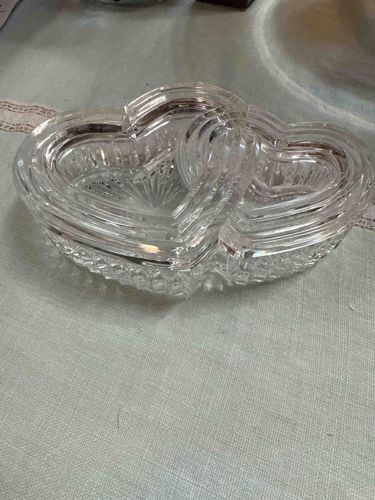
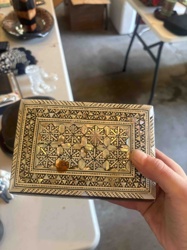
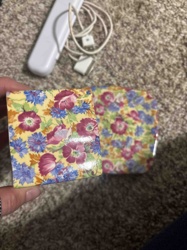
This item is a clear crystal or glass decorative box, uniquely shaped as two interlocking hearts. The material appears to be clear, colorless glass, possibly lead crystal given the refractive qualities and sparkle visible in the image, though without direct examination, it cannot be definitively confirmed as lead crystal. The box consists of two main components: a base and a fitted lid. Both the base and the lid are crafted in the shape of a heart, with a noticeable 'kissing' or interlocking design where the curves of the two hearts meet. The surface of the lid features a smooth, polished finish on the top planes of the heart shapes, transitioning to ridged or fluted details along the outer edges, providing a sense of depth and tactile interest. The base of the box exhibits a finely cut or molded pattern, possibly in a diamond or starburst motif, which enhances its reflective properties. This detailed pattern is visible around the perimeter and likely on the underside of the base, suggesting a decorative element intended to catch and refract light. There are no immediately apparent signs of damage such as chips, cracks, or significant scuffing, indicating it is in good to excellent visible condition. No maker's marks, signatures, or stamps are discernible from the provided images. The style suggests it could be a relatively modern piece, perhaps from the late 20th century, consistent with decorative glass or crystal items often used for trinkets, candy, or sentimental keepsakes. Its craftsmanship indicates a manufactured piece, likely molded or pressed crystal/glass rather than hand-blown, given the uniformity of the patterns. The interlocking heart design makes it a common gift item, especially for occasions like Valentine's Day or anniversaries.
AI Appraisal Report
I've carefully examined the provided image of this Crystal Double Heart Box. Visually, the piece appears to be in excellent condition, showing no obvious chips, cracks, or significant scuffs. The clear, colorless material, coupled with the refractive qualities, suggests it is likely crystal or high-quality glass. The fluted edges on the lid and the finely cut pattern on the base indicate a manufactured piece, almost certainly molded or pressed, rather than hand-blown. This uniformity points to mass production. Without a direct physical examination, I cannot definitively confirm if it is lead crystal; this would require specific tests or the identification of a maker's mark, which is not discernible in the images.
The market for decorative crystal or glass boxes of this nature is generally moderate. Items featuring common romantic motifs like interlocking hearts are widely available, diminishing their rarity. Demand tends to be seasonal, peaking around holidays such as Valentine's Day. Comparable new items from reputable glass manufacturers range from $30-$70, while pre-owned pieces often sell for $15-$40, depending on the brand and condition. Without a designer name or historical significance, the primary value drivers are its decorative appeal and condition. The lack of discernible maker's marks is a limiting factor in assigning a higher value. For full authentication and a more precise valuation, I would need to physically inspect the item for etched signatures, perform specific gravity tests for lead content, and examine for any subtle manufacturing imperfections or unique characteristics not visible in photographs.