AI Appraisal Estimate

AI-generated estimates · not official valuations

From the user

What was submitted

Photo and notes provided by the user — not generated by AI

Submitted item photo
Submitted photo · May 25, 2026

User's notes

No additional notes provided.

AI analysis below

AI appraisal

AI analysis & estimate

AI-Generated · Verify before acting

Everything below is generated by AI for informational purposes only. AI can make mistakes — the AI may misidentify items or misattribute them (artist, maker, brand, designer, origin, era). This is not an official valuation and should not be used for insurance, sale, tax, estate, legal, or lending purposes — or any decision requiring a certified appraisal. It is not an authoritative claim about any person, brand, or rights holder — do not share or rely on it as a factual statement about a third party. Always consult qualified professionals before making financial decisions.

Read the full disclaimer

AI Identification

·Not independently authenticated·Verify before acting

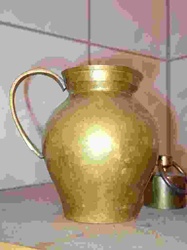
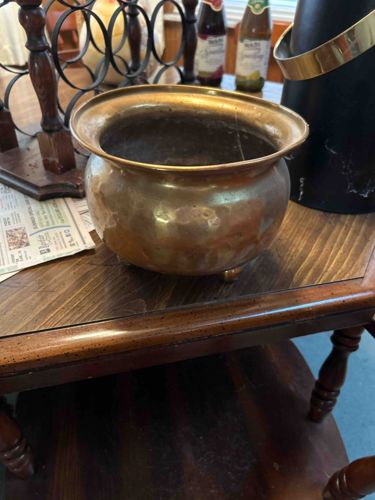
Vintage Hammered Brass Footed Planter/Caldron

Antique and Vintage Metalware

AI Estimated Value

·Not an official valuation·Verify before acting

$45.00-$75.00

As of May 25, 2026

AI Item Analysis

·AI can make mistakes·Verify before acting
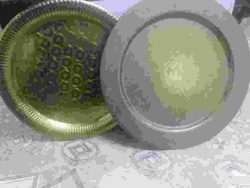
This item is a small, low-profile decorative bowl or planter constructed from spun and hammered brass. It features a distinct globular, bulbous body with a slightly narrowed neck that flares out into a rolled, reinforced rim. The exterior surface exhibits a subtle hammered texture, indicating a handcrafted or hand-finished manufacturing process. The vessel is supported by three small, integrated brass 'bun' or ball feet that elevate the base slightly from the surface. In terms of color, the metal shows a significant amount of natural oxidation and aged patina, ranging from deep dull gold to darker verdigris and brownish tones, especially near the base. The interior indicates signs of previous use, likely as an indoor planter or cachepot, with darker mineral deposits and oxidation visible on the inner walls. There are no immediately visible maker's marks or stamps from this angle, though such items were commonly produced in the mid-20th century (circa 1950s-1970s) in regions like India or Holland. The overall condition is good with no major dents or punctures, though the heavy surface tarnish suggests it has not been polished for many years, which is often preferred by collectors of vintage metalware. The construction is solid with the rim and feet appearing securely attached, reflecting mid-market craftsmanship from the mid-century modern or bohemian decor era.
AI Appraisal Report

·AI can make mistakes·Verify before acting
Based on my visual examination of this hammered brass footed planter, I have determined it to be a mid-20th-century decorative piece, likely manufactured in India or the Netherlands between 1950 and 1970. The spun-brass construction, reinforced rim, and integrated bun feet are characteristic of mass-market bohemian and Mid-Century Modern decor of the era. The item exhibits a desirable natural patina with significant oxidation and verdigris, which adds character and confirms its vintage status to collectors who prefer uncleaned surfaces. The condition is good, showing expected mineral deposits on the interior consistent with use as a cachepot, but without structural integrity issues such as thinning or punctures. Market demand for such items remains steady but accessible, often sold through vintage boutiques and online platforms rather than high-end auction houses. Compared to similar items, its value is bolstered by the feet and hammered texture, though the lack of a prominent maker's mark (such as Peerage or Mottahedeh) keeps it in the mid-market range. Limitations: This appraisal is based solely on digital images. A physical inspection is necessary to check for hidden solder repairs, structural fatigue, or faint hallmarks obscured by tarnish. Weight and metal density cannot be verified through images; a true assessment of brass purity would require spectroscopic testing or professional cleaning of the base to locate stamps. Provenance documentation would be required to verify if this piece was part of a specific designer collection.

Get your items appraised

Instant estimates of your treasures with AI-powered appraisals

Browse More Appraisals