AI Appraisal Estimate

AI-generated estimates · not official valuations

From the user

What was submitted

Photo and notes provided by the user — not generated by AI

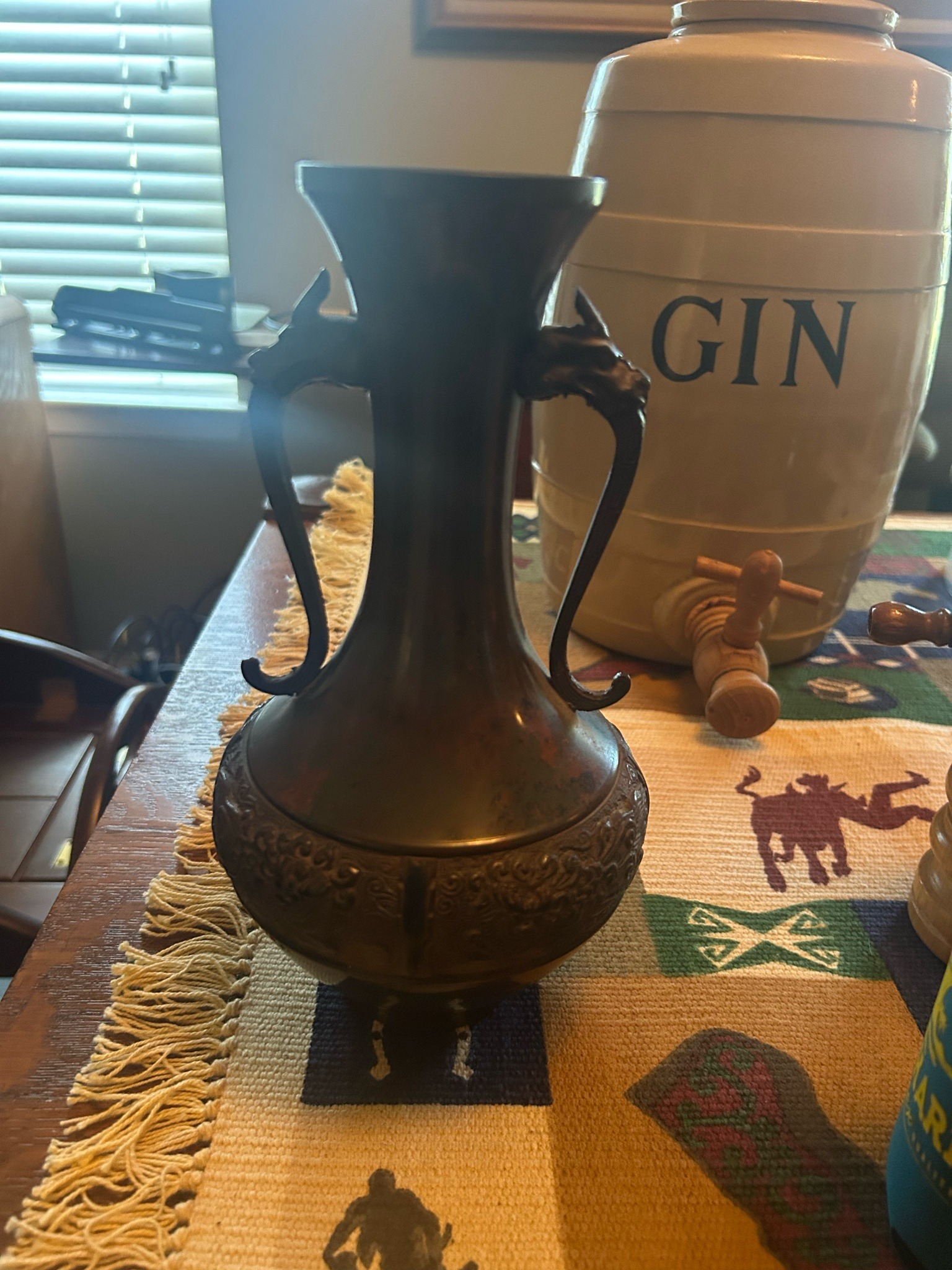
Submitted item photo
Submitted photo · May 30, 2026

User's notes

No additional notes provided.

AI analysis below

AI appraisal

AI analysis & estimate

AI-Generated · Verify before acting

Everything below is generated by AI for informational purposes only. AI can make mistakes — the AI may misidentify items or misattribute them (artist, maker, brand, designer, origin, era). This is not an official valuation and should not be used for insurance, sale, tax, estate, legal, or lending purposes — or any decision requiring a certified appraisal. It is not an authoritative claim about any person, brand, or rights holder — do not share or rely on it as a factual statement about a third party. Always consult qualified professionals before making financial decisions.

Read the full disclaimer

AI Identification

·Not independently authenticated·Verify before acting

East Asian-style bronze-toned footed vase with dragon handles

Vases and Decorative Containers

AI Estimated Value

·Not an official valuation·Verify before acting

$100 - $300

As of May 30, 2026

AI Item Analysis

·AI can make mistakes·Verify before acting
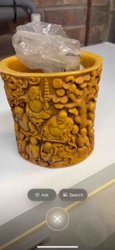
This object appears to be a footed metal vase, stylistically consistent with Chinese or Japanese bronze work. It features a flared rim atop a slender neck that transitions into a bulbous body. The most prominent decorative features are the zoomorphic handles, which appear to represent dragons or stylized chimeras, attached at the neck and shoulder. The lower half of the bulbous body is decorated with an embossed or cast frieze containing scrolling patterns and possible foliate motifs consistent with the Meiji or late Qing aesthetic traditions. The material appears to be a copper alloy, possibly bronze or brass, with a dark brown patinated finish showing subtle variations in tone. No maker's marks, signatures, or inscriptions are visible in the provided image; therefore, any specific attribution regarding its origin or age remains a hypothesis. The craftsmanship suggests a cast production method with subsequent hand-finishing or chasing on the decorative bands. Visible condition includes a generally uniform patina with some minor scuffs and surface accumulation consistent with handled ornamental objects. Evaluation of its age is based purely on stylistic characteristics, which suggest it could be a 19th or 20th-century decorative piece, though in-person inspection of the base and casting seams would be necessary to distinguish an antique from a later reproduction.
AI Appraisal Report

·AI can make mistakes·Verify before acting
Based on the provided image, I have examined this East Asian-style footed metal vase. My evaluation operates under the hypothesis that this is a late 19th or 20th-century decorative piece consistent with Meiji or late Qing aesthetic traditions. From the photo alone, I can observe the zoomorphic dragon-style handles, the flared rim, and a lower frieze containing scrolling motifs with a dark brown patinated finish. However, I cannot verify the exact metallurgy (whether bronze, brass, or another copper alloy), nor can I inspect the base or casting seams from this single angle. Without visible maker's marks, any attribution regarding its specific origin or age remains completely hypothetical. The estimated value of $100 to $300 is based on the assumption that it is an antique or vintage decorative piece of the period it emulates. General market demand for unmarked, decorative Asian metalwares is relatively soft compared to signed masterpieces, though pieces with elaborate handles still hold decorative appeal. If in-person inspection reveals this to be a modern reproduction or a lightly patinated recent copy, the market value would likely decrease to a decorative value of $30 to $75. To learn more about its origins, an in-person physical examination by a specialist would be necessary to assess the casting methods, wear patterns, bottom wear, and weight, which could help differentiate a period piece from a later 20th-century homage.

Get your items appraised

Instant estimates of your treasures with AI-powered appraisals

Browse More Appraisals