AI estimate as of October 21, 2025 · verify with a professional before acting
AI-Generated · Verify before acting
Everything on this page is generated by AI for informational purposes only. AI can make mistakes — the AI may misidentify items or misattribute them (artist, maker, brand, designer, origin, era). This is not an official valuation and should not be used for insurance, sale, tax, estate, legal, or lending purposes — or any decision requiring a certified appraisal. It is not an authoritative claim about any person, brand, or rights holder — do not share or rely on it as a factual statement about a third party. Always consult qualified professionals before making financial decisions.
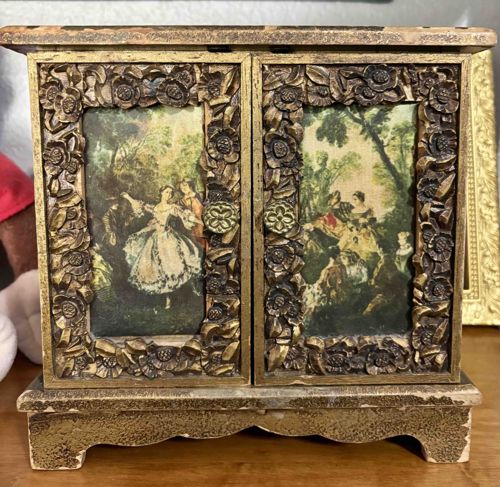
This appears to be a vintage decorative cabinet, possibly a jewelry box or a small keepsake chest, characterized by its faux wood and ornate rococo-style embellishments. The item stands on a base with a curved, scalloped apron and short, block-like feet. The overall construction suggests it's made from a lightweight material, likely wood or a composite material, finished to mimic aged gilded wood. The primary color scheme is distressed gold and dark brown, giving it an antique appearance. The cabinet features two front-opening doors, each adorned with a rectangular panel containing an image depicting a pastoral or 'fête galante' scene, reminiscent of 18th-century French painting styles. Surrounding these pictorial panels are intricately molded frames, deeply carved with floral and foliate motifs, likely made from plaster, resin, or carved wood, and finished in a matching distressed gold and brown. The top of the cabinet has a simple, slightly overhanging lid. Two small, decorative knobs, also molded with floral designs and finished in gold, are present on the meeting edges of the doors, serving as pulls.
Visible condition issues include significant wear to the gold finish, particularly along edges and raised areas, exposing the darker material beneath, which contributes to its aged aesthetic but also indicates use and handling. There are chips and loss of finish on the base and corners, and some darkening or grime accumulated in the crevices of the ornate carvings. The images inside the door panels show some fading or discoloration, consistent with age. The craftsmanship suggests it was mass-produced but designed to evoke an older, more luxurious style. It likely dates from the mid-20th century, seeking to replicate 18th or 19th-century European aesthetics. The item's light construction and decorative nature suggest it was intended more for visual appeal and light storage rather than heavy-duty use.
AI Appraisal Report
Based on my visual examination of the provided image, this item is a Vintage Faux Wood Rococo Style Decorative Cabinet, likely functioning as a jewelry box or keepsake chest. The overall condition shows significant wear consistent with its age and intended decorative purpose. The distressed gold finish is heavily worn on edges and raised areas, exposing a darker material beneath, which, while contributing to an aged aesthetic, also indicates surface degradation. There are visible chips and loss of finish, particularly on the base and corners, and grime accumulation in the carved crevices. The pastoral scenes on the door panels exhibit fading or discoloration.
Authenticity: While it successfully evokes an 18th or 19th-century European aesthetic, the faux wood finish, lightweight construction, and visible manufacturing techniques strongly suggest this is a mid-20th century mass-produced decorative item, not an antique of the period it simulates. The rococo-style embellishments appear to be molded from plaster or resin rather than hand-carved wood, further supporting its decorative reproduction status. A physical examination would be needed to confirm the exact materials (e.g., wood vs. composite, plaster vs. resin) and construction methods. Verification of artist signatures (if any) on the 'fête galante' scenes, or any hidden maker's marks, would require in-person inspection.
Market Conditions & Comparables: The market for mass-produced vintage decorative items, particularly those mimicking older styles, is moderately niche. Similar faux-rococo decorative boxes from the mid-20th century typically sell in the $30-$100 range, depending on size, condition, and specific decorative appeal. Items in better condition fetch higher prices, but the distressed nature of this piece, while intended, aligns it with the lower-to-mid range of comparable sales.
Demand & Rarity: These types of pieces are not rare; they were widely produced, though specific designs vary. Demand is primarily from collectors of vintage decor or individuals seeking an accent piece for an eclectic interior. Its decorative function is its primary appeal. The condition, while aged, does not elevate its rarity or demand significantly.
Factors Impacting Value: The primary factors impacting value are its decorative appeal, its visible condition issues (chips, wear), and its identity as a mass-produced reproduction rather than an authentic antique. Its lightweight construction is also a limiting factor for perceived quality. Without provenance, a maker's mark, or higher-quality materials, its value remains in the decorative collectible range rather than the fine art or antique market.
Limitations: My assessment is based solely on visual inspection of the image. A physical examination would allow for definitive identification of materials, assessment of structural integrity, and the search for any hidden marks or labels that could influence its value. Testing for lead paint (if applicable in certain older finishes) or detailed examination of the painted scenes for artistic merit would also require in-person analysis.