AI estimate as of August 24, 2025 · verify with a professional before acting
AI-Generated · Verify before acting
Everything on this page is generated by AI for informational purposes only. AI can make mistakes — the AI may misidentify items or misattribute them (artist, maker, brand, designer, origin, era). This is not an official valuation and should not be used for insurance, sale, tax, estate, legal, or lending purposes — or any decision requiring a certified appraisal. It is not an authoritative claim about any person, brand, or rights holder — do not share or rely on it as a factual statement about a third party. Always consult qualified professionals before making financial decisions.
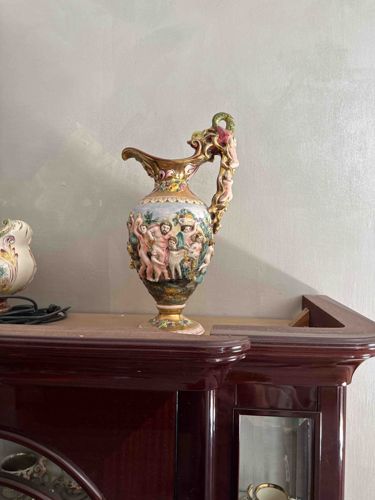
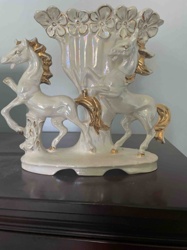
This is a highly ornate ceramic ewer or pitcher, likely crafted from majolica, faience, or a similar glazed earthenware, given its vibrant colors and intricate sculptural details. The primary color palette features rich golden-browns, a muted light blue, and various pastel shades for the figural elements. The vessel has a classical pitcher or ewer shape with a wide, open spout. The body is extensively decorated in high relief with a scene depicting numerous putti or cherubs amidst foliage, suggesting a mythological or allegorical theme, possibly Bacchanalian given the lively interacting figures. The handle is exceptionally elaborate, incorporating swirling, organic forms that appear to terminate in a floral or leaf motif near the rim, exhibiting an almost serpentine quality. The base is pedestal-like, decorated with gilded accents and possibly floral patterns. The craftsmanship appears to be of high quality, with careful attention to molding and hand-painting. Visible condition issues are minimal from the provided image, though the surface appears to have a slight layer of dust, suggesting it has been displayed for some time. There are no obvious chips or cracks, but a thorough inspection would be required to confirm this. The gold accents suggest an intent for luxury. The style points towards late 19th or early 20th-century European decorative arts, particularly Italian or French, known for their elaborate ceramic productions. The use of high relief figures is characteristic of the Rococo revival or similar ornamental periods. No specific maker's marks are visible in the image.
AI Appraisal Report
Based on my visual examination of the provided image, this ornate ceramic ewer, likely majolica or faience, exhibits significant characteristics consistent with late 19th or early 20th-century European decorative arts. The vibrant color palette, intricate high-relief putti decoration, and elaborate handle are hallmarks of that period, particularly from Italian or French workshops. The craftsmanship appears to be of high quality, with meticulous molding and hand-painting evident. Condition, as assessed from the image, appears good; I see no obvious chips, cracks, or significant losses to the sculptural elements or gilding, though a thorough in-person inspection would be required to confirm this and check for hairline fractures or repairs. A slight layer of dust suggests display but no immediate signs of neglect. Authenticity, based solely on the visual, seems highly probable for the period and style described. However, without physical examination, I cannot definitively confirm the material (majolica vs. other glazed earthenware) or rule out restoration. Factors impacting value include the exceptional detail, the good apparent condition, and the strong decorative appeal for collectors of period ceramics. Market conditions for highly ornamental European ceramics remain stable, with pieces of this caliber attracting interest. Demand for such elaborate pieces is moderate, driven by collectors seeking unique decorative statements rather than purely utilitarian objects. Rarity is difficult to assess without maker's marks, but pieces of this level of detail are less common than simpler productions. For full authentication and to confirm material and exact origin, an in-person examination to inspect manufacturer marks, assess surface integrity under various lights, and potentially conduct scientific tests (e.g., UV light for repairs, material analysis for composition) would be essential. Provenance documentation, if available, would also significantly enhance authenticity verification.