AI estimate as of November 10, 2025 · verify with a professional before acting
AI-Generated · Verify before acting
Everything on this page is generated by AI for informational purposes only. AI can make mistakes — the AI may misidentify items or misattribute them (artist, maker, brand, designer, origin, era). This is not an official valuation and should not be used for insurance, sale, tax, estate, legal, or lending purposes — or any decision requiring a certified appraisal. It is not an authoritative claim about any person, brand, or rights holder — do not share or rely on it as a factual statement about a third party. Always consult qualified professionals before making financial decisions.
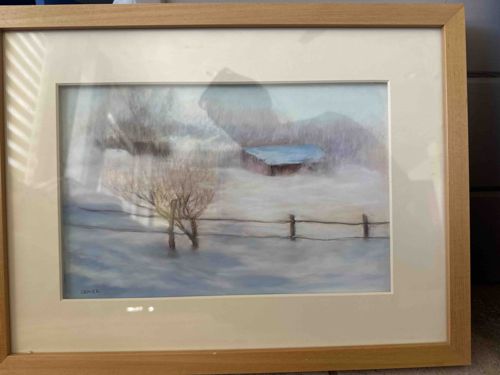
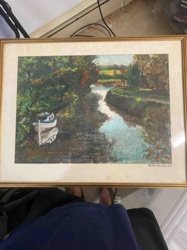
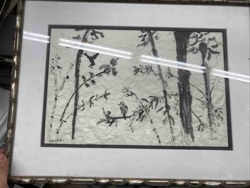
This item is a framed original painting depicting a serene winter landscape. The artwork features a snow-covered field with a bare, multi-branched tree in the foreground on the left, its intricate branches reaching upwards. A simple, dark-colored fence with two visible posts stretches across the mid-ground. In the background, nestled amidst the snow and muted tones, is a small, dark red building with a distinctive light blue roof, possibly a barn or shed. The sky is rendered in soft, hazy light blues and purples, suggesting a cold, overcast day or the subdued light of dusk/dawn, with distant, indistinct shapes that might represent hills or other structures. The overall color palette is cool and muted, dominated by whites, grays, pale blues, and touches of dark red and brown. The painting appears to be executed in a soft medium, possibly watercolor or pastel, given the blended transitions and atmospheric quality. The brushwork, though subtle, conveys a sense of depth and tranquility. The painting is housed within a light-colored, possibly natural wood, frame with a visible wood grain, indicating a simple yet sturdy construction. A wide, off-white or cream-colored mat surrounds the artwork, providing a clean border and separation from the frame. The frame shows no obvious signs of significant damage but the lighting in the photograph causes some reflections on the protective glass or acrylic, making absolute clarity difficult. There appears to be a signature in the bottom left corner, though it is not clearly legible from the provided image. The style suggests a representational, possibly impressionistic or traditional landscape approach, often seen from the late 20th to early 21st century. The craftsmanship of the framing appears competent, suggesting a professionally finished piece.
AI Appraisal Report
Based on my visual examination of the provided image of the framed winter landscape painting, I assess its fair market value to be in the range of $150 to $300. The painting appears to be in good condition, with no overt signs of damage to the artwork itself, though reflections on the glazing prevent a complete assessment. The framing and matting also seem competent and in good shape. Authenticity, however, is difficult to determine solely from an image. While there appears to be a signature, its illegibility prevents identification.
The market for representational, possibly impressionistic, landscape paintings by unknown or lesser-known artists is generally robust, but values are often modest. The aesthetic appeal of the serene winter scene is a positive factor. However, without a known artist or provenance, the work falls into a decorative art category rather than fine art with established market value. Demand is steady for appealing framed artworks that complement interiors, but rarity is not a factor here without artist identification.
Factors impacting value include the unknown artist, the medium (which appears to be watercolor or pastel, generally less robust in value than oils unless by a highly recognized artist), and the lack of provenance. To definitively verify authenticity and potentially enhance value, an in-person examination would be crucial to assess the medium precisely, analyze the signature under magnification, and check for any artist's marks or labels. Provenance documentation and, potentially, art historical research would be required for full authentication of authorship.