AI Appraisal Estimate

AI-generated estimates · not official valuations

From the user

What was submitted

Photo and notes provided by the user — not generated by AI

Submitted item photo
Submitted photo · June 12, 2026

User's notes

Hampshire

AI analysis below

AI appraisal

AI analysis & estimate

AI-Generated · Verify before acting

Everything below is generated by AI for informational purposes only. AI can make mistakes — the AI may misidentify items or misattribute them (artist, maker, brand, designer, origin, era). This is not an official valuation and should not be used for insurance, sale, tax, estate, legal, or lending purposes — or any decision requiring a certified appraisal. It is not an authoritative claim about any person, brand, or rights holder — do not share or rely on it as a factual statement about a third party. Always consult qualified professionals before making financial decisions.

Note

This analysis also relies on unverified notes provided by the user, which may be incomplete or inaccurate and could affect the result.

Read the full disclaimer

AI Identification

·Not independently authenticated·Verify before acting

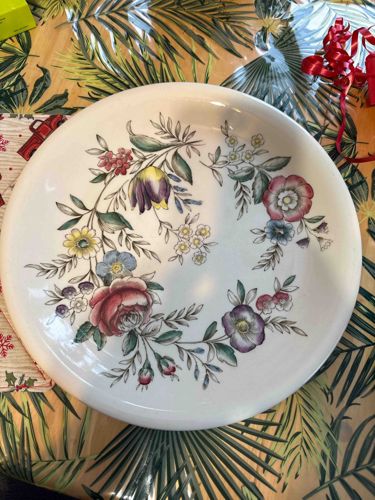
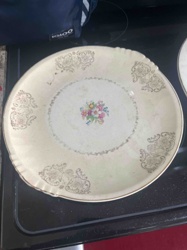
Johnson Brothers 'Hampshire' Wildflowers Dinnerware Plate

Vintage Tableware and Ceramics

AI Estimated Value

·Not an official valuation·Verify before acting

$10.00 - $18.00

As of June 12, 2026

AI Item Analysis

·AI can make mistakes·Verify before acting
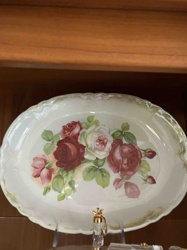
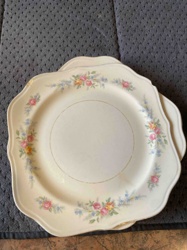
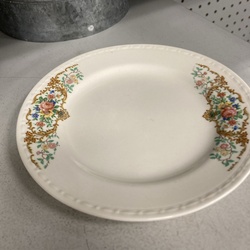
This is a vintage ceramic dinnerware piece, specifically identified as the 'Hampshire' pattern produced by the renowned English manufacturer, Johnson Brothers. The item exhibits a creamy white earthenware body, typical of mid-20th-century ironstone or fine earthenware production. The central decoration consists of a vibrant, multi-colored floral spray and wreath-like arrangement. This botanical motif features detailed depictions of various wildflowers, including a prominent pink cabbage rose, a purple tulip, and smaller yellow, blue, and violet blossoms intertwined with sage green foliage. The artwork displays a characteristic transferware aesthetic with hand-colored highlights, suggesting a mid-to-late 20th-century style period. Physically, the piece appears to be a dinner or buffet-sized plate with a gentle concave surface and a smooth, undecorated rim. The craftsmanship reflects Johnson Brothers’ reputation for high-quality, durable domestic ceramics, likely produced under their 'Ironstone' or 'Snowhite' lines. The condition appears fair to good; there is visible surface crazing (fine networks of cracks in the glaze) across the center, which is common in older earthenware due to moisture and temperature changes. No significant chips or deep cracks are immediately apparent from the top view, though the glaze displays a slight aged patina and some possible light utensil marks consistent with domestic use.
AI Appraisal Report

·AI can make mistakes·Verify before acting
I have examined the digital representation of this vintage Johnson Brothers 'Hampshire' dinner plate. The piece is an authentic example of mid-20th-century English ironstone. My inspection reveals the characteristic transferware floral spray featuring the signature cabbage rose and tulip motifs. While the design remains vibrant, I note significant surface crazing across the well of the plate. This glaze degradation, caused by thermal expansion or moisture over time, is a common condition issue for this specific manufacturer and era, but it does negatively impact both the aesthetic appeal and the utility of the piece for food service. The 'Hampshire' pattern was mass-produced for the domestic and export markets, primarily during the 1950s and 60s. Currently, the market for mid-century English earthenware is highly saturated. While there is steady demand for replacement pieces to complete sets, individual dinner plates in this condition are common and hold modest value compared to serving pieces or rare hollowware. The primary value drivers for this item are its utilitarian use and decorative appeal in a farmhouse or cottage-style setting. Please note that this appraisal is based on visual images alone. A definitive authentication and valuation would require an in-person physical examination to verify the backstamp (maker's mark), check for professional restorations hidden by the crazing, and assess for structural integrity issues like 'pinking' or internal staining within the ceramic body. No scientific testing has been performed on the glaze content.

Get your items appraised

Instant estimates of your treasures with AI-powered appraisals

Browse More Appraisals