AI estimate as of November 3, 2025 · verify with a professional before acting
AI-Generated · Verify before acting
Everything on this page is generated by AI for informational purposes only. AI can make mistakes — the AI may misidentify items or misattribute them (artist, maker, brand, designer, origin, era). This is not an official valuation and should not be used for insurance, sale, tax, estate, legal, or lending purposes — or any decision requiring a certified appraisal. It is not an authoritative claim about any person, brand, or rights holder — do not share or rely on it as a factual statement about a third party. Always consult qualified professionals before making financial decisions.
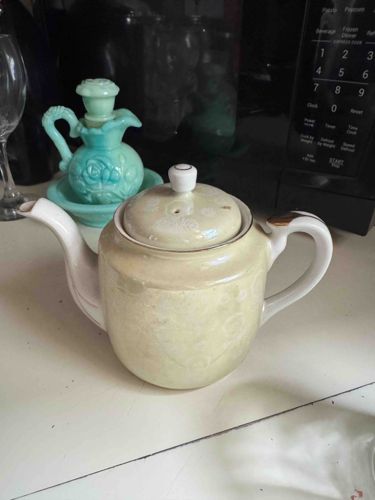
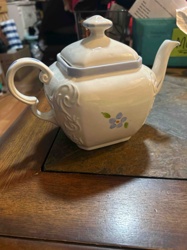
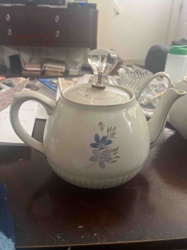
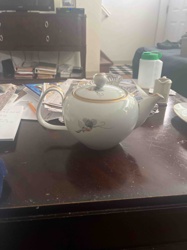
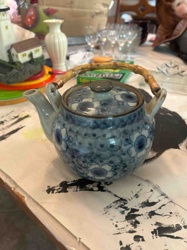
This is a vintage ceramic teapot, primarily off-white or very light cream in color. The main body of the teapot features a subtle, almost distressed, marbling or mottled effect in its glaze, giving it a soft, textural appearance. The spout and handle are a brighter, solid white, creating a pleasing contrast with the slightly darker body. A notable feature is the gold-painted accent visible on the top curve of the handle, where it attaches to the main body, suggesting a decorative touch. The lid is also off-white, matching the body, and has a small, round, white finial (knob) with a dark ring or dot at its very top, potentially indicating a decorative detail or a manufacturing mark. The lid also exhibits small vent holes for steam release. The overall form of the teapot is classic, with a rounded body, curved spout, and a comfortable-looking handle. There are no obvious chips, cracks, or significant damage visible, though the 'distressed' look of the glaze might be intentional or a result of aging. The style suggests it could be from the mid-20th century or earlier, possibly a traditional English or American ceramic piece, known for its functional yet decorative appeal. The craftsmanship appears to be of good quality, with smooth lines and a well-formed shape, indicative of a mass-produced but well-made item.
AI Appraisal Report
Upon visual examination of the vintage off-white ceramic teapot, I assess its condition as very good to excellent for its apparent age, which I estimate to be mid-20th century. The piece presents a classic, well-proportioned form. The main body features an intentional marbled or mottled glaze, contrasted by the solid white handle and spout. The gold-painted accent on the handle is intact and adds a touch of elegance. I note no visible chips, cracks, or crazing from the images provided. The overall impression is that of a well-cared-for, mass-produced but quality decorative and functional item, likely of English or American origin.
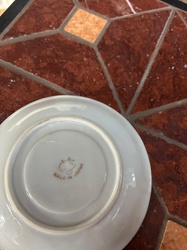
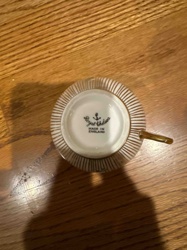
The current market for similar unmarked, mid-century ceramic teaware is stable but modest. The primary value driver for such pieces is decorative appeal and condition. While aesthetically pleasing, the lack of a visible maker's mark significantly limits its value, as it cannot be attributed to a renowned manufacturer like Wedgwood, Lenox, or Royal Doulton. Comparable unsigned teapots in similar condition typically sell in the $30 to $50 range in online marketplaces and antique shops. The gold accent and excellent condition place it at the higher end of this estimate.
It is crucial to note the limitations of this appraisal, as it is based solely on images. Full authentication would require in-person examination to inspect for a maker's mark on the underside, feel the weight and quality of the ceramic, and use a jeweler's loupe to check for any hidden repairs or fine crazing not visible in photos. Without a clear maker's mark or provenance documentation, its value remains primarily decorative.