Yixing Zisha Clay Shiboridashi or Easy Gaiwan
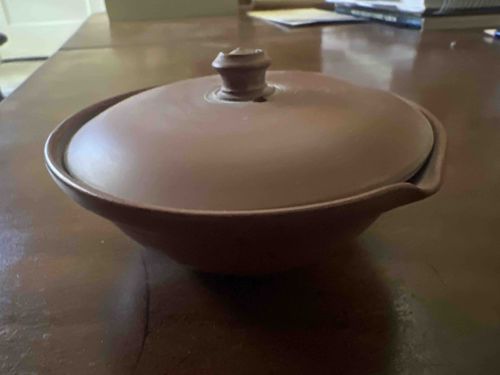
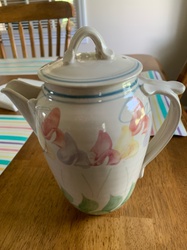
This item is a Japanese or Chinese style tea brewing vessel, specifically a handleless teapot often referred to as a shiboridashi or an easy gaiwan. It is crafted from unglazed purple sand clay, known as Zisha or Yixing clay, characterized by its earthy, reddish-brown matte finish and fine grain. The vessel features a wide, shallow bowl with a notched pouring lip on one side. It is topped with a matching domed lid that has a central knob for easy lifting. A small steam vent hole is visible near the base of the knob. The construction shows high-quality wheel-thrown or slip-cast techniques with smooth, clean lines and a uniform thickness. The surface appears to be in good condition with no visible cracks or chips, though it shows a slight natural patina from contact with tea oils. This style of teaware is typical of the late 20th to early 21st century and is highly valued for its ability to absorb tea flavors over time, enhancing the brewing process of delicate green or oolong teas. The simplicity of the design and the choice of material indicate functional craftsmanship aimed at serious tea practitioners.
AI-Generated Appraisal Disclaimer
Estimated Value
$150-$250
Basic Information
Category
Teaware / Ceramics
Appraised On
March 21, 2026
Estimated Value
$150-$250
Item Description
This item is a Japanese or Chinese style tea brewing vessel, specifically a handleless teapot often referred to as a shiboridashi or an easy gaiwan. It is crafted from unglazed purple sand clay, known as Zisha or Yixing clay, characterized by its earthy, reddish-brown matte finish and fine grain. The vessel features a wide, shallow bowl with a notched pouring lip on one side. It is topped with a matching domed lid that has a central knob for easy lifting. A small steam vent hole is visible near the base of the knob. The construction shows high-quality wheel-thrown or slip-cast techniques with smooth, clean lines and a uniform thickness. The surface appears to be in good condition with no visible cracks or chips, though it shows a slight natural patina from contact with tea oils. This style of teaware is typical of the late 20th to early 21st century and is highly valued for its ability to absorb tea flavors over time, enhancing the brewing process of delicate green or oolong teas. The simplicity of the design and the choice of material indicate functional craftsmanship aimed at serious tea practitioners.
Related Tags
Get Your Items Appraised
Instant estimates of your treasures with AI-powered instant appraisals