AI Appraisal Estimate

AI-generated estimates · not official valuations

From the user

What was submitted

Photo and notes provided by the user — not generated by AI

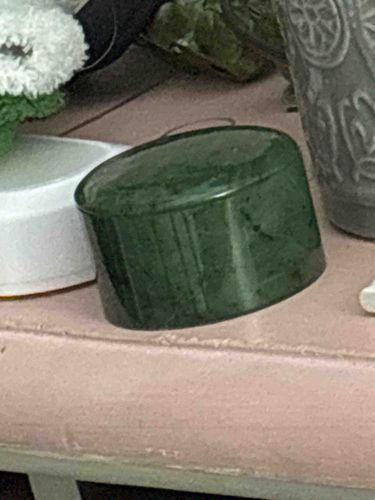
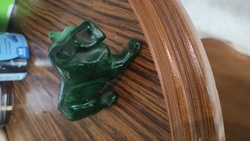
Submitted item photo
Submitted photo · June 18, 2026

User's notes

Jade powder box

AI analysis below

AI appraisal

AI analysis & estimate

AI-Generated · Verify before acting

Everything below is generated by AI for informational purposes only. AI can make mistakes — the AI may misidentify items or misattribute them (artist, maker, brand, designer, origin, era). This is not an official valuation and should not be used for insurance, sale, tax, estate, legal, or lending purposes — or any decision requiring a certified appraisal. It is not an authoritative claim about any person, brand, or rights holder — do not share or rely on it as a factual statement about a third party. Always consult qualified professionals before making financial decisions.

Note

This analysis also relies on unverified notes provided by the user, which may be incomplete or inaccurate and could affect the result.

Read the full disclaimer

AI Identification

·Not independently authenticated·Verify before acting

Chinese Spinach Jade Circular Powder Box

Asian Art & Antiquities / Hardstone Carvings

AI Estimated Value

·Not an official valuation·Verify before acting

$400 - $600

As of June 18, 2026

AI Item Analysis

·AI can make mistakes·Verify before acting
This item is a small, circular powder box or vanity jar carved from dark green spinach jade, likely nephrite. The piece features a deep forest green hue with characteristic mottled inclusions and darker 'spinach' flecks scattered throughout the stone, which provide a naturally variegated texture. Its construction follows a minimalist aesthetic, consisting of a cylindrical body with a slightly domed, flush-fitting lid that creates a seamless profile when closed. The exterior surface has been polished to a soft, waxy luster rather than a high gloss, which is typical of traditional nephrite craftsmanship. The walls appear to be of uniform thickness, suggesting skilled hand-carving. In terms of condition, the piece shows a well-preserved surface with minor surface abrasions consistent with age and domestic use. There are no visible large cracks or significant chips on the exterior body, though the interior rim may have the micro-flea bites common to stone-on-stone contact. Stylistically, this piece reflects late 19th to early 20th-century Chinese lapidary work, often produced for the export market or as part of a traditional dressing table set. The quality is indicated by the evenness of the stone's color and the precision of the lid's fit, which requires careful hand-finishing.
AI Appraisal Report

·AI can make mistakes·Verify before acting
Upon examination of this spinach jade circular powder box, I find it to be a representative example of late Qing Dynasty to early Republic period (c. 1890–1920) lapidary work. The material exhibits the characteristic 'spinach' features of nephrite, specifically the dark chromium-induced inclusions and mottled forest-green saturation. The craftsmanship is commendable; the flush-fitting lid and consistent wall thickness indicate a high level of skill in traditional abrasive carving techniques. The soft, waxy luster is appropriate for nephrite of this era, suggesting it has not been subjected to modern polymer bleaching or high-gloss machine polishing. Current market demand for utilitarian jade scholar's objects and vanity items remains steady, though prices are dictated heavily by the translucency and 'cleanliness' of the stone. This piece, while possessing a deep, desirable color, is more opaque, which places it in a moderate price bracket compared to imperial-quality translucent jades. This appraisal is based on visual analysis of the images provided. Limitations include the inability to perform a specific gravity test or Mohs hardness scratch test to definitively distinguish nephrite from lower-value bowenite or 'new jade' serpentines. Furthermore, an in-person inspection under ultraviolet light is required to check for hidden stabilizers or resin fills. For a definitive authentication, I would recommend reviewing provenance documentation or bills of sale that establish a chain of custody, as well as a tactile inspection of the interior rim to verify the nature of the wear and hand-carving marks.

Get your items appraised

Instant estimates of your treasures with AI-powered appraisals

Browse More Appraisals