AI estimate as of December 2, 2025 · verify with a professional before acting
AI-Generated · Verify before acting
Everything on this page is generated by AI for informational purposes only. AI can make mistakes — the AI may misidentify items or misattribute them (artist, maker, brand, designer, origin, era). This is not an official valuation and should not be used for insurance, sale, tax, estate, legal, or lending purposes — or any decision requiring a certified appraisal. It is not an authoritative claim about any person, brand, or rights holder — do not share or rely on it as a factual statement about a third party. Always consult qualified professionals before making financial decisions.
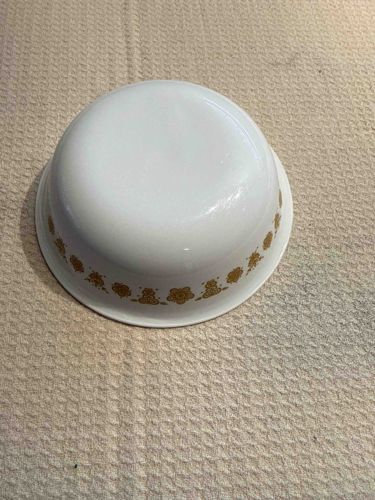
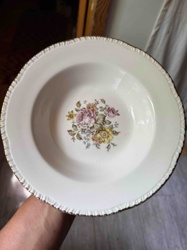
This is a vintage Pyrex baby bowl, likely from the 'Bears and Flowers' pattern, characterized by its opaque white milk glass construction. The bowl features a classic circular shape with gently sloping sides and a flat bottom, designed for stability during feeding. Its primary color is a bright, glossy white, indicative of milk glass, which was popular for its durability and aesthetic appeal in kitchenware. A distinctive decorative band, approximately one inch in height, encircles the exterior of the bowl, just below the rim. This band is adorned with alternating motifs of small, stylized golden-yellow bears and four-petal flowers, distributed evenly around the circumference. The bears appear to be sitting or standing, while the flowers have a simple, symmetrical design. These decals are applied with precision, suggesting a machine-printed process common to mass-produced Pyrex. The condition appears to be good, with a smooth, reflective surface that shows minimal signs of wear or scratches, suggesting it has been well-preserved. There are no visible chips, cracks, or significant fading of the gold decal, which often indicates careful handling and cleaning. The craftsmanship is typical of Pyrex, known for its robust and heat-resistant glass, making it a practical and long-lasting item. This type of pattern was common during the mid to late 20th century, likely dating from the 1970s or 1980s, consistent with Pyrex's production history of patterned milk glass dinnerware and children's items. The bowl's small size and decorative motif suggest it was intended for infant or toddler feeding.
AI Appraisal Report
Upon visual examination of the provided image, I assess this Vintage Pyrex Gold 'Bears and Flowers' Baby Bowl to be in excellent condition. The opaque white milk glass shows no visible chips, cracks, or significant scratches, and the surface retains its original gloss. Crucially, the gold 'bears and flowers' decal appears remarkably intact with no signs of fading, flaking, or wear, which is often a vulnerability for Pyrex decals of this era. The precision of the decal application further supports its authenticity as a mass-produced Pyrex item from the mid to late 20th century, likely the 1970s or 1980s.
Market conditions for vintage Pyrex baby bowls in good condition are generally stable. While not exceptionally rare, patterns like 'Bears and Flowers' have a loyal collector base. Comparables for similar Pyrex novelty patterns or children's ware in excellent condition typically range from $20 to $50. The strong condition of the decal significantly impacts its value positively, as wear to the decoration would substantially reduce its appeal and price. Demand for these specific baby bowls is moderate, driven by Pyrex collectors, vintage kitchenware enthusiasts, and those seeking nostalgic baby items.
It is important to note the limitations of an appraisal based solely on an image. Full authentication would ideally require an in-person examination to verify the tactile quality of the glass, confirm the absence of hairline cracks or flea bites that might not be visible in photographs, and to check for any manufacturing marks or stamps on the base that could further corroborate its age and authenticity. Without physical inspection, I am assessing based on the visual evidence presented, which suggests a well-preserved and authentic piece.