AI estimate as of December 8, 2025 · verify with a professional before acting
AI-Generated · Verify before acting
Everything on this page is generated by AI for informational purposes only. AI can make mistakes — the AI may misidentify items or misattribute them (artist, maker, brand, designer, origin, era). This is not an official valuation and should not be used for insurance, sale, tax, estate, legal, or lending purposes — or any decision requiring a certified appraisal. It is not an authoritative claim about any person, brand, or rights holder — do not share or rely on it as a factual statement about a third party. Always consult qualified professionals before making financial decisions.
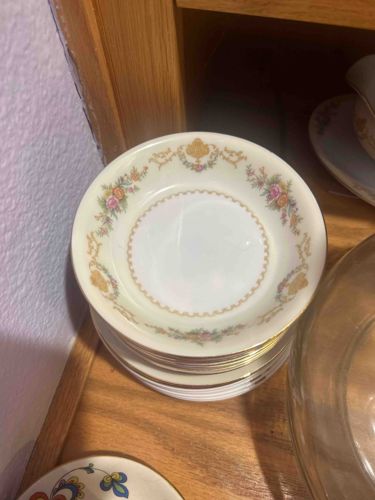
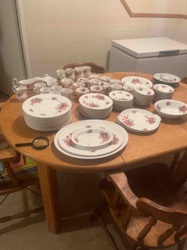
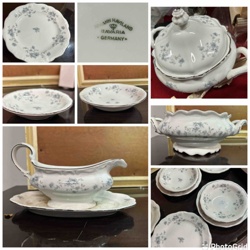
This item is a vintage ceramic or porcelain soup or salad bowl, characterized by its shallow, rounded form suitable for serving liquid or semi-liquid dishes. The primary color of the bowl's body is an off-white or cream, providing a soft background for the intricate decorative elements. A prominent feature is the elegant floral and gold motif encircling the rim. This pattern consists of groupings of small, multi-colored roses and green foliage, interspersed with ornate gold crests or medallions that have a classical or rococo feel. The outer edge of the bowl appears to have a subtle gold rim, suggesting a touch of luxury. Moving inwards from the floral band, there is a thinner, wavy or scalloped golden line, which frames the central, undecorated well of the bowl. The surface of the bowl appears smooth and glazed, indicating a quality finish. No obvious cracks, chips, or significant wear are visible from this perspective, suggesting it is in good to very good used condition. Minor surface scratches or slight fading of the gold trim might be present upon closer inspection, common with vintage tableware. The specific manufacturer's marks are not visible in the image, but the style points to mid-20th century production, possibly from the 1940s to 1960s, a period known for such elaborate dinnerware patterns. The craftsmanship appears to be of good quality, with clear and consistent application of the decorative elements. The overall aesthetic is one of elegant home dining, often associated with formal place settings.
AI Appraisal Report
Based on my visual examination of the provided image, this vintage soup or salad bowl, featuring a rose floral and gold motif on a cream-colored porcelain or ceramic body, appears to be in good to very good used condition. The decorative elements, including the multi-colored roses, green foliage, and ornate gold crests, show clear and consistent application. The subtle gold rim and wavy inner gold line contribute to its elegant aesthetic. No overt chips, cracks, or significant wear are discernible from the photograph, suggesting careful use and storage.
Authenticity, based solely on imagery, is limited. The style strongly points to mid-20th century production (1940s-1960s), a period known for such patterned dinnerware. However, without a physical examination, I cannot confirm the specific manufacturer, material composition (porcelain vs. ceramic), or precise age.
In terms of market conditions, individual vintage dinnerware bowls, even with attractive patterns, generally command modest prices unless they are from highly sought-after manufacturers or very rare patterns. Comparable items from similar eras with floral and gold motifs typically sell in the range of $10 to $30 per piece on platforms like eBay, Etsy, and antique malls. The demand for such individual pieces is moderate, primarily from collectors completing sets, prop stylists, or individuals seeking unique decorative items. This particular pattern does not appear to be exceptionally rare, nor does it immediately suggest a high-end, highly collectible brand without maker's marks.
Factors impacting value include the condition (which appears good), the attractive yet not unique design. The absence of manufacturer's marks significantly restricts definitive authentication and narrows the potential buyer pool for those seeking specific brands. For full authentication and a more precise valuation, I would require an in-person examination to inspect for manufacturer's marks, assess the exact material and weight, confirm the absence of crazing or micro-abrasions, and evaluate the integrity of the gold trim for any subtle fading or wear not visible in the image. Provenance documentation, though rare for individual dinnerware pieces, would further enhance value.