AI estimate as of September 21, 2025 · verify with a professional before acting
AI-Generated · Verify before acting
Everything on this page is generated by AI for informational purposes only. AI can make mistakes — the AI may misidentify items or misattribute them (artist, maker, brand, designer, origin, era). This is not an official valuation and should not be used for insurance, sale, tax, estate, legal, or lending purposes — or any decision requiring a certified appraisal. It is not an authoritative claim about any person, brand, or rights holder — do not share or rely on it as a factual statement about a third party. Always consult qualified professionals before making financial decisions.
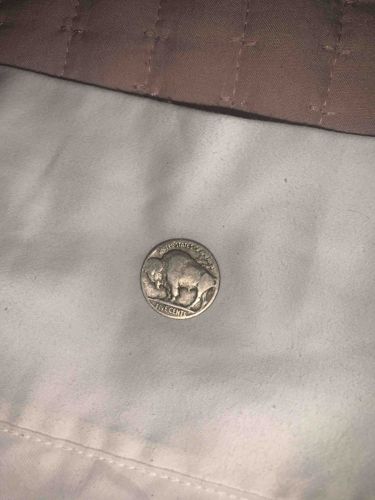
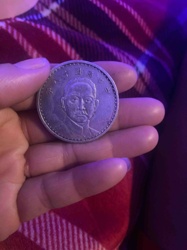
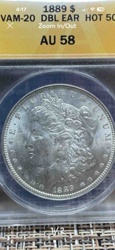
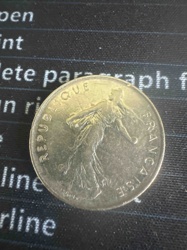
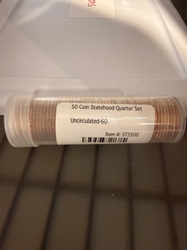
The item is a United States Buffalo Nickel, specifically showing its reverse side. This coin is made of a cupronickel alloy, giving it a dull, silvery-gray metallic appearance. The physical characteristics visible include a circular shape with a raised rim, typical of coinage. The central artwork depicts an American bison (buffalo) standing on a raised mound, facing to the left. Above the bison, the inscription "UNITED STATES OF AMERICA" is partially visible around the upper curve of the coin, with "E PLURIBUS UNUM" below it, though these are somewhat obscured or worn. Below the bison, the denomination "FIVE CENTS" is clearly legible on the mound.
The overall condition appears to be circulated, with moderate wear visible on the high points of the design, such as the bison's hump and legs, suggesting loss of some finer details. There are no obvious major damages like deep scratches or significant corrosion, but the surface exhibits a consistent, somewhat mottled patina, common for older circulated coins that have not been extensively cleaned. The specific date is not visible on this side, as it is located on the obverse (Indian Head side). This coin belongs to a series minted between 1913 and 1938. The craftsmanship is typical of U.S. Mint production for the early 20th century, displaying intricate detail in the design, despite the wear. The general style is an iconic example of early 20th-century U.S. numismatic art, characterized by its realistic portrayal of American natural elements.
AI Appraisal Report
Based on my visual examination of the provided image of this Buffalo Nickel (reverse side), I assess its condition as 'Good' (G-4) to 'Very Good' (VG-8) on the Sheldon scale. The coin exhibits moderate to heavy circulation wear, consistent with frequent handling over an extended period. Key design elements like the bison's horn, head, and hump show significant flattening, and portions of the legend "UNITED STATES OF AMERICA" and "E PLURIBUS UNUM" are weak or incomplete, typical for this grade range. The central element, the bison, is still clearly discernible, and the denomination "FIVE CENTS" is fully legible.
The authenticity, based purely on visual characteristics from the image, appears to be consistent with a genuine United States Buffalo Nickel. There are no immediate red flags suggesting a counterfeit, such as incorrect design elements, tool marks, or an unusual patina. The craftsmanship aligns with U.S. Mint production for the early 20th century. However, definitive verification of authenticity would require in-person examination to assess weight, diameter, thickness, edge characteristics, and specific die markers that are not visible or confirmable from an image alone. Microscopic analysis and spectrographic material testing could also solidify authenticity and rule out sophisticated counterfeits.
Market conditions for common date, heavily circulated Buffalo Nickels are generally robust but with low individual values. These coins are popular entry-level collectibles. Comparables in similar circulated grades typically trade in the $1-5 range, depending on the specific date (which is not visible here) and mint mark (also not visible). There is significant demand for these coins, but their high mintage figures and survival rates for circulated examples preclude rarity for common dates in low grades. Factors significantly impacting value for this specific coin are limited to its grade. If it were a key date (e.g., 1913-S Type 2, 1914/13, 1926-S) or a rare variety, its value, even in this condition, would be significantly higher; however, given the typical circulation wear, it is highly improbable to be a premium date/mint mark.
My primary limitation in this appraisal is the reliance on a single image of only the reverse side. Without viewing the obverse, I cannot determine the date or mint mark, which are crucial for precise valuation. An in-person inspection would also allow for a more accurate grade assessment, detection of any hidden damage or repairs, and confirmation of characteristics like luster, toning, and specific die states, all of which contribute to an accurate appraisal.