AI Appraisal Estimate

AI-generated estimates · not official valuations

From the user

What was submitted

Photo and notes provided by the user — not generated by AI

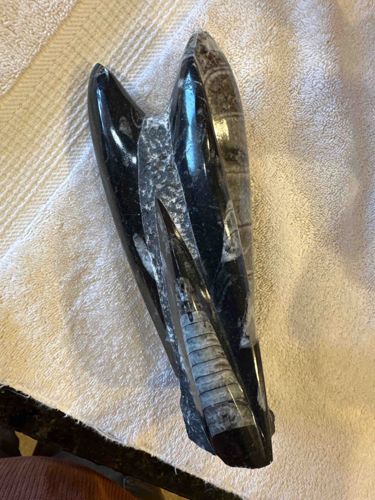
Submitted item photo
Submitted photo · June 10, 2026

User's notes

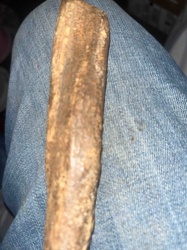
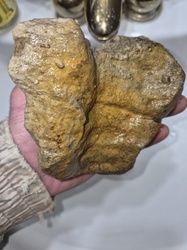
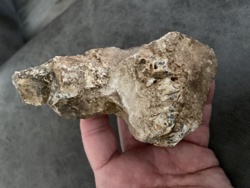
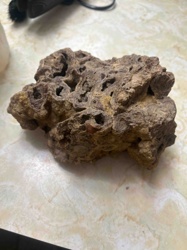
~8-1/2 inch tall polished orthoceras fossil

AI analysis below

AI appraisal

AI analysis & estimate

AI-Generated · Verify before acting

Everything below is generated by AI for informational purposes only. AI can make mistakes — the AI may misidentify items or misattribute them (artist, maker, brand, designer, origin, era). This is not an official valuation and should not be used for insurance, sale, tax, estate, legal, or lending purposes — or any decision requiring a certified appraisal. It is not an authoritative claim about any person, brand, or rights holder — do not share or rely on it as a factual statement about a third party. Always consult qualified professionals before making financial decisions.

Note

This analysis also relies on unverified notes provided by the user, which may be incomplete or inaccurate and could affect the result.

Read the full disclaimer

AI Identification

·Not independently authenticated·Verify before acting

Polished Orthoceras Fossil Sculpture

Paleontology / Fossils & Minerals

AI Estimated Value

·Not an official valuation·Verify before acting

$65.00 - $95.00

As of June 10, 2026

AI Item Analysis

·AI can make mistakes·Verify before acting
This item is an original Orthoceras fossil specimen, approximately 8.5 inches in height, originating from the Paleozoic era (approximately 350 to 450 million years ago), most likely sourced from Morocco. The piece features multiple fossilized cephalopods embedded in a dark, carbonaceous limestone matrix. The specimen has been meticulously hand-polished to a high luster, contrasting the white/grey aragonite internal chambers and the siphuncle of the fossils against the deep black of the surrounding stone. The sculpture is carved in a 'free-standing' or 'standing wing' style, with a bifurcated or split top creating a modern, abstract aesthetic. The visible fossil structures show clear septa (chamber walls), which are well-preserved. Regarding condition, the piece shows a professional polish with no significant chips or cracks visible on the main surfaces, though the base appears rough-hewn for stability. Small surface pits or natural irregularities in the stone matrix are consistent with organic fossils of this age. The craftsmanship is typical of commercial paleontological décor, demonstrating high-quality lapidary work used to reveal the intricate internal anatomy of the ancient marine mollusks.
AI Appraisal Report

·AI can make mistakes·Verify before acting
I have virtually examined this hand-polished Orthoceras fossil sculpture, standing at approximately 8.5 inches. The specimen features well-preserved cephalopods in a carbonaceous limestone matrix, likely originating from the Erfoud region of Morocco. Upon visual inspection, the piece demonstrates high-quality lapidary work; the contrast between the calcified white aragonite chambers and the dark matrix is sharp, and the 'standing wing' bifurcated cut indicates a deliberate aesthetic choice for interior décor. The condition appears excellent for a commercial-grade fossil, with minimal surface abrasions and a high-gloss finish that highlights the internal septa and siphuncle structures. From a market perspective, Orthoceras specimens are among the most common fossils available globally due to their abundance in Moroccan massifs. Consequently, they do not command high rarity premiums. Value is determined primarily by the quality of the polish, the size of the piece, and the visual balance of the fossils within the matrix. This specific piece’s modern, sculptural shape elevates it slightly above standard raw slabs. Similar pieces typically retail in mineral galleries and museum shops within the appraised range. Limitations: While the visual characteristics are consistent with genuine Devonian-era fossils, a digital image cannot confirm the absence of synthetic fillers or composite reconstructions occasionally used to mask structural damage. A physical inspection would be required to verify the density of the stone and check for tactile 'coldness' to ensure it is not a high-quality resin cast. To provide a definitive authentication certificate, I would need to examine the piece under magnification to ensure the boundaries between the fossils and matrix are natural and not adhered with epoxy.

Get your items appraised

Instant estimates of your treasures with AI-powered appraisals

Browse More Appraisals