Late 19th-Century Jacobean Revival Barley Twist Side Chair
Antique Furniture / Seating

Late 19th-Century Jacobean Revival Barley Twist Side Chair

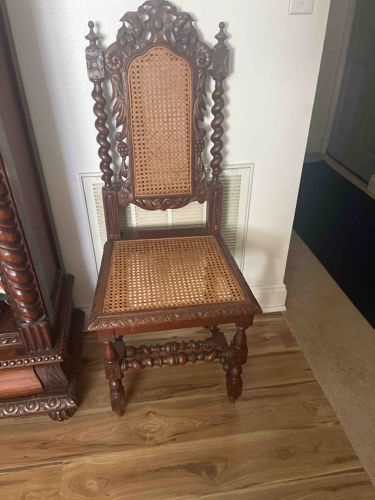
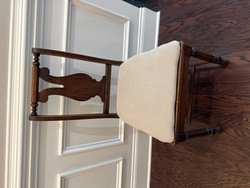
This is a highly ornate side chair executed in the Jacobean Revival style, likely dating from the late 19th to early 20th century. The chair is constructed from a dark-stained hardwood, possibly oak or walnut, featuring a very tall backrest characterized by elaborate hand-carved details. The back is framed by two prominent barley-twist (solomonic) stiles topped with decorative finials. A central splat consists of a classic hand-woven caned panel, which is mirrored by a similar caned seat. The crest rail and surrounding frame exhibit deep relief carvings of floral and scroll motifs. The apron of the seat is further embellished with a chip-carved geometric border. The support structure consists of turned legs connected by an H-shaped stretcher system featuring multiple ring-and-ball turnings for added stability and aesthetic appeal. The dark patina suggests an original finish with some expected surface wear, light scuffing on the feet, and general aging to the cane. The cane work appears intact without major sagging or breaks, which is a significant indicator of care or potentially a high-quality historical restoration. The craftsmanship shows high attention to detail, typical of Victorian-era historical revivals that sought to emulate the grandeur of 17th-century English furniture.
Estimated Value

$450 - $700

Basic Information

Category

Antique Furniture / Seating

Appraised On

February 22, 2026

Estimated Value

$450 - $700

Item Description

This is a highly ornate side chair executed in the Jacobean Revival style, likely dating from the late 19th to early 20th century. The chair is constructed from a dark-stained hardwood, possibly oak or walnut, featuring a very tall backrest characterized by elaborate hand-carved details. The back is framed by two prominent barley-twist (solomonic) stiles topped with decorative finials. A central splat consists of a classic hand-woven caned panel, which is mirrored by a similar caned seat. The crest rail and surrounding frame exhibit deep relief carvings of floral and scroll motifs. The apron of the seat is further embellished with a chip-carved geometric border. The support structure consists of turned legs connected by an H-shaped stretcher system featuring multiple ring-and-ball turnings for added stability and aesthetic appeal. The dark patina suggests an original finish with some expected surface wear, light scuffing on the feet, and general aging to the cane. The cane work appears intact without major sagging or breaks, which is a significant indicator of care or potentially a high-quality historical restoration. The craftsmanship shows high attention to detail, typical of Victorian-era historical revivals that sought to emulate the grandeur of 17th-century English furniture.
Get Your Items Appraised

Instant estimates of your treasures with AI-powered instant appraisals

Browse More Appraisals