Late Victorian Pressed-Back Golden Oak Dining Chair
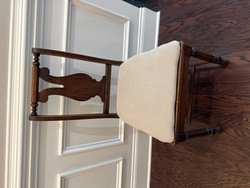
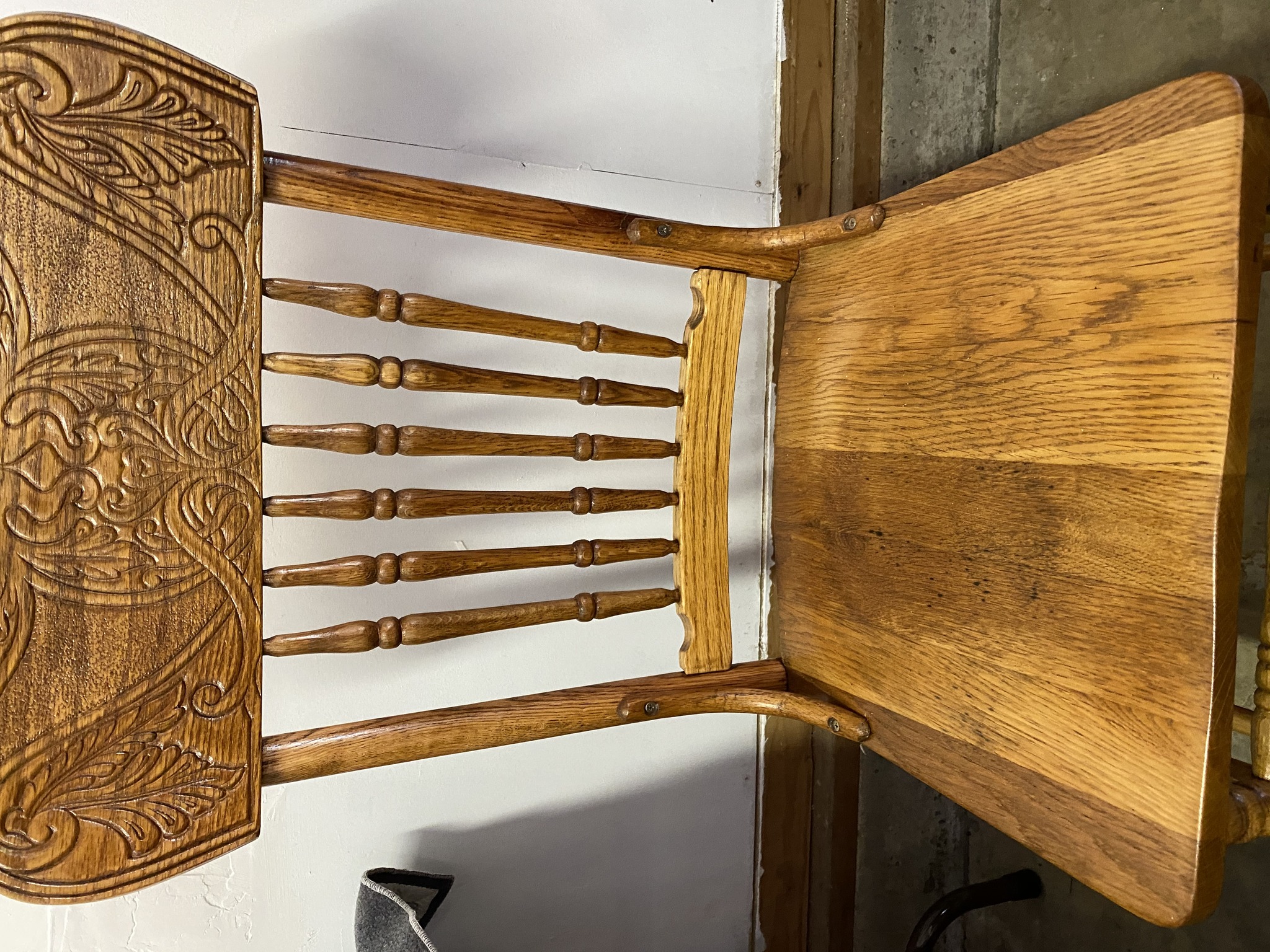
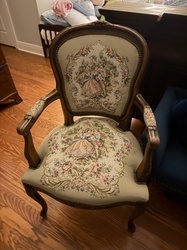
This is a fine example of a Late Victorian-style dining chair, likely dating from the 1890s to 1910, commonly referred to as a 'pressed-back' chair. The piece is constructed from solid white oak, featuring a prominent 'golden oak' finish that highlights the natural grain. The most striking element is the crest rail, which showcases intricate machine-pressed foliate and scroll patterns that mimic hand-carving — a hallmark of late 19th-century mass-produced quality furniture. Below the crest, the backrest features six turned spindles joined to a contoured horizontal splat. The seat is solid and gently sculpted for ergonomic comfort, joined to the back posts with visible screw reinforcements, which may indicate a later repair or a specific manufacturing style of the era. The condition appears to be very good with a consistent patina, though typical signs of age are present, including minor surface abrasions, darkening in the deep recesses of the pressed design, and slight wood movement over time. The sturdiness of the turnings and the depth of the pressing suggest a higher-quality production from a reputable American furniture manufacturer of the period, such as those found in Michigan or Illinois during the peak of the oak furniture movement.
AI-Generated Appraisal Disclaimer
Estimated Value
$125 - $175
Basic Information
Category
Antique Furniture / Seating
Appraised On
April 17, 2026
Estimated Value
$125 - $175
Additional Details Provided By Owner
User Provided Information
antique oak chair
Item Description
This is a fine example of a Late Victorian-style dining chair, likely dating from the 1890s to 1910, commonly referred to as a 'pressed-back' chair. The piece is constructed from solid white oak, featuring a prominent 'golden oak' finish that highlights the natural grain. The most striking element is the crest rail, which showcases intricate machine-pressed foliate and scroll patterns that mimic hand-carving — a hallmark of late 19th-century mass-produced quality furniture. Below the crest, the backrest features six turned spindles joined to a contoured horizontal splat. The seat is solid and gently sculpted for ergonomic comfort, joined to the back posts with visible screw reinforcements, which may indicate a later repair or a specific manufacturing style of the era. The condition appears to be very good with a consistent patina, though typical signs of age are present, including minor surface abrasions, darkening in the deep recesses of the pressed design, and slight wood movement over time. The sturdiness of the turnings and the depth of the pressing suggest a higher-quality production from a reputable American furniture manufacturer of the period, such as those found in Michigan or Illinois during the peak of the oak furniture movement.
Get Your Items Appraised
Instant estimates of your treasures with AI-powered instant appraisals