AI Appraisal Estimate

AI-generated estimates · not official valuations

From the user

What was submitted

Photo and notes provided by the user — not generated by AI

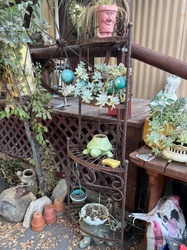
Submitted item photo
Submitted photo · June 18, 2026

User's notes

Statue

AI analysis below

AI appraisal

AI analysis & estimate

AI-Generated · Verify before acting

Everything below is generated by AI for informational purposes only. AI can make mistakes — the AI may misidentify items or misattribute them (artist, maker, brand, designer, origin, era). This is not an official valuation and should not be used for insurance, sale, tax, estate, legal, or lending purposes — or any decision requiring a certified appraisal. It is not an authoritative claim about any person, brand, or rights holder — do not share or rely on it as a factual statement about a third party. Always consult qualified professionals before making financial decisions.

Note

This analysis also relies on unverified notes provided by the user, which may be incomplete or inaccurate and could affect the result.

Read the full disclaimer

AI Identification

·Not independently authenticated·Verify before acting

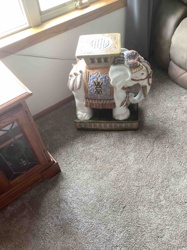
Ceramic Elephant Garden Stool/Planter Stand

Garden Furniture & Decor

AI Estimated Value

·Not an official valuation·Verify before acting

$100-150

As of June 18, 2026

AI Item Analysis

·AI can make mistakes·Verify before acting
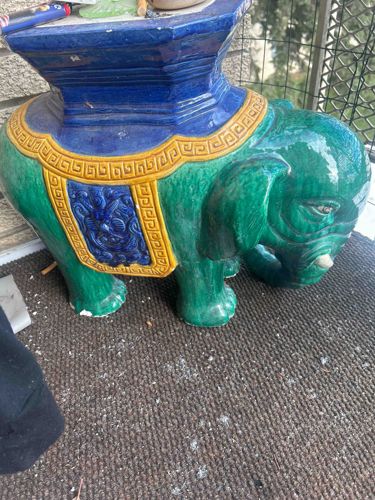
This item is a ceramic garden stool or planter stand, molded in the form of a stylized elephant. Its primary colors are a vivid emerald green for the elephant's body and a deep cobalt blue for the saddle-like top portion and decorative accents. The elephant's body features a glossy, somewhat irregularly applied green glaze, characteristic of ceramic items that may have been crafted with a more rustic or hand-finished approach rather than mass industrial production. A prominent 'saddle' or 'howdah' is depicted on its back, rendered in the same rich blue, atop which a rectangular pedestal also in blue serves as the flat surface. This pedestal has a slightly tapered silhouette. Encircling the elephant's back where the blue saddle meets the green body is a decorative band defined by a raised, repeating geometric pattern (possibly a meander or grecque key motif) rendered in a contrasting bright yellow enamel or glaze. Below this yellow band, on the elephant's side, is a recessed panel with intricate, molded relief details, also finished in the cobalt blue glaze, suggesting a floral or mythical creature design. The elephant features stout legs and a roughly sculpted head with visible eyes and a trunk curled upwards or forwards, though details are somewhat obscured by the glaze. There are observable condition issues: several chips are present, particularly visible on the feet where the white ceramic body is exposed, indicating wear and impact. The glaze also shows some inconsistencies and minor pitting, which could be part of its original character or signs of age and exposure to the elements. The overall aesthetic suggests an item of East Asian influence, possibly from the mid to late 20th century, designed for outdoor or patio use due to its robust construction and weather-resistant materials. The craftsmanship appears sturdy, though not exceptionally refined, typical of decorative garden ceramics.
AI Appraisal Report

·AI can make mistakes·Verify before acting
Upon examining the provided images of this ceramic elephant garden stool, I have assessed its value based on my expertise in decorative arts and garden statuary. The piece presents as a mid-to-late 20th-century decorative item, likely of East Asian origin, designed for patio or garden use. Its vibrant emerald green and cobalt blue glazes, along with the stylized elephant form, are characteristic of this period's popular 'Hollywood Regency' or Chinoiserie revival styles. The craftsmanship appears to be commercial-grade rather than fine art; it is sturdy but lacks the refined detail of older or more artisanal examples. The primary factor impacting its value is its condition. I noted several chips on the feet, which expose the underlying white ceramic body. Such damage is common for garden items but significantly detracts from its market value. While some glaze inconsistencies may be original to its manufacture, the visible wear is post-production damage. Market analysis of comparable mid-century ceramic elephant stools and stands shows a wide range of values, but items with notable condition issues, such as chips, typically sell at the lower end of the spectrum. The demand for such decorative pieces remains steady among decorators and collectors of vintage outdoor furnishings. However, the lack of rarity and the noted damage limit its potential value. It is important to note that this appraisal is based solely on visual examination of images. A full authentication would require in-person inspection to identify any maker's marks on the underside, which could significantly alter the valuation. Without physical handling or provenance documentation, I cannot definitively confirm the manufacturer, exact age, or country of origin.

Get your items appraised

Instant estimates of your treasures with AI-powered appraisals

Browse More Appraisals