AI Appraisal Estimate

AI-generated estimates · not official valuations

From the user

What was submitted

Photo and notes provided by the user — not generated by AI

Submitted item photo
Submitted photo · June 17, 2026

User's notes

No additional notes provided.

AI analysis below

AI appraisal

AI analysis & estimate

AI-Generated · Verify before acting

Everything below is generated by AI for informational purposes only. AI can make mistakes — the AI may misidentify items or misattribute them (artist, maker, brand, designer, origin, era). This is not an official valuation and should not be used for insurance, sale, tax, estate, legal, or lending purposes — or any decision requiring a certified appraisal. It is not an authoritative claim about any person, brand, or rights holder — do not share or rely on it as a factual statement about a third party. Always consult qualified professionals before making financial decisions.

Read the full disclaimer

AI Identification

·Not independently authenticated·Verify before acting

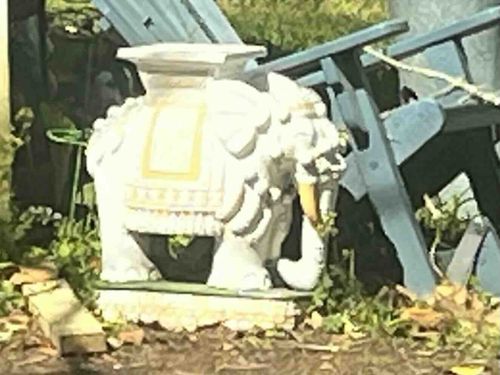
Elephant Ceramic Garden Stool

Home Decor / Outdoor Furniture

AI Estimated Value

·Not an official valuation·Verify before acting

$150 - $250

As of June 17, 2026

AI Item Analysis

·AI can make mistakes·Verify before acting
This is a decorative ceramic garden stool fashioned in the form of a ceremonial elephant. The piece is primarily white with subtle yellow or gold accenting on the saddle (howdah) area and tusks. It features a standing elephant with its trunk curled inward, supporting a flat rectangular surface on its back intended for use as a side table or plant stand. The construction appears to be glazed earthenware or porcelain, typical of Chinoiserie garden ornaments. Detailed sculptural elements include draped floral or geometric trappings along the sides, ruffled ear details, and a molded base that mimics a pedestaled platform. The craftsmanship shows mid-range quality with some visible relief work. Regarding condition, the glaze appears somewhat weathered from outdoor exposure, and there is visible dirt or organic staining around the base and lower extremities. Small chips or crazing may be present upon closer inspection given its outdoor placement. Style-wise, it reflects a 20th-century Hollywood Regency or traditional Asian-inspired aesthetic, commonly produced from the 1960s through the modern era. No maker's marks are visible in the photograph, but such items were frequently imported from Asia.

AI Appraisal Report

·AI can make mistakes·Verify before acting
I have completed a visual assessment of this ceramic elephant garden stool. Based on its design and material characteristics, the piece is a late 20th-century decorative object, likely mass-produced in Asia (Vietnam or China) for the global home decor market. The ivory-white glaze and molded decorative trappings align with the popular Hollywood Regency aesthetic. Condition: The item shows signs of significant outdoor exposure. There is visible organic staining and mineral buildup around the base and feet, which suggests prolonged placement in a garden or patio setting. While the glaze remains largely intact, the presence of surface grime and potential hairline crazing—common in glazed earthenware—reduces its secondary market value compared to mint indoor examples. Market Conditions: Garden stools of this type are relatively common, with high supply in the vintage market. This specific model lacks the intricate hand-painted polychrome details found in high-end antique Cantonese or Satsuma examples, placing it in the decorative/utility category rather than a fine art category. Comparable sales for ivory-glazed elephant stools in similar condition generally fall within the $150 to $250 range at regional auction houses or through online vintage marketplaces like Etsy or 1stDibs (at the lower end). Limitations: This appraisal is based solely on digital images. A physical inspection is necessary to verify the base's foot rim for age markers, check for hidden maker's marks, and determine the structural integrity of the ceramic. I cannot definitively date the clay body or rule out deep structural cracks without a tactile examination and cleaning. Provenance documentation or original purchase receipts would be required to verify its specific decade of manufacture.

Get your items appraised

Instant estimates of your treasures with AI-powered appraisals

Browse More Appraisals