AI Appraisal Estimate

AI-generated estimates · not official valuations

From the user

What was submitted

Photo and notes provided by the user — not generated by AI

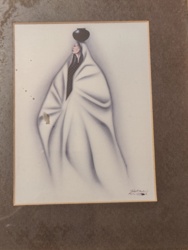
Submitted item photo
Submitted photo · June 3, 2026

User's notes

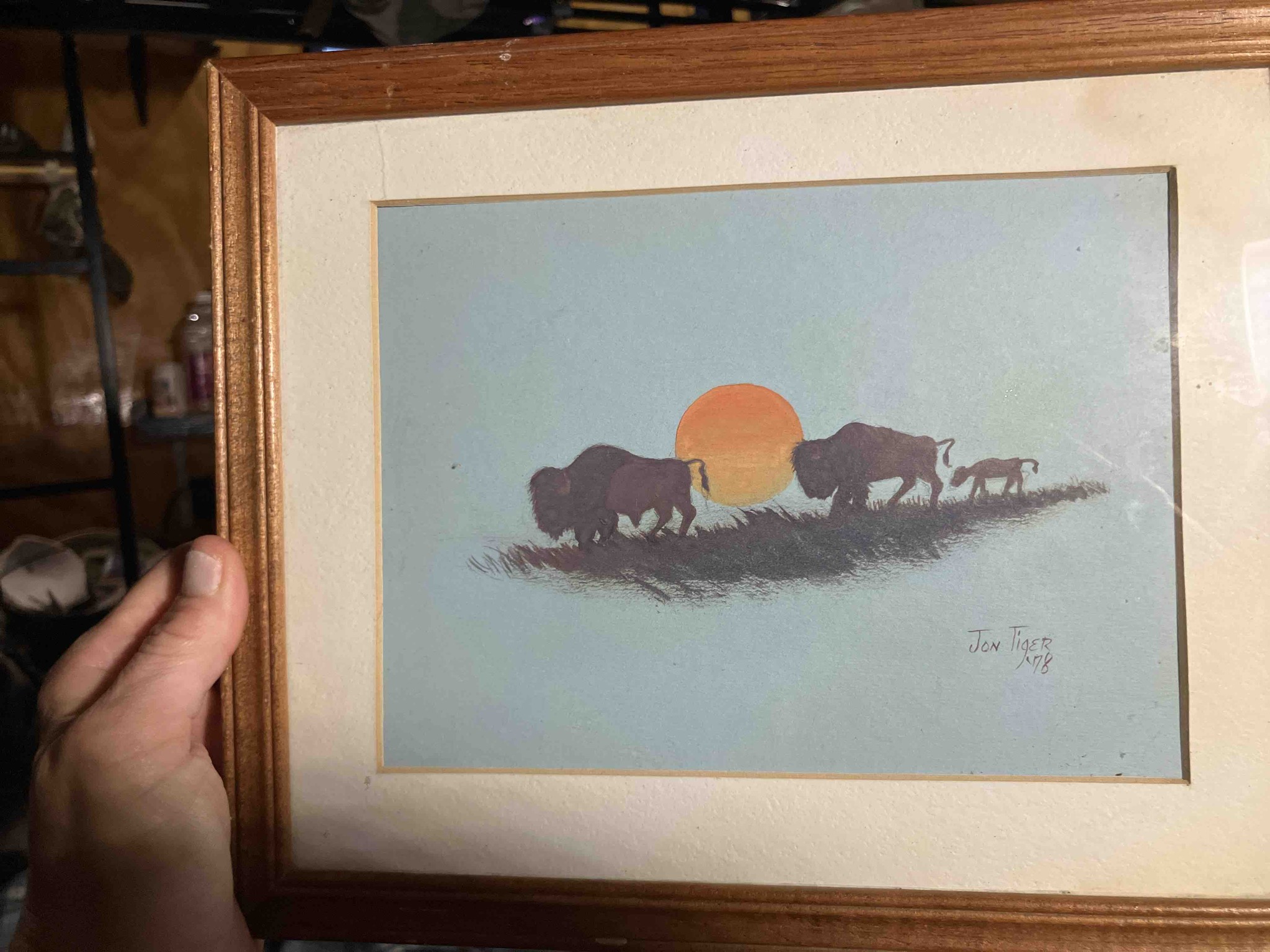
Jon tiger 78

AI analysis below

AI appraisal

AI analysis & estimate

AI-Generated · Verify before acting

Everything below is generated by AI for informational purposes only. AI can make mistakes — the AI may misidentify items or misattribute them (artist, maker, brand, designer, origin, era). This is not an official valuation and should not be used for insurance, sale, tax, estate, legal, or lending purposes — or any decision requiring a certified appraisal. It is not an authoritative claim about any person, brand, or rights holder — do not share or rely on it as a factual statement about a third party. Always consult qualified professionals before making financial decisions.

Note

This analysis also relies on unverified notes provided by the user, which may be incomplete or inaccurate and could affect the result.

Read the full disclaimer

AI Identification

·Not independently authenticated·Verify before acting

Jon Tiger Original Gouache Bison Painting

Native American Fine Art

AI Estimated Value

·Not an official valuation·Verify before acting

$450 - $650

As of June 3, 2026

AI Item Analysis

·AI can make mistakes·Verify before acting
This original painting by Muscogee (Creek) artist Jon Tiger, dated 1978, depicts a family group of bison against a minimalist, pale blue background. The composition features four bison silhouettes—two adults and two calves—traversing a textured, dark ground that suggests tall prairie grass. A prominent, gradient orange sunset orb sits behind the leading bison, providing a striking focal point. The medium appears to be gouache or acrylic on a muted gray-blue paper stock. The work is house in a professional cream-colored mat and a simple, honey-toned natural wood frame with a double-bead profile. The piece is signed 'Jon Tiger' followed by '78' in the lower right corner in a stylized script. Physically, the matting shows some minor yellowing or oxidation along the bevel, and there is a faint moisture stain or foxing mark visible in the upper right corner of the mat. The paper itself shows a few pinpoint-sized dark spots, potentially intrinsic to the paper texture or minor foxing. The craftsmanship reflects the flat-style aesthetic often found in 20th-century Native American painting, characterized by clean lines and symbolic color use. The piece shows typical age-related patina consistent with its late 1970s origin.
AI Appraisal Report

·AI can make mistakes·Verify before acting
I have completed a visual assessment of the original 1978 gouache painting by Muscogee (Creek) artist Jon Tiger. The work is an excellent example of the 20th-century Native American 'flat-style,' characterized by its heavy use of symbolism and clean, graphic silhouettes. The composition is well-balanced, utilizing a striking sunset motif that elevates the minimalist buffalo subjects. Condition-wise, the artwork displays expected age-related patina. I noted minor oxidation on the mat bevel and faint foxing in the upper right. While these issues are common for works on paper from this era, they do slightly temper the valuation compared to a pristine example. The signature 'Jon Tiger 78' is consistent with known examples of the artist's hand during his mid-career period. The market for mid-century and late 20th-century Southeastern tribal art remains stable, with growing interest in regional Oklahoma artists like Tiger. Comparables for smaller original works by Tiger typically range between $300 and $800 depending on complexity and subject matter; the buffalo theme is particularly desirable for collectors of Western Americana. Limitations: This appraisal is based solely on high-resolution digital imagery. A definitive authentication would require physical inspection to verify the paint's pigment structure and paper weight. I recommend an in-person examination to confirm whether the spots mentioned are surface debris or deep-seated foxing, which would require professional conservation. Verification of provenance—such as a gallery receipt or prior exhibition history—would be necessary to reach the upper echelon of market value.

Get your items appraised

Instant estimates of your treasures with AI-powered appraisals

Browse More Appraisals