AI Appraisal Estimate

AI-generated estimates · not official valuations

From the user

What was submitted

Photo and notes provided by the user — not generated by AI

Submitted item photo
Submitted photo · May 23, 2026

User's notes

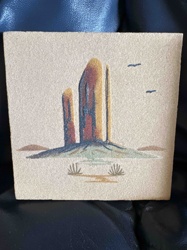
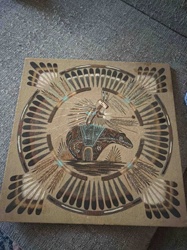
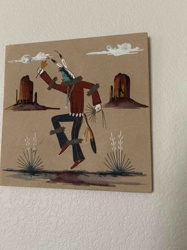
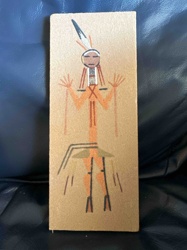
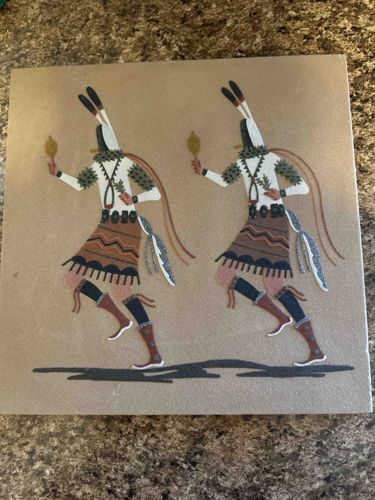
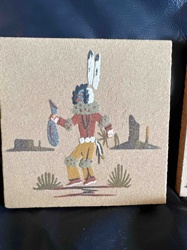
Sand painting of two dancers taking part in the 90 day chance ceremony performed to prevent blindness Yei Bei Chei by Irene TsosleI

AI analysis below

AI appraisal

AI analysis & estimate

AI-Generated · Verify before acting

Everything below is generated by AI for informational purposes only. AI can make mistakes — the AI may misidentify items or misattribute them (artist, maker, brand, designer, origin, era). This is not an official valuation and should not be used for insurance, sale, tax, estate, legal, or lending purposes — or any decision requiring a certified appraisal. It is not an authoritative claim about any person, brand, or rights holder — do not share or rely on it as a factual statement about a third party. Always consult qualified professionals before making financial decisions.

Note

This analysis also relies on unverified notes provided by the user, which may be incomplete or inaccurate and could affect the result.

Read the full disclaimer

AI Identification

·Not independently authenticated·Verify before acting

Yeibichai Dancer Sand Painting by Irene Tsosie

Native American Fine Art / Navajo Sand Painting

AI Estimated Value

·Not an official valuation·Verify before acting

$450 - $650

As of May 23, 2026

AI Item Analysis

·AI can make mistakes·Verify before acting
This is a fine-grain Navajo sand painting depicting two traditional Yeibichai (Yei Bi Chei) dancers, created by the artist Irene Tsosie. The piece is constructed using various shades of natural crushed sandstone, minerals, and pigments meticulously adhered to a solid board or particle base. The artwork features two identical dancers in a dynamic, rhythmic pose, representing the Nightway Chant ceremony—a sacred nine-day healing ritual meant to restore balance and prevent ailments such as blindness. The dancers are rendered with intricate detail, sporting traditional ceremonial attire including feathered headdresses, fringed kilts with geometric patterns, spruce collars, and distinctive moccasins. The color palette is earthy and traditional, utilizing ochre, terracotta, charcoal, and cream tones against a tan background. The craftsmanship is evident in the fine lines and uniform texture of the sand application. Regarding condition, the piece appears well-preserved with sharp edges and no visible loss of sand or 'dropping,' though there is a small surface irregularity or indentation visible on the right edge of the board. The style indicates it was likely produced in the latter half of the 20th century, a period when the Diné (Navajo) transitioned sand painting from ephemeral ritual ground-drawings to permanent, collectible art forms. The composition is balanced and culturally significant, capturing the spirit of the 'Grandfather of the Spirits' through skilled hand-pouring techniques.
AI Appraisal Report

·AI can make mistakes·Verify before acting
Upon my examination of this Navajo sand painting by Irene Tsosie, I find it to be a quintessential example of mid-to-late 20th-century Diné permanent sand art. The work depicts two Yeibichai dancers from the Nightway Chant with high technical proficiency. The use of natural, finely ground sandstone and minerals is evident in the subtle ochre and terracotta palette. The linework is impressively precise, indicating a master hand, particularly in the intricate detailing of the kilts and headdresses. Overall condition is excellent; the sand adhesion is stable with no 'shedding' typically found in poorly stored pieces, though a minor indentation on the right edge slightly affects the structural uniformity. Irene Tsosie is a recognized name in this medium, and works of this size and complexity regularly appear in the secondary market and specialized Southwestern galleries. Current demand for authentic, artist-signed sand paintings remains steady among collectors of indigenous art, though the market is currently saturated with smaller, tourist-grade versions, making larger, professionally executed works like this more desirable. Factors impacting value include the symmetry of the composition and the cultural significance of the Nightway motif. Please note that while the materials and artist's 'hand' appear consistent with mid-century Navajo production, this appraisal is based on digital images. A full authentication would require a physical inspection to confirm the adhesive stability and the absence of synthetic dyes. Documentation of provenance—specifically where and when the piece was originally acquired—would further solidify its market valuation. Scientific testing of the pigments could also confirm the use of entirely natural minerals versus contemporary mixes.

Get your items appraised

Instant estimates of your treasures with AI-powered appraisals

Browse More Appraisals